
Indonesia is rapidly moving toward becoming an aging society—a pace that often goes unnoticed. Recent data show that more than 12 percent of the population is now over 60 years old. Over the next two decades, this proportion is expected to increase sharply. Behind these demographic figures lies a serious yet rarely discussed challenge: elderly oral health.
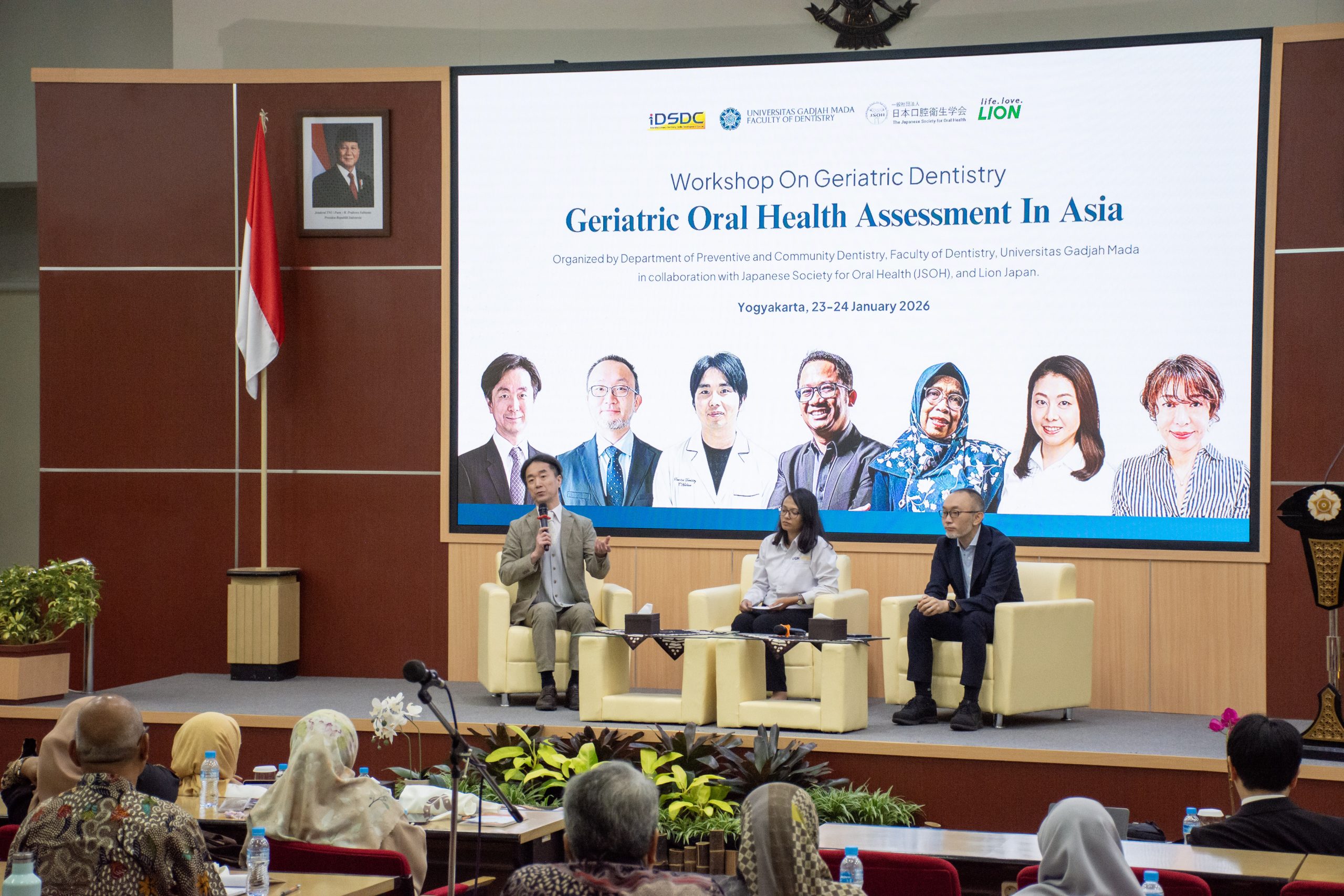
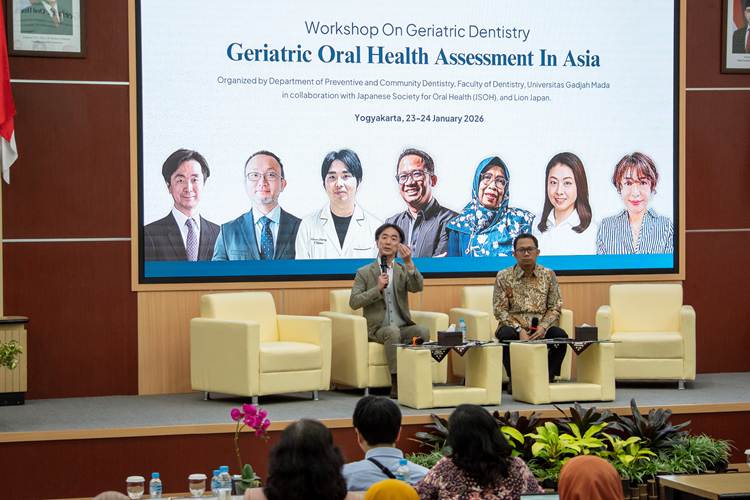
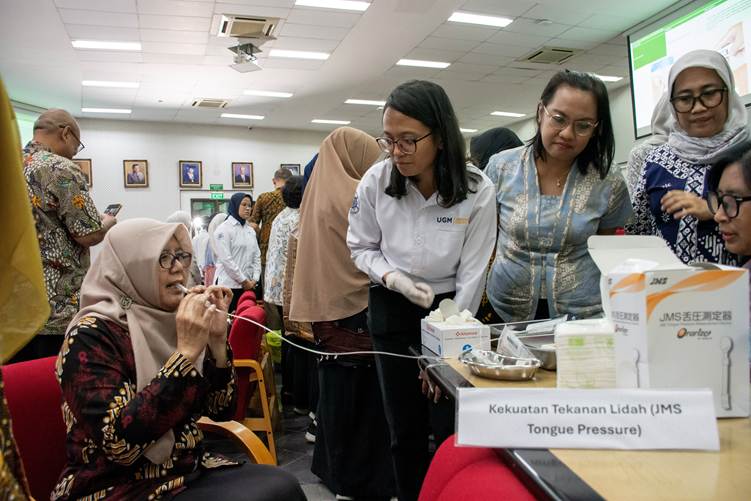
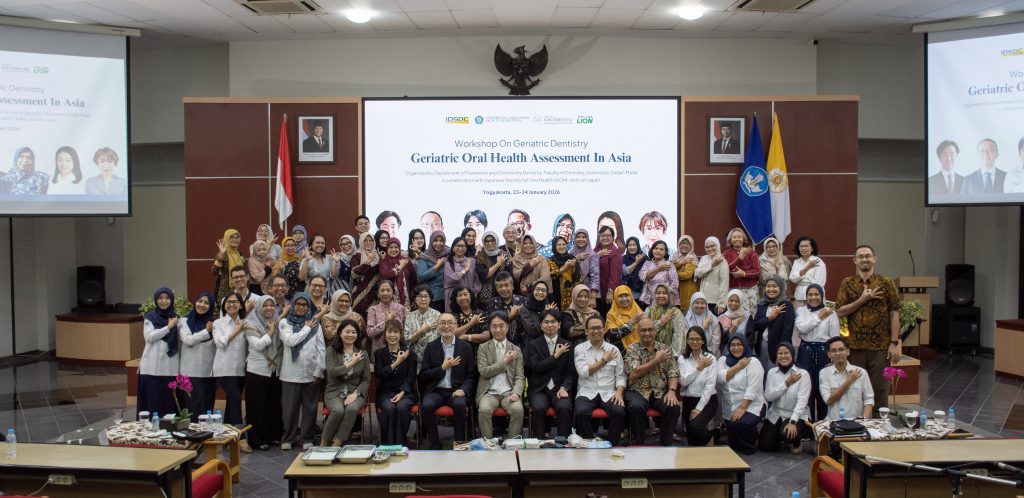
This issue was highlighted during the Workshop on Geriatric Dentistry: Geriatric Oral Health Assessment in Asia, which brought together academics from FKG UGM and the Japanese Society for Oral Health (JSOH) on January 23–24, 2026, at the UGM Graduate School. The forum emphasized a key message: longevity without functional health will only increase the burden on individuals and the healthcare system.
From Japan: A Glimpse into Indonesia’s Future
Japan is often described as a “laboratory of the future” for Asian countries. More than 25 percent of its population is now over 65. However, Japan did not simply age—it prepared through measured oral health policies over the past three decades.
One milestone is the 8020 Campaign, which aims for citizens to retain at least 20 natural teeth at age 80. The results have been significant. In the early 1990s, only about 10 percent of elderly Japanese met this target. Today, more than half of 80-year-olds retain 20 or more teeth.
“Teeth count is not the ultimate goal. What matters more is chewing, speaking, and swallowing function,” said Prof. Hiroshi Ogawa from Niigata University. Japan is now shifting toward a focus on oral function rather than merely counting teeth.
When the Mouth Becomes the Gateway to Elderly Health
Recent research shows that declining oral function—known as oral frailty—is closely associated with malnutrition, muscle mass loss, risk of falls, and premature death. Elderly individuals with chewing difficulties tend to choose soft, low-protein foods, accelerating the cycle of physical frailty.
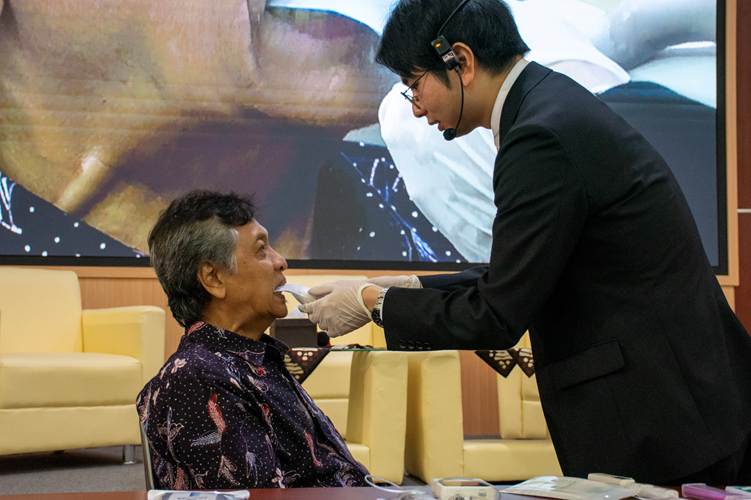
Prof. Masanori Iwasaki from Hokkaido University explained that oral frailty is an early stage that can still be reversed. “If detected early, simple interventions such as oral muscle exercises, dental rehabilitation, and nutritional education can slow or even halt the decline,” he said.
In Japan, this approach has been integrated into community services, including home visits by dentists to elderly individuals and nursing homes—an approach that remains underdeveloped in Indonesia.
An Old Problem, A New Challenge
In Indonesia, oral health issues begin early. Childhood caries rates remain high, and routine dental check-ups are not yet a widespread habit. The cumulative impact is evident: by the time many individuals reach old age, they have already lost most of their teeth before achieving optimal oral function.
This condition suggests that geriatric dentistry is not exclusively an elderly issue, but rather the result of systemic shortcomings in oral healthcare throughout the life course.
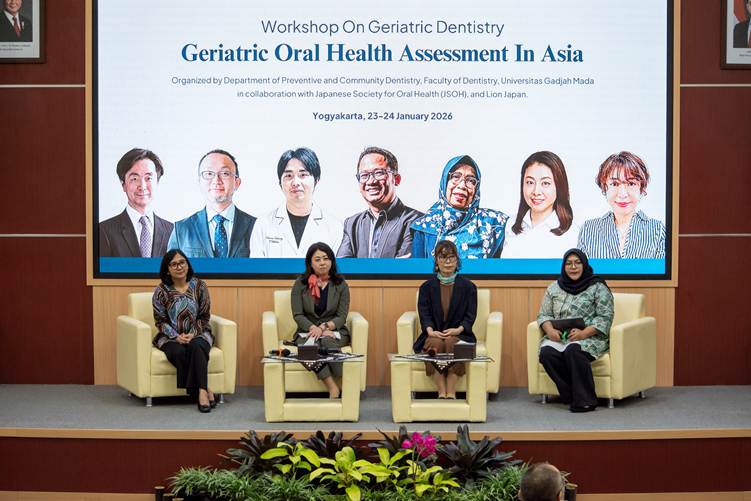
“If we want Indonesian elderly to remain independent, interventions must begin in childhood and young adulthood,” said one Indonesian dental academic during the forum.
From Seminar to Public Policy
The workshop highlighted the urgent need for:
- A national elderly oral health strategy comparable to Japan’s 8020 campaign.
- Integration of oral health into non-communicable disease (NCD) prevention agendas.
- Proactive service models, including home visits and community health worker training.
- Measurement of oral function—not merely dental status—in national health surveys.
Without systemic action, Indonesia’s demographic dividend risks becoming a demographic burden in the future.
Managing Longevity with Quality of Life
Indonesia’s life expectancy continues to increase. However, the critical question is no longer how long we live, but how we live those additional years. Japan has demonstrated that oral health is a frequently underestimated foundation of elderly quality of life.
Indonesia now stands at a crossroads: learn early or pay a higher price later.
(Reporter: Andri Wicaksono, Photography: Fajar Budi Harsakti & drg. Muhammad Fahmi Alfian, M.P.H.)

