
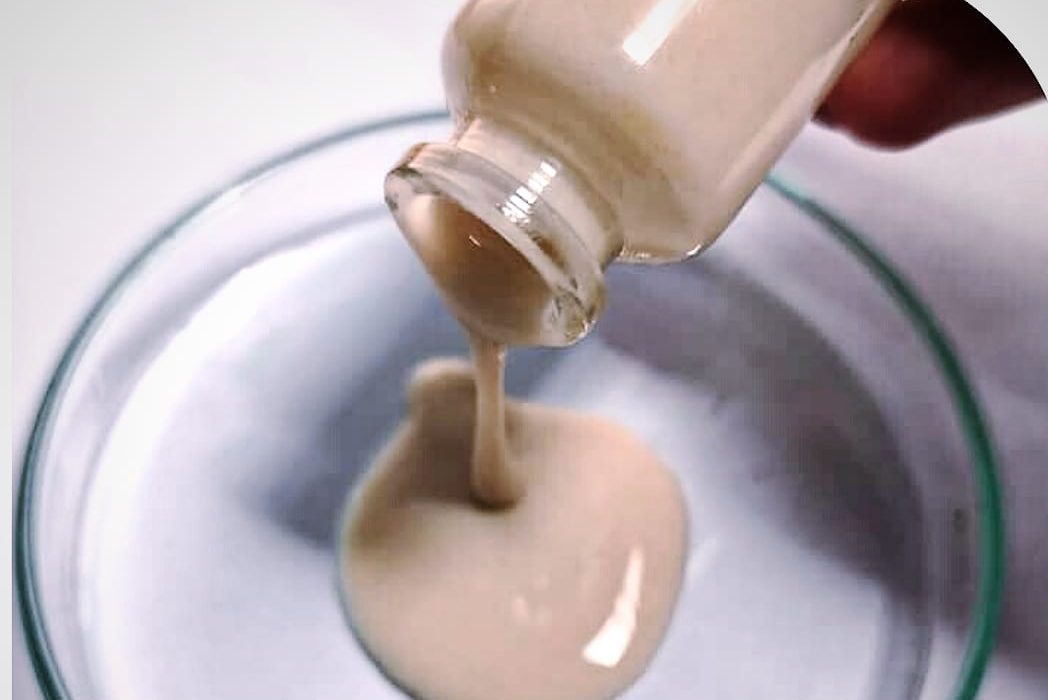
Who would have thought that waste from seashells and green tea leaves could be transformed into a natural tooth-strengthening material? This is the exciting innovation from a team of students at Universitas Gadjah Mada (UGM), who successfully created an environmentally friendly biocomposite gel to strengthen and protect teeth from bacteria that cause cavities.
The gel combines two natural ingredients: green mussel shells (Perna viridis), which are rich in calcium, and green tea leaves (Camellia sinensis), which contain natural fluoride and polyphenolic compounds that function as antibacterials. Through a materials engineering process, both components are synthesized into nano-hydroxyapatite, a very small-sized mineral form that resembles the natural structure of tooth enamel.
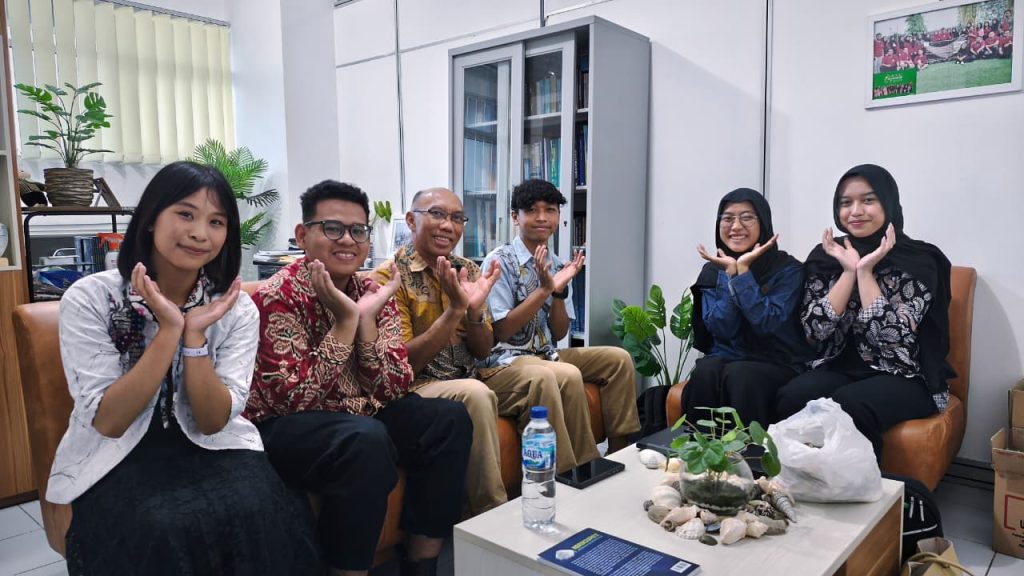
This research was supervised by Prof. Dr. Eng. Yusril Yusuf, S.Si., M.Si., M.Eng., Ph.D., a materials physics expert from FMIPA UGM. The research team consisted of Hasan Rabbani (Physics 2024) as the team leader, along with Achmad Musa Nurhadi (Dentistry 2024), Irya Dira (Chemistry 2023), Jovanka Sandy (Chemistry 2023), and Ifah Nuur Rakhimah (Biology 2024).
“We are not only utilizing natural potential, but also integrating physics, chemistry, biology, and dentistry into a single biomimetic product based on biomimicry principles (imitation of biological systems) with a sustainability orientation,” said Prof. Yusril (6/11).
The seashells sourced from Baron Beach, Gunungkidul, were selected because they contain up to 95.69% calcium carbonate, making them ideal for producing hydroxyapatite. Through a controlled calcination process at a temperature of 1000°C, the shells were converted into nano-sized particles. Meanwhile, green tea leaves from Nglinggo, Kulon Progo, were extracted using 96% ethanol to obtain natural fluoride and polyphenol content.
To ensure its effectiveness, the team conducted two main types of testing: tooth hardness testing and antibacterial testing. In the hardness test, bovine teeth were used as a model because their structure is similar to that of human teeth. Teeth coated with the gel were then observed for four days and immersed in an artificial saliva solution to simulate oral conditions. The results showed an increase in enamel hardness and a decrease in porosity (small pores) on the tooth surface, indicating that the remineralization process was effectively taking place.
Meanwhile, in the antibacterial test, the team examined the gel’s ability to inhibit the growth of Streptococcus mutans, the primary bacterium responsible for dental caries. The observations showed the presence of a fairly wide inhibition zone, indicating that the gel has effective antimicrobial activity in preventing the growth of caries-causing bacteria.
The team leader, Hasan Rabbani, stated that the research idea emerged from concern over the high prevalence of dental caries in Indonesia. “According to data from the Ministry of Health in 2023, the prevalence of caries reached 82.8%. We want to present a solution derived from local materials that is safe, effective, and sustainable,” he explained.
From a dentistry perspective, Achmad Musa Nurhadi added that this gel works differently from conventional fluoride toothpaste. This product not only strengthens the outer layer of the teeth but is also able to penetrate the surface and repair the mineral structure from within. In addition, the formulation is free from the risk of cow’s milk protein allergy that is sometimes found in imported products. The method of use is simply to apply the gel to the teeth using a clean finger or a small silicone spatula twice a day after brushing. According to Musa, the team also ensured that the structure and particle size of the gel meet international biomaterial standards through a series of laboratory tests such as XRD, FTIR, and SEM.
Meanwhile, Ifah Nuur Rakhimah explained that the team conducted antibacterial testing using Streptococcus mutans cultures to measure the effectiveness of its inhibitory activity. She mentioned that although they initially faced challenges in the high-temperature synthesis process and gel sterilization, cross-laboratory collaboration at FMIPA, FBIO, and FKG UGM successfully overcame all these challenges. With various advantages ranging from the ability to penetrate tooth layers, antibacterial properties, allergen-free composition, to sustainable local materials, the gel is considered to have strong potential to be developed toward patenting and industrial production stages.
Currently, the Pevillia Dent PKM-RE UGM Team is preparing to advance to the National Student Scientific Week (PIMNAS) 2025 at Universitas Hasanuddin. They carry the spirit of cross-disciplinary collaboration and innovation based on local resources to present dental health solutions that are safe, natural, and sustainable.
Author: Ahmad Musa | Photo: Pevillia Dent PKM-RE 2025 Team
Editor: Fajar Budi Harsakti

