
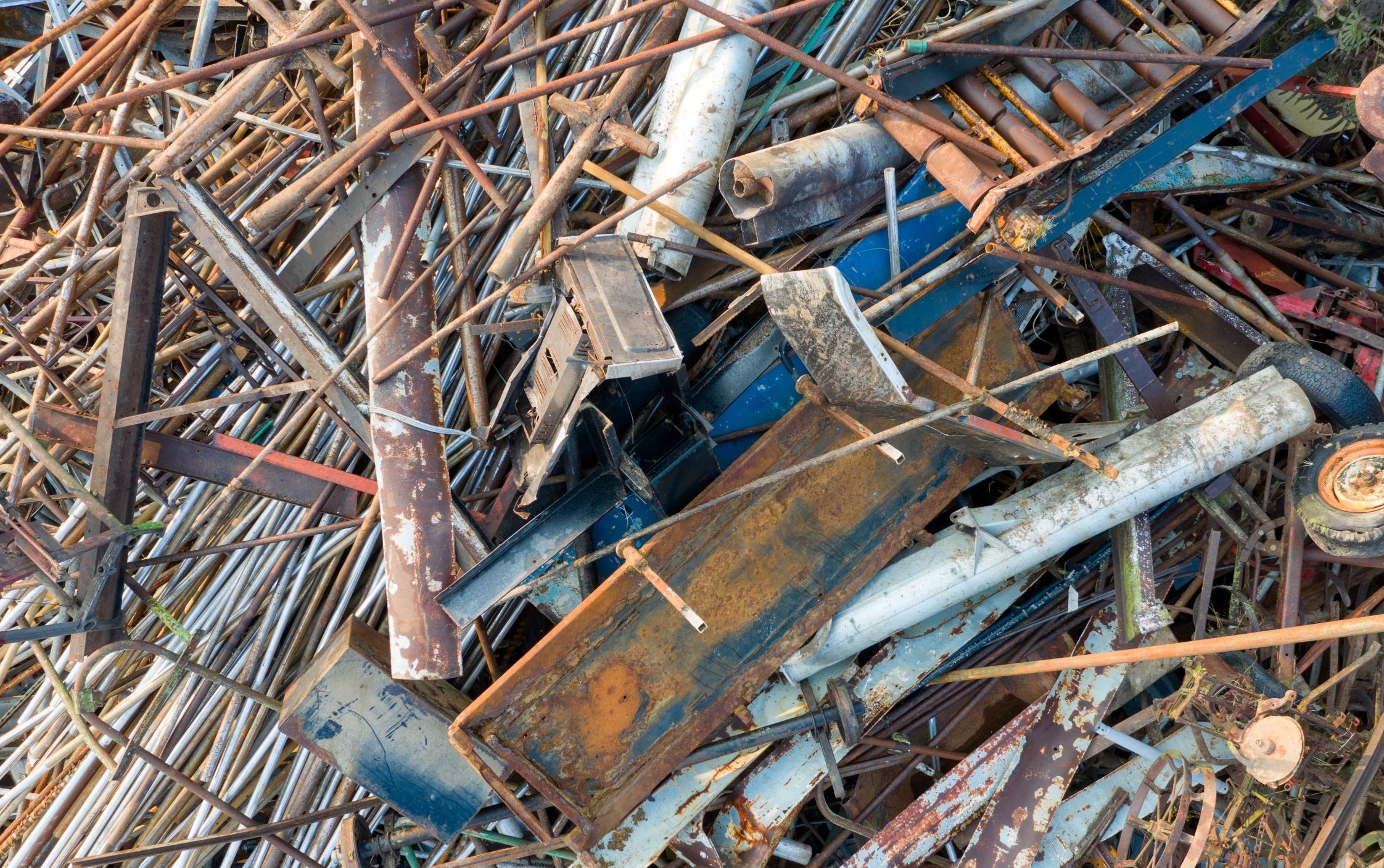
Imagine industrial steel waste that was once simply discarded now becoming the key to producing stronger and longer-lasting batteries for electric vehicles. This is the finding reported by Dr. drg. Bambang Priyono, S.U., and a research team from Universitas Indonesia and Chonnam National University, South Korea, in Materials Chemistry and Physics in 2025. Their study demonstrated that steel manufacturing waste from PT Krakatau Steel could be processed into a dopant material for lithium-ion battery electrodes, delivering performance that surpassed that of standard commercial materials.
The Long-Standing Problem with Lithium Batteries
Lithium-ion batteries have long been the backbone of electric vehicles. However, the most commonly used anode material, graphite, has significant limitations: it is susceptible to the formation of a solid electrolyte interface layer that can impair performance internally and, under certain conditions, can contribute to dangerous overheating.
An alternative material known as lithium titanate, or LTO (Li₄Ti₅O₁₂), has emerged as a promising replacement. LTO has a stable crystal structure, a long cycle life, and enhanced safety. It is known as a “zero-strain” material because it undergoes almost no structural change as lithium ions move in and out during battery charging and discharging.
The problem is that LTO has low electronic conductivity, approximately 10⁻⁸ to 10⁻¹³ S/cm. This means that electrons move slowly through the material, limiting battery capacity and charging speed. Many researchers have attempted to overcome this limitation by doping LTO with a single additional element, but the results have remained suboptimal.
Bambang Priyono's team took a different approach: using two dopant elements simultaneously—magnesium (Mg) and iron (Fe)—in a strategy known as co-doping.
Steel Waste as a Scientific Raw Material
What makes this research even more interesting is the source of the Fe used. Instead of purchasing iron precursors from commercial chemical suppliers, the researchers extracted Fe₂O₃ from steel manufacturing waste generated by PT Krakatau Steel. The waste was purified before being used as a dopant.
The results were striking. LTO electrodes doped with Fe derived from this industrial waste demonstrated better electrochemical performance than undoped pure LTO, while also performing comparably to previous studies that used commercial materials.
“Fe precursors derived from steel manufacturing waste were used as dopants… Our results suggest that Mg and Fe-doping strategy was found to be effective to enhance the performance of the LTO electrode and the steel manufacturing waste can be used as a viable alternative to commercially available dopant precursors.”
This is not merely a matter of cost efficiency. Using industrial waste as a research material opens a new pathway toward developing batteries that are more environmentally sustainable.
The Numbers Tell the Story: Capacity, Cycling, and Rate Performance
The researchers conducted comprehensive electrochemical testing. The LTO sample co-doped with Mg and Fe at a ratio of x = 0.05, labeled MF-LTO(p)-0.05, demonstrated an initial charge capacity of 174 mAh/g, substantially higher than the 143 mAh/g recorded for pure LTO. This figure approaches the theoretical capacity of LTO, which is 175 mAh/g.
In a 300-cycle charge-discharge durability test, the co-doped sample retained a capacity of 77 mAh/g, compared with only 52 mAh/g for pure LTO. This indicates that the co-doped electrode was substantially more resistant to long-term degradation.
Rate-performance testing also produced significant results. At a rate of 15C, meaning that the battery could theoretically be fully charged in four minutes, MF-LTO(p)-0.05 still delivered a capacity of 58 mAh/g. By comparison, pure LTO achieved only 24 mAh/g at the same rate.
To understand why this occurred, the researchers used Density Functional Theory (DFT) calculations. The results showed that pure LTO behaves as a semiconductor with a band gap of 1.2 eV. After Mg and Fe co-doping, this band gap narrowed significantly, approaching semimetallic characteristics. This condition facilitates electron movement through the material, thereby improving electronic conductivity.
Meanwhile, bond valence energy landscape calculations showed that the lithium-ion migration barrier decreased from 0.397 eV in pure LTO to 0.391 eV in the co-doped sample. Although this reduction may appear small, it has a meaningful effect because it works synergistically with the improvement in electronic conductivity.
Towards Better Electric Vehicle Batteries
This study establishes an important foundation for developing the next generation of electric vehicle batteries. The Mg-Fe co-doping strategy, combined with the utilization of local industrial waste, offers two simultaneous opportunities: improving battery performance while reducing the environmental impact of the manufacturing process.
The researchers acknowledge that there is still room for improvement, particularly in refining the synthesis process to eliminate impurity phases such as rutile TiO₂ and Li₂TiO₃ detected in the samples. Nevertheless, the presence of these impurities does not invalidate the study's main findings.
The research was funded by the Directorate of Research and Community Engagement at Universitas Indonesia and the National Research Foundation of Korea, reflecting a productive international research collaboration. For Indonesia, the findings also carry strategic significance: high-quality battery materials may potentially be produced from domestic industrial waste that has long been overlooked.
Authors: Achmad Zam Zam Aghasy, DDS, M.Kes.; Hazra Alifia Muharam
Photo: Pexels
Source DOI: https://doi.org/10.1016/j.matchemphys.2024.129939