
Thirty women from villages in Prambanan and Ngemplak, Sleman, took turns sitting down, lowering their heads at an angle of about 45 degrees, and allowing saliva to slowly flow into a small container. It was hardly a complicated procedure. Yet from just one minute of saliva collection, an intriguing finding emerged: women taking birth control pills had higher salivary pH and volume than those who did not use hormonal contraception at all.
The study, published in the July 2010 issue of Dentika Dental Journal, was conducted by Prof. Dr. drg. Juni Handajani, M.Kes., Ph.D., PBO, and a team from the Faculty of Dentistry, Universitas Gadjah Mada. The finding may seem straightforward statistically, but its implications extend to millions of Indonesian women who take contraceptive pills every day or visit midwives for contraceptive injections.
Saliva Is More Than Just Spit
Before understanding why this finding matters, it is important to first understand what saliva actually does in the mouth. It is far more than a simple lubricant. Saliva performs several important functions: mechanically clearing food debris, lubricating the teeth, neutralizing acids through its buffering capacity, and inhibiting the colonization of pathogenic bacteria.
Normal salivary pH ranges from 6.7 to 7.3. This figure is not static. It fluctuates according to circadian rhythms, dietary patterns, and even a person’s psychological state. A high-carbohydrate diet reduces buffering capacity because bacteria produce more acid, whereas a protein-rich diet increases it because bacteria break down proteins into alkaline compounds such as ammonia.
Salivary volume over a 24-hour period ranges from approximately 1,000 to 1,500 mL. Under unstimulated conditions, secretion occurs at a rate of about 0.32 mL per minute. When stimulated, the rate can rise to 3–4 mL per minute.
The Numbers Tell the Story
In this study, 30 subjects were divided into three groups: women using oral contraceptive pills, women using injectable contraception, and a control group not using hormonal contraception. All subjects were 20–35 years old, in good health, not undergoing orthodontic treatment, and had been using contraception for more than three months.
Saliva was collected in the afternoon between 4:00 and 5:00 p.m. Western Indonesia Time (WIB) using an unstimulated collection method, which was considered to best represent routine physiological conditions. The results were quite clear.
“The use of hormonal contraceptives, both oral pills and injections, can increase salivary pH and volume in women who use them.” — Prof. Dr. drg. Juni Handajani, M.Kes., Ph.D., PBO, et al., Dentika Dental Journal, 2010
The oral contraceptive group had a mean salivary pH of 7.19 and a volume of 2.15 mL per minute. The injectable contraception group had a pH of 6.92 and a volume of 1.41 mL per minute. Meanwhile, the control group recorded a pH of only 6.59 and a volume of 0.81 mL per minute. ANOVA showed statistically significant differences in both salivary pH and volume, with p = 0.000 for both variables.
Hormones, Cortisol, and the Chain of Effects
So how can hormonal contraception alter saliva? The answer lies in a longer physiological pathway than one might expect.
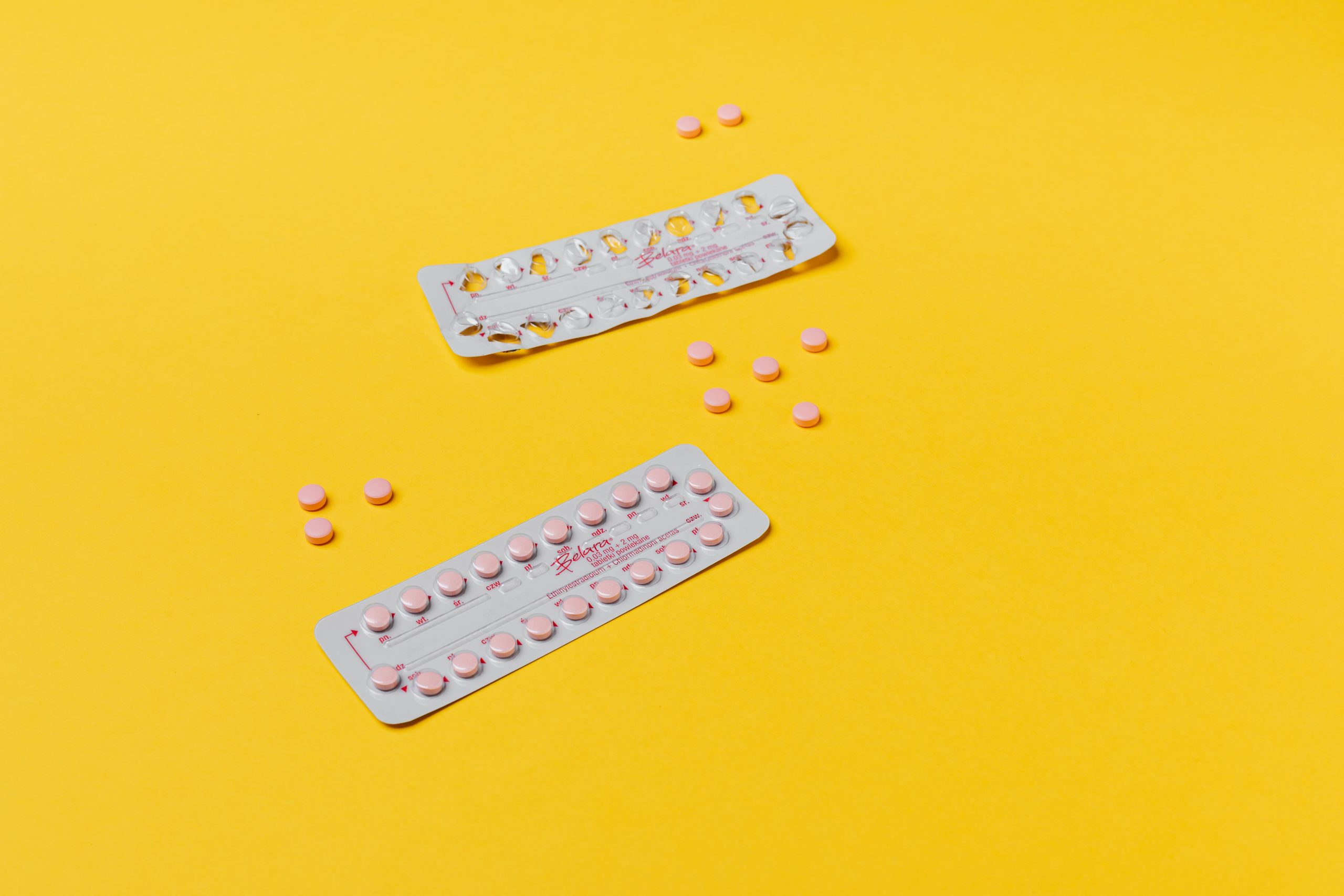
Birth control pills contain synthetic steroid hormones, namely estrogen and progesterone. Injectable contraceptives contain progesterone alone. Once these hormones enter the circulation, they are thought to increase plasma cortisol levels. Cortisol then affects the sympathetic nervous system through adrenergic receptors, ultimately promoting the secretion of protein-rich saliva from the salivary glands.
Another explanation may complement this mechanism. Estradiol and progesterone are known to exacerbate gingival inflammation, making gingivitis more likely to develop. According to the literature cited in the study, inflammation of the gingiva itself can stimulate salivary secretion. The greater the amount of saliva secreted, the higher the concentration of bicarbonate ions, which in turn is associated with an increase in pH.
Interestingly, despite the increase in cortisol, the study did not find evidence of reduced immune function among the subjects. The researchers hypothesized that this may be because the increase in cortisol was offset by a decrease in plasma cortisone, along with the role of the enzyme 11β-hydroxysteroid dehydrogenase in the salivary glands, which converts cortisol into cortisone.
Why the Findings Matter
Indonesia is considered to have one of the more successful family planning programs. Birth control pills and injectable contraceptives are widely used. Their effectiveness is reported to reach 99.6 percent, they are relatively affordable, and they are readily accessible even in rural villages. Millions of Indonesian women use them every day, often without realizing that the synthetic hormones they take may be quietly altering conditions inside the oral cavity.
Changes in salivary pH and volume may have consequences. Increased saliva production and a more alkaline oral environment could affect the balance of the oral microbiota, the rate of plaque formation, and even caries risk. However, this study does not answer all of these questions. The researchers themselves noted the need for further studies that control for dietary factors and measure total salivary protein to better understand these relationships.
One thing is already clear: the female body responds to hormonal contraception in ways that are far more complex than simply preventing pregnancy. And the oral cavity, which is often overlooked in discussions of reproductive health, appears to be part of that response.
Source DOI: https://doi.org/10.32734/dentika.v15i1.1678
Authors: Anny Anggraini; drg. Achmad Zam Zam Aghasy, M.Kes.
Photo: Pixels