
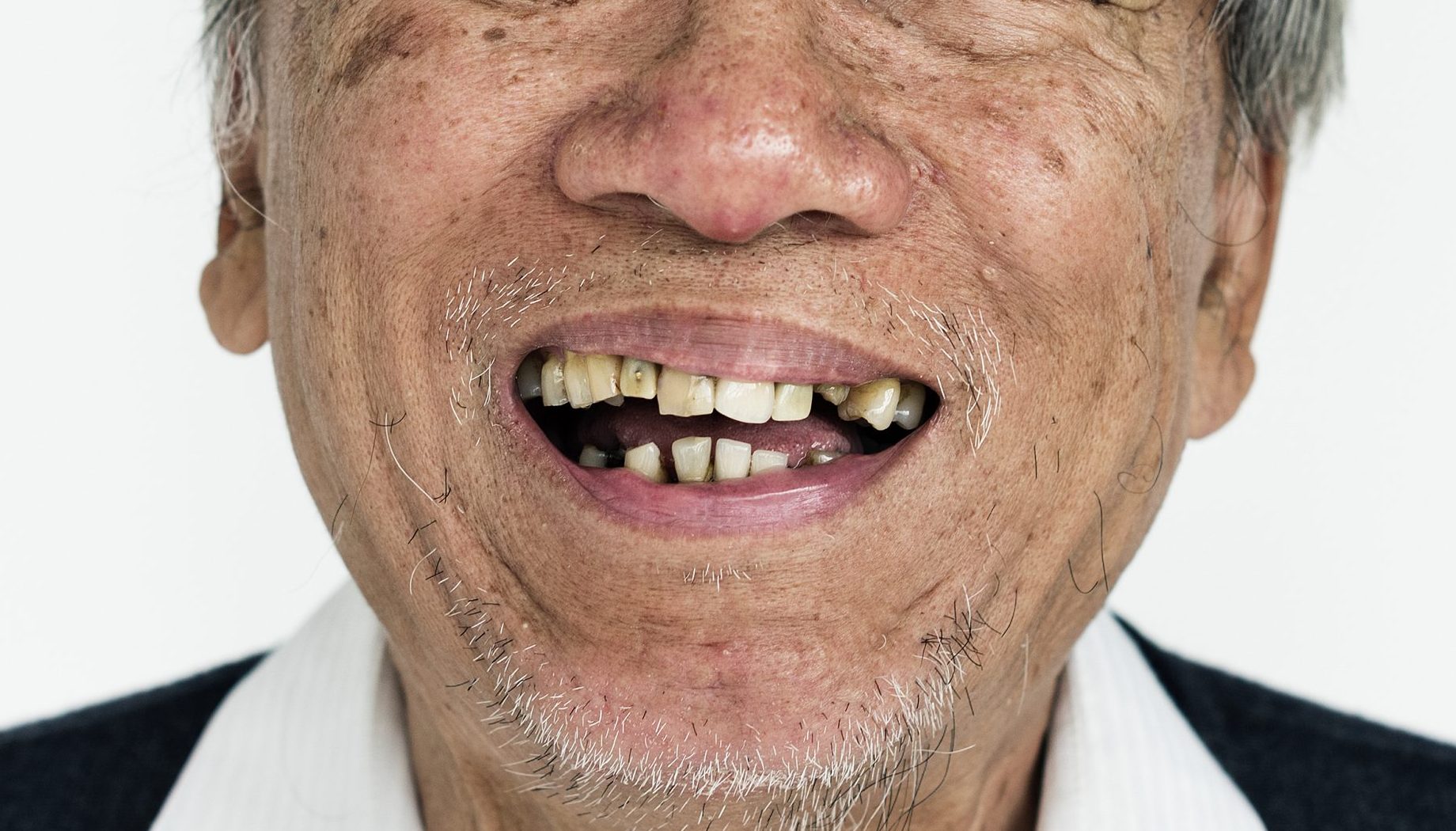
One in ten older Indonesians has no remaining natural teeth. This figure may sound like an ordinary statistic until you consider what Rieski Prihastuti, S.Kp.G., MPH., Ph.D., a researcher at the Faculty of Dentistry, Universitas Gadjah Mada, and her team from Tokushima University, Japan, discovered. In a study published in the international journal INQUIRY: The Journal of Health Care Organization, Provision, and Financing in 2025, they found that complete tooth loss, medically known as edentulism, is not merely a matter of appearance or chewing ability. It is closely associated with declines in overall physical function, and the risks vary by age.
The study used data from the fifth wave of the Indonesian Family Life Survey (IFLS-5), conducted in 2014–2015, which included 2,554 adults aged 60 years and older from 13 provinces across Indonesia. The findings were striking: 280 people, or approximately 10.96% of the respondents, were edentulous.
The Older People Get, the More Teeth They Lose
The pattern identified by the research team was consistent. Among those aged 60–69 years, the prevalence of edentulism was 7.68%. This figure nearly doubled among those aged 70–79 years, reaching 17.39%. Among those aged 80 years and older, nearly one-quarter of respondents—23.58%—had no teeth left at all.
More important than the prevalence itself was the relationship between edentulism and physical condition. The researchers measured physical function across three dimensions: physical performance using the five-time chair stand test, functional ability through independence in daily activities (Activities of Daily Living/ADL and Instrumental Activities of Daily Living/IADL), and appendicular skeletal muscle mass (ASM).
Among participants aged 60–69 years, those with poor physical performance—defined as taking more than 12 seconds to stand up from a chair five times—had twice the risk of edentulism compared with those with normal performance (OR 2.02). In other words, people who were already beginning to experience mobility difficulties in their 60s were more likely to lose all their teeth.
Among those aged 70–79 years, the picture became more complex. In addition to poor physical performance (OR 1.62), dependence in even one daily activity was sufficient to increase the risk of edentulism (OR 1.75). Among those aged 80 years and older, the most prominent factor was dependence in two or more daily activities, which was associated with a fourfold increase in risk (OR 4.02).
A Vicious Cycle That Needs to Be Broken
Why are people with declining physical function more likely to lose their teeth? The answer is not simple, but it is logical.
As muscles weaken and mobility decreases, people may find it increasingly difficult to maintain oral hygiene independently, brush their teeth, rinse their mouths, or even visit a dentist. Poor oral hygiene increases the risk of periodontal disease, or inflammation of the tissues supporting the teeth, which can eventually cause teeth to loosen and fall out one by one. Conversely, tooth loss impairs chewing ability, worsens nutritional intake, and can contribute to further physical decline.
“These findings emphasize the importance of preserving natural teeth and improving oral health throughout the aging process, particularly among individuals with physical functional limitations.”
This was the conclusion written by the research team in their paper, serving as a reminder that dental health is not separate from overall physical health.
Interestingly, the researchers also found that the relationship between physical function and edentulism was not linear across all age groups. Among those aged 80 years and older, the direct association between physical performance and edentulism was not statistically significant. The researchers suggested that at very advanced ages, longstanding chronic conditions may become more dominant, making it more difficult to identify a specific relationship between physical function and dental status.
National Data Speak Louder
One of the study's major strengths lies in the scale of its data. IFLS-5 is a nationally representative survey conducted using random sampling across 13 provinces in Indonesia and covering more than 30,000 households. From this large dataset, the research team selected 2,554 older adults with complete data, far exceeding the minimum sample size required for this type of study.
Rieski Prihastuti, who is also a lecturer in the Department of Preventive and Community Dentistry (IKGP and KGM), Faculty of Dentistry, Universitas Gadjah Mada, conducted the analysis together with the Japanese research team. The study was carried out within the framework of academic collaboration between FKG UGM and the Graduate School of Biomedical Sciences, Tokushima University.
The researchers acknowledged several limitations. Edentulism data were self-reported, meaning they were based on participants' responses to the question, “Have you lost all of your teeth?” rather than direct clinical examinations. The cross-sectional study design also cannot definitively establish a causal relationship. The researchers recommended that future studies include direct oral examinations, information on denture use, and data on the number of remaining functional teeth.
Teeth Are More Than Just Tools for Chewing
This study carries a message that extends beyond the statistics. Dental care has often been regarded as a secondary need, something that can be postponed when financial resources or access to healthcare are limited. Yet for older adults, complete tooth loss can be both a marker and a potential contributor to more serious physical decline.
Comprehensive interventions that address both physical function and oral health are what the research team recommends as a concrete step toward improving the quality of life of older adults. Rather than separate programs targeting different “parts of the body,” an integrated approach recognizes the human body for what it is: a single, interconnected whole.
In a country such as Indonesia, where the older population continues to grow, the questions of who will care for their dental health and whether they will remain capable of caring for themselves are becoming increasingly urgent.
Authors: Achmad Zam Zam Aghasy, DDS, M.Kes.; Hazra Alifia Muharam
Photo: Freepik
Source DOI: https://doi.org/10.1177/00469580251317643