
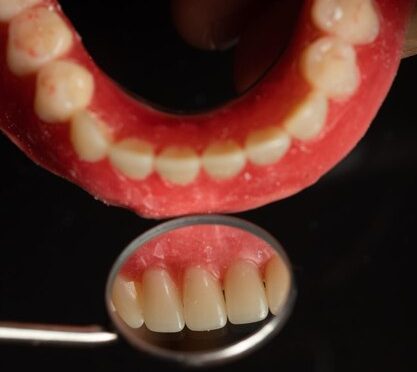
Biomaterials for dental implants must meet various criteria ranging from nanostructures to macro-level spatial arrangements. This includes physicochemical and mechanical properties as well as biological interactions with tissues. In recent developments, the use of bioceramic materials from abalone shells and honeycomb-shaped biopolymers has shown great potential for dental implant and tissue engineering applications.
Sources of Biogenic Bioceramics
Research conducted by Mona Sari, a student of the Faculty of Dentistry, Universitas Gadjah Mada, under the supervision of Prof. Dr. Eng. Yusril Yusuf, M.Si., M.Eng.; Prof. drg. Ika Dewi Ana, M.Kes., Ph.D.; and Dr. Chotimah, M.S., developed hydroxyapatite (HAp) and carbonate hydroxyapatite (CHAp) bioceramics from abalone shells (Haliotis asinina). The fabrication process involved calcination with variations in temperature and stirring time as well as precipitation methods, producing materials with adequate performance. Characterization included:
- XRD, SEM-EDX, and FTIR to identify phases and crystal structures.
- Analysis of Ca/P ratio showing values of 1.67 for HAp and 1.73 for CHAp, close to the ratio in natural bone (1.71).
Honeycomb (HCB) wax extraction was utilized as a porogen in HAp and CHAp scaffolds through porogen leachingtechniques. Key findings:
- Scaffold porosity increased along with higher HCB concentrations.
- HCB degraded in the scaffold, with crystallite size reduction indicating a finer internal structure.
Mechanical properties and biocompatibility were tested through:
- Microhardness test on enamel remineralized by HAp-Abalone gel.
- • Compressive strength test on CHAp/Ti plates coated with the electrophoretic deposition dip-coating (EP2D).
- Cell viability tests (MTT and cell culture) on scaffolds and gels. Results showed:
- HAp scaffold 30 wt% and CHAp 40 wt% were the best samples, with optimal physicochemical characteristics and cell viability.
- HAp-Abalone gel 20 wt%, with crystallite size around (15 ± 1) nm, was most effective for enamel remineralization (~86 ± 6 VHN hardness value).
- IC50 value of HAp-Abalone gel 20 wt% was 1497 µg/mL, indicating that high concentrations inhibit NIH/3T3 cell growth.
- CHAp/Ti scaffolds and plates showed compressive strength between 54–83 MPa and coating thickness between 50–200 µm, suitable for bone implant applications. Cell viability on CHAp/Ti plates was higher compared to CHAp/Ti scaffolds, and plate surfaces remained stable after coating.
***
This article outlines the journey of biomaterial characterization from nanostructures (crystallites, remineralization gels) to macrostructures (scaffolds, coatings, mechanics). UGM’s research emphasizes that combining bioceramics from abalone and HCB biopolymers holds great potential for dental implants, combining biological compatibility, mechanical stability, and clinical efficiency.
References
Mona Sari, Prof. Dr. Eng. Yusril Yusuf, M.Si., M.Eng.; Prof. drg. Ika Dewi Ana, M.Kes., Ph.D.; Dr. Chotimah, M.S.., Development of Scaffolds and Gel Preparations Based on Bioceramics from Abalone Shells (Haliotis Asinina) and Honeycomb Biopolymers for Biomaterial Applications, https://etd.repository.ugm.ac.id/penelitian/detail/219097
Author: Rizky B. Hendrawan | Photo: Freepik

