
Researchers from the Faculty of Dentistry, Universitas Gadjah Mada (FKG UGM), drg. Raras Ajeng Enggardipta, MDSc., Sp.KG, together with a research team from Tokushima University in Japan, have made a breakthrough in dental treatment. They successfully tested trimethyl chitosan (TMC), a chitosan-derived compound obtained from natural materials such as shrimp and crab shells, as an alternative irrigation solution for root canal treatment.
The important findings have been published in the 2026 edition of the Journal of Dental Sciences. The study showed that TMC was not only capable of killing bacteria and disrupting the Enterococcus faecalis biofilm layer, a bacterium associated with failed dental treatment, but was also considerably safer for human tissue cells than the standard chemical cleaning solution currently commonly used in dental clinics.
Root canal treatment, also known as endodontic treatment, aims to eliminate bacteria from inside the root canal so that the infection does not progress. The problem is that root canals have complex, curved anatomy with numerous small branches, making bacteria hidden within them difficult to reach through mechanical instruments alone.
One of the most persistent pathogens is Enterococcus faecalis. This bacterium is among the ten microorganisms most frequently found in infected root canals that have failed to respond to treatment. Its ability to penetrate the pores of teeth (dentinal tubules), survive under extreme conditions, and form a thick protective layer known as a biofilm makes it a major threat and a leading cause of repeated root canal treatment failure.
To date, dentists have relied on sodium hypochlorite (NaOCl), or chemical bleach, to kill these bacteria. Although this solution is highly effective at eliminating microorganisms, it has serious drawbacks: it is toxic to tissues surrounding the tooth root, has a strong odor, and can weaken the original tooth structure. If the chemical solution leaks beyond the root tip, the surrounding connective tissue may become inflamed, potentially delaying the patient's healing process.
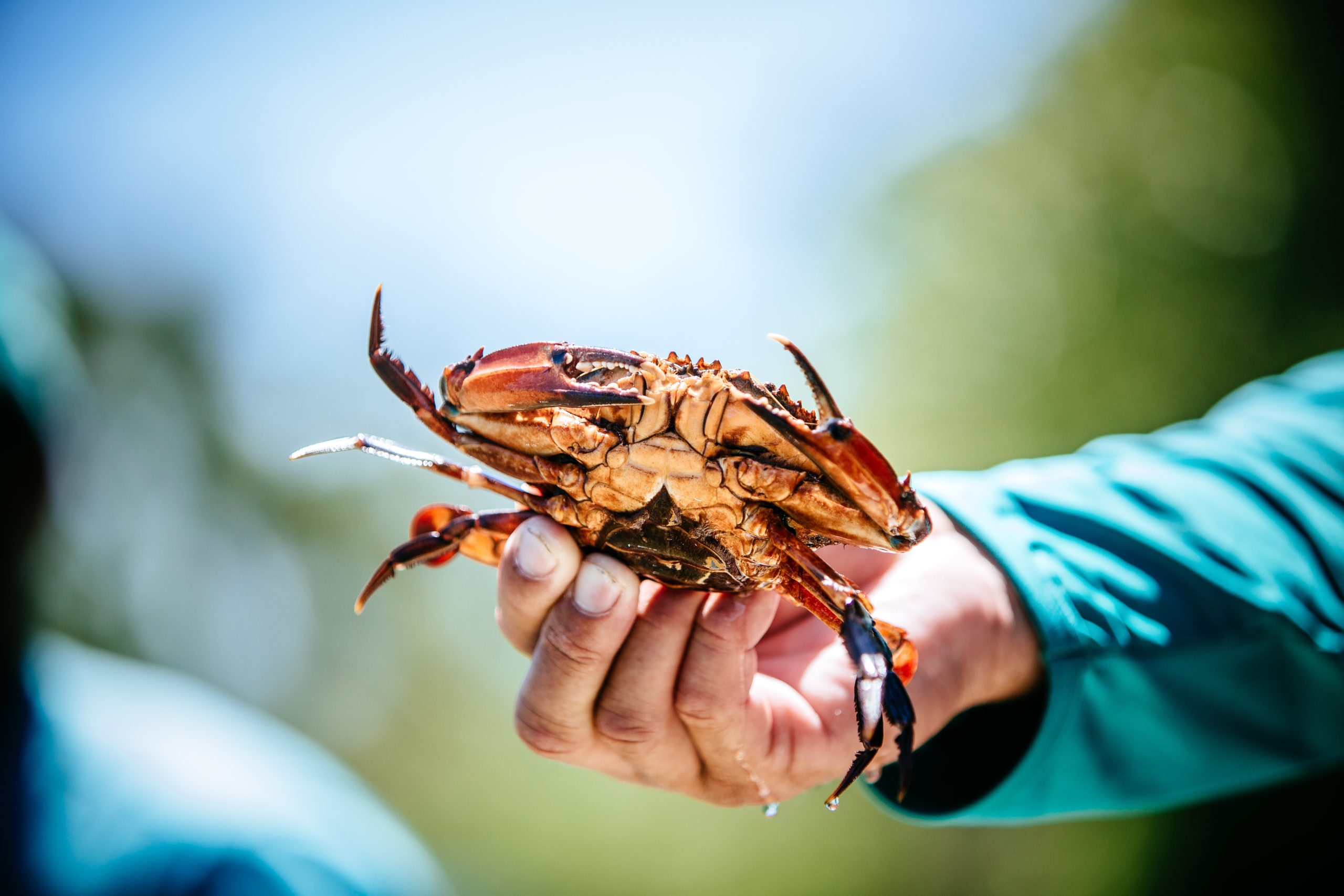
This is where the natural-material-based innovation from UGM and its partners offers a potential solution. Chitosan is a natural polymer obtained through the processing of marine animal shells, such as shrimp and crab shells. The research team then chemically modified it into trimethyl chitosan (TMC) to make it more water-soluble and more active against microorganisms.
Scientifically, TMC carries a strong positive electrical charge. This positive charge enables it to attract and damage the negatively charged bacterial cell walls, acting like magnets that attract one another and ultimately destroying their target from within.
In laboratory experiments, the team led by drg. Raras tested the effectiveness of TMC against bacteria grown on surfaces designed to resemble human teeth. The results were highly consistent across all testing methods. Electron microscopy revealed that the protective bacterial structure (biofilm) treated with TMC appeared extensively disrupted and significantly reduced, in stark contrast to the control bacteria, which appeared dense, tightly packed, and proliferative.
In their official publication, the research team emphasized the significance of this innovation:
“These findings highlight the potential of TMC as a novel irrigation agent due to its antibacterial and antibiofilm activity against E. faecalis, as well as its compatibility with human periodontal tissue cells.” — drg. Raras Ajeng Enggardipta, MDSc., Sp.KG, and research team, Journal of Dental Sciences, 2026
The greatest advantage of this crab-shell-derived compound lies in its safety for patients' tissues. The research team tested TMC directly on living cells surrounding human tooth roots, known as periodontal ligament fibroblasts. These cells are among those most vulnerable to damage and inflammation if the dental cleaning solution used by a dentist leaks into the gums.
Laboratory tests demonstrated that these living cells remained highly viable and healthy throughout the observation period of up to 72 hours. This was considerably safer and less toxic than standard NaOCl, which rapidly and drastically reduced tissue-cell viability. Based on international standards (ISO 10993-5), this natural solution successfully met the required safety threshold. Nevertheless, the researchers noted that the concentration and contact time of the solution still need to be carefully controlled to prevent bacteria from mounting a stress response that could potentially promote resistance.
This international collaborative study provides strong proof of concept that discarded marine animal shells, which have long been treated as waste, may contain an answer to a major challenge in dentistry. Although further testing is still required before it can be officially adopted for widespread use by dentists in clinical settings, this innovation from UGM offers concrete hope for the wider community. In the future, root canal cleaning could become more comfortable, safer for the gums, and based on natural, environmentally friendly materials.
Author: drg. Achmad Zam Zam Aghasy, M.Kes., Annisa Dwi Noviyanti
Photo: FreePik
Source DOI: https://doi.org/10.1016/j.jds.2025.06.022