
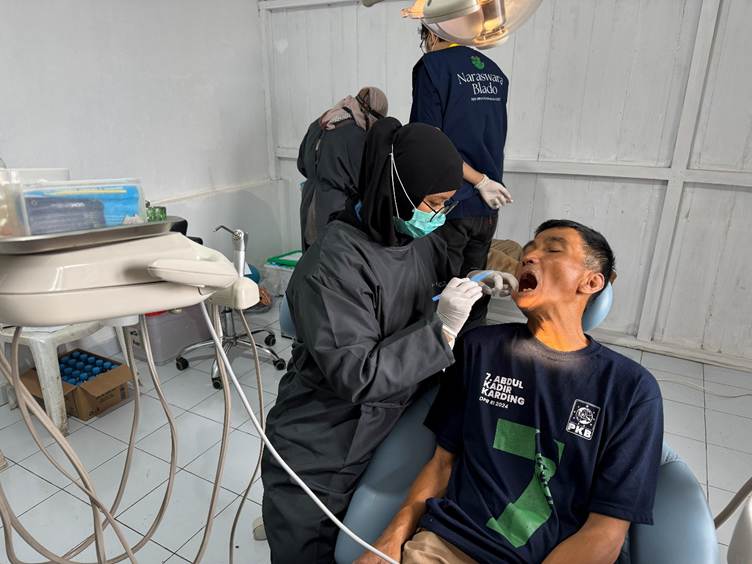
In Keteleng Village, Blado District, Batang Regency, tooth loss is not merely an aesthetic concern. For many older adults, it leads to difficulty chewing, reduced nutritional intake, and limited social interaction. In rural areas with limited access to dental services, this issue often becomes an accepted part of daily life.
National data reflect a similar picture. The 2023 Indonesian Health Survey recorded that 56.9 percent of Indonesians experience oral health problems, yet only 11.2 percent receive care from dental professionals. The prevalence of dental caries reaches 82.8 percent. Behind these numbers, rural elderly populations are among the most vulnerable.
This condition prompted the Faculty of Dentistry, Universitas Gadjah Mada (FKG UGM), through its Department of Prosthodontics, to design a community service program based on appropriate technology in Keteleng Village. The program, titled Oral Health Education and Restoration of Masticatory Function through Denture Fabrication, aims not only to restore oral function but also to promote long-term health behavior change.
FROM EDUCATION TO REHABILITATION
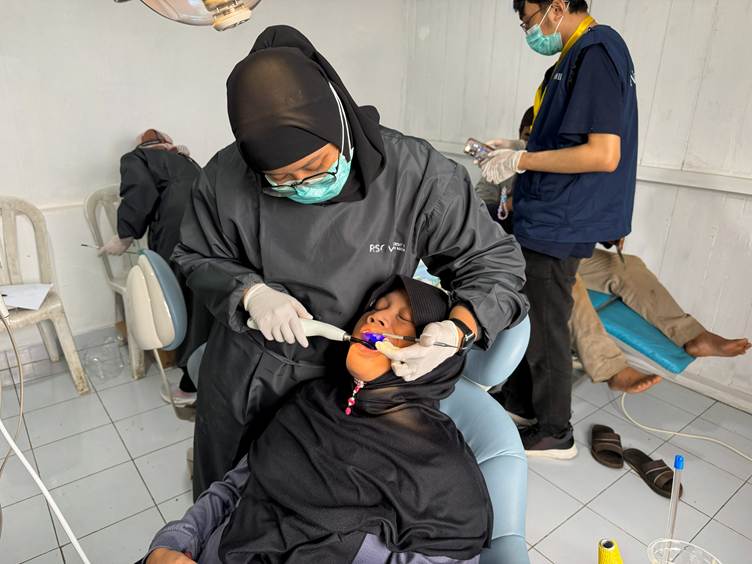
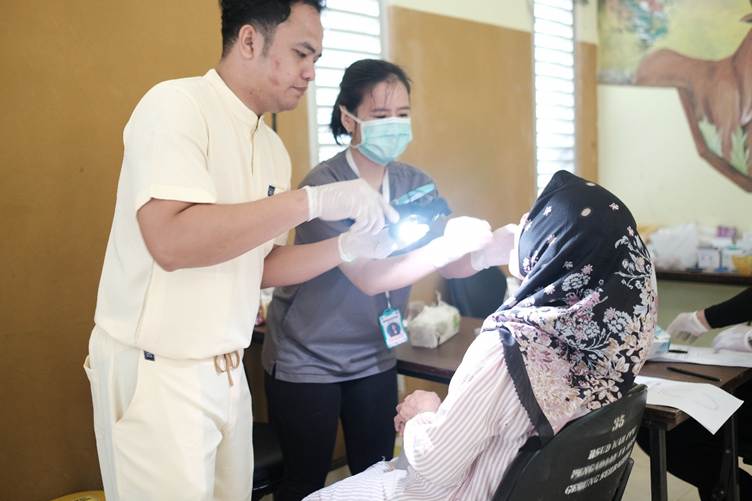
Unlike incidental health services, this program is layered. The initial stage involves outreach and screening to map residents’ dental health conditions, particularly among the elderly. Based on examination results, follow-up actions are determined—ranging from extractions, simple fillings, and scaling, to selecting cases eligible for denture placement.
A total of 94 residents participated in the initial screening. Not all could immediately receive dentures. In cases of extensive tooth loss and unprepared oral conditions, preliminary treatments are necessary to ensure safe placement. Denture installation is scheduled for May 2026 after the completion of initial treatments.
“Restoring masticatory function cannot be instant. We first ensure that the oral cavity is healthy so the dentures are truly beneficial and comfortable,” said drg. Pramudya Aditama, MDSc., Sp.Pros, Head of the program team.
In addition to clinical procedures, residents received oral health education, including proper toothbrushing techniques and denture care. This approach positions the community not merely as service recipients, but as active participants.
APPROPRIATE TECHNOLOGY AND EQUITABLE ACCESS
Cost remains a major barrier to denture utilization in rural areas. Under the National Health Insurance (JKN) scheme, denture services are not fully covered, requiring additional out-of-pocket expenses.
Through appropriate technology, the Prosthodontics team developed a more affordable removable denture model without compromising function and clinical standards. This approach aligns with efforts to reduce disparities in access to dental care between urban and rural areas.
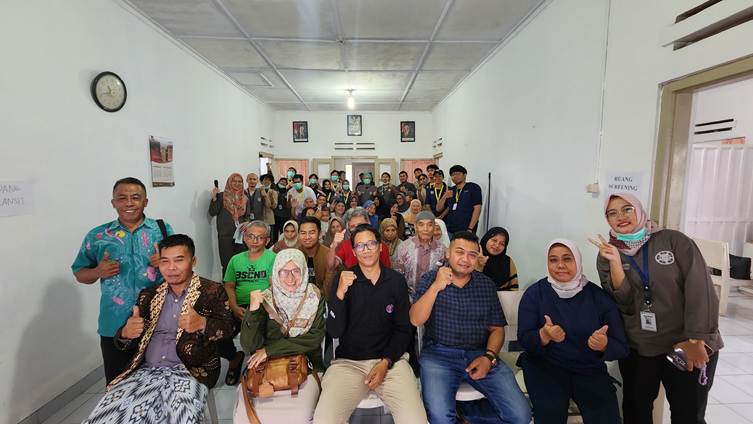
The program also involves Blado I Community Health Center, the village government, professional dental organizations, as well as students and alumni of FKG UGM. This cross-sector collaboration is expected to form the foundation for sustainable community-level dental services.
BROADER IMPACT
For areas such as Keteleng Village, covering approximately 8.83 square kilometers with challenging inter-hamlet access, the presence of community-based dental services carries significant meaning. Beyond improving the quality of life for older adults, the program aims to establish a replicable community-based denture service model for other villages in Blado District.
“Teeth that function again are not just about eating. They affect confidence and quality of life.”
In Keteleng Village, a new smile is not merely a symbol of clinical success. It signifies that health—including oral health—is a right that should be accessible even in the most remote areas.
Editor: Andri Wicaksono, Photo: Archive of the Department of Prosthodontics, FKG UGM

