
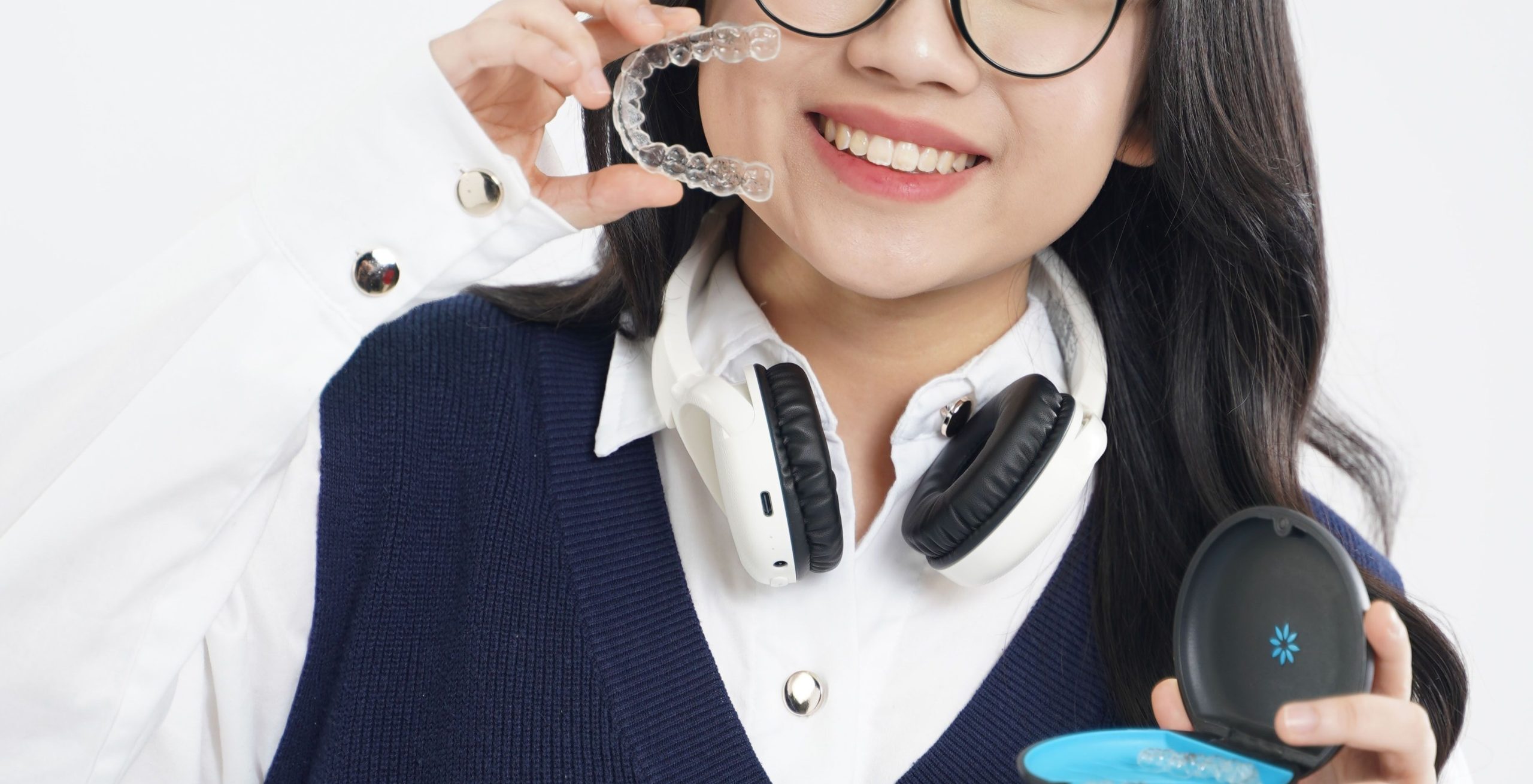
Imagine an adult patient visiting an orthodontic clinic with two simultaneous goals: having straight and bright white teeth. The patient has already undergone dental bleaching at the clinic and now wants to have metal brackets installed immediately. The question that arises is not related to aesthetics, but rather a technical concern: will the brackets bond strongly enough after the tooth enamel has just been exposed to hydrogen peroxide?
This question motivated a research team from the Department of Orthodontics, Faculty of Dentistry, Universitas Gadjah Mada, to conduct a laboratory study whose findings were published in the European Journal of Dentistry in December 2023. The team, consisting of Septia Emi Ambersari, Dr. drg. Dyah Karunia, Sp.Ort., and Prof. Ananto Ali Alhasyimi, discovered a surprising finding: fluoride-based desensitizing agents not only reduce post-bleaching sensitivity but also significantly improve the bonding strength of orthodontic brackets on enamel surfaces.
When Teeth Whitening Becomes a Challenge for Brackets
In-office bleaching works through a relatively aggressive chemical process. A 37% hydrogen peroxide agent produces free radicals that break down large molecules responsible for tooth discoloration. However, residual free radicals and peroxide remaining on the enamel surface can become a serious obstacle to bracket bonding. The remaining oxygen interferes with the polymerization process of composite resin, the adhesive material used to attach brackets to teeth.
As a result, shear bond strength (SBS), or the resistance of brackets against shearing forces, decreases. Easily detached brackets are not merely a minor inconvenience; they can prolong treatment duration, waste clinical time, and potentially damage enamel. The prevalence of bracket failure during orthodontic treatment itself ranges from 0.5% to 17.6%.
On the other hand, bleaching can also trigger tooth hypersensitivity because whitening agents increase enamel and dentin permeability, allowing chemicals to penetrate toward the dental pulp. To manage this condition, clinicians commonly prescribe desensitizing agents. The question, however, remains: which desensitizing agent provides the greatest benefit if patients plan to have brackets installed immediately after bleaching?
Three Groups, One Testing Machine, and Unexpected Findings
This study used 27 freshly extracted maxillary premolars, which were divided into three groups. All teeth were first bleached using 37% hydrogen peroxide for three cycles of 20 minutes each. The first group did not receive any desensitizing agent after bleaching and served as the control group. The second group received a fluoride-based desensitizing agent, namely CPP-ACFP (casein phosphopeptide-amorphous calcium fluoride phosphate). The third group received a non-fluoride desensitizing agent, CPP-ACP (casein phosphopeptide-amorphous calcium phosphate).
After treatment, metal brackets were bonded using Transbond XT, and their shear bond strength was tested using a universal testing machine. The results were analyzed together with the adhesive remnant index (ARI), a scoring system that measures the amount of adhesive remaining on the tooth surface after bracket removal. The enamel surfaces were also examined using a scanning electron microscope (SEM) and analyzed for calcium and phosphorus content.
The results were clear. The CPP-ACFP group recorded the highest average SBS value at 8.13 MPa, compared with the control group, which only reached 5.69 MPa. The CPP-ACP group showed an intermediate value of 6.88 MPa, although the difference was not statistically significant compared with the control group.
“The fluoride content in desensitizing agents is essential for improving the SBS of metal brackets bonded with composite resin cement after in-office bleaching.” — Ambersari, Karunia, Alhasyimi, European Journal of Dentistry, 2023
Fluoride Creates a Protective Shield on the Enamel Surface
Why does fluoride make such a significant difference? The answer lies in the mechanism of remineralization. CPP-ACFP forms a calcium fluoride layer on the enamel surface that not only strengthens the crystal structure but also neutralizes residual oxygen from the bleaching process. This protective layer allows resin polymerization to occur without interference, resulting in stronger bracket adhesion.
Fluoride also transforms hydroxyapatite into fluorapatite, a mineral structure that is harder and more resistant to acid attacks. As a result, remineralization occurs more extensively and rapidly compared with non-fluoride agents. This finding was confirmed through energy-dispersive X-ray (EDX) analysis, which showed higher calcium and phosphorus levels on enamel surfaces treated with CPP-ACFP compared with the control group.
SEM images further supported these findings. In the control group, enamel surfaces appeared porous and irregular. In contrast, enamel treated with CPP-ACFP showed almost invisible pores covered by an evenly distributed white layer. The ARI scores in this group were also dominated by score 2, indicating that more than 90% of the adhesive material remained attached to the tooth surface after bracket removal. This suggests that a strong bond was formed on the enamel side rather than at the bracket interface.
Two Procedures in a Single Visit
The clinical implications of this study are significant. Traditionally, many clinicians recommend a waiting period between bleaching procedures and bracket placement due to concerns regarding reduced SBS. This study suggests that applying CPP-ACFP immediately after bleaching may allow patients to undergo both procedures during the same clinical visit.
The SBS value of 8.13 MPa achieved by the CPP-ACFP group exceeded the minimum recommended threshold proposed by Reynolds (5.9–7.8 MPa) for withstanding masticatory pressure and orthodontic forces. However, it remained well below Retief’s safety limit (13.5 MPa), above which enamel fracture may occur. This means that the achieved bonding strength was both functional and safe.
Nevertheless, this study remains a laboratory-based investigation with a limited sample size. The researchers emphasized the need for further clinical studies to confirm the effectiveness of CPP-ACFP under different time intervals between bleaching and bracket placement. For now, the answer to the dilemma of “whiten teeth first or install braces first?” appears to be emerging—contained within the thin fluoride layer formed on the surface of freshly polished enamel.
Source DOI: https://doi.org/10.1055/s-0043-1776119
Authors: Nanda Ayu, drg. Achmad Zam Zam Aghasy, M.Kes.
Photo: Pexels