
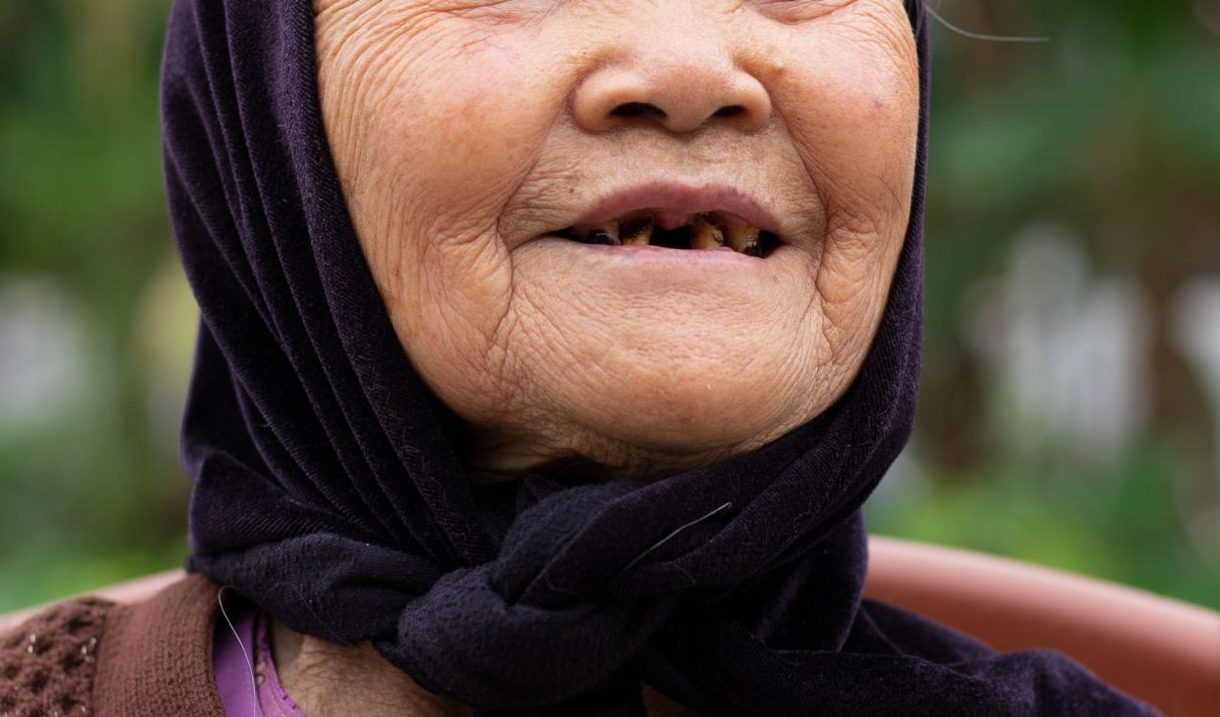
Four out of ten older adults in Tokyo experience oral frailty, a condition involving declining oral function that not only makes chewing and speaking more difficult but also gradually erodes their happiness and life satisfaction. This surprising finding comes from a study published in the Journal of Prosthodontic Research in May 2026, involving 849 older adults living in Itabashi District, Northwestern Tokyo, Japan. Behind this international research collaboration is a researcher from Yogyakarta: Dr. Agatha Ravi Vidiasratri, DDS, MPH, a lecturer from the Department of Preventive and Community Dentistry at the Faculty of Dentistry, Universitas Gadjah Mada (UGM). She served as one of the lead authors of the study alongside researchers from Hokkaido University and the Tokyo Metropolitan Institute for Geriatrics and Gerontology.
The study explored a seemingly simple yet rarely investigated question: how can declining oral health eventually lead to a life that feels less fulfilling?
Oral Frailty: More Than Just a Dental Problem
Oral frailty refers to a decline in oral function across multiple aspects. It is not merely about losing teeth, but also includes difficulty chewing hard foods, frequent choking while drinking, bothersome dry mouth, and unclear speech. In this study, individuals were classified as having oral frailty if they met at least two of these five criteria.
The findings were striking. Among the 849 participants with an average age of 75.8 years, 40.2% were identified as experiencing oral frailty. This percentage was considerably higher than other physical conditions measured in the same study: physical frailty was found in only 6.5% of participants, while cognitive impairment was identified in 5.4%.
Older adults experiencing oral frailty tended to have lower well-being scores, both on the Philadelphia Geriatric Center Morale Scale (PGCMS), which measures life satisfaction and morale, and the Cantril Self-Anchoring Striving Scale (CSASS), which assesses overall life satisfaction. The average PGCMS score among individuals with oral frailty was 6.9 out of 11, compared with 8.4 among those without the condition.
Three Hidden Pathways Leading to Unhappiness
What makes this study particularly significant is not only its discovery of the relationship between oral health and happiness but also its exploration of the mechanisms connecting the two. The research team used Generalized Structural Equation Modeling (GSEM), a statistical method capable of mapping indirect pathways between conditions and their consequences.
Three statistically significant pathways were identified.
First, the nutritional pathway. Older adults with oral frailty often experience difficulty chewing fibrous and hard foods such as meat and fresh vegetables. As a result, they tend to shift toward softer foods that are frequently less nutritious. This increases the risk of malnutrition, which was statistically associated with reduced life satisfaction and morale.
Second, the depression pathway. This was the strongest pathway identified in the study. Symptoms of depression consistently mediated the relationship between oral frailty and lower well-being, both in PGCMS and CSASS measurements. Older adults who experience extensive tooth loss or dysphagia (difficulty swallowing) may feel embarrassed, lose independence, and eventually experience psychological distress that negatively affects their quality of life.
Third, the social isolation pathway. Poor oral function may discourage individuals from eating together with others, engaging in conversations, or even smiling in public. This gradual withdrawal from social interactions can eventually diminish their satisfaction with life.
“These findings support the view that oral health plays an important role in self-perception and overall quality of life,”
the research team stated in the study’s conclusion, emphasizing that the mouth is not an isolated organ but rather an entry point to a much broader health system.
Why This Matters for Indonesia
Although Japan served as the location of this study, where 29.1% of the population is aged 65 years and older, its implications for Indonesia cannot be overlooked. The Indonesian Statistics Agency (BPS) projects that the number of older adults in Indonesia will continue to increase over the next two decades, while access to dental healthcare services, particularly in rural and remote areas, remains limited.
This study provides strong evidence that oral frailty screening should be integrated into routine healthcare services for older adults—not only as part of dental care but also as a component of comprehensive health assessments. With early detection, nutritional interventions and social support can be provided sooner, before the cycle between poor oral function, malnutrition, depression, and social isolation becomes more difficult to break.
The research also serves as a reminder that oral health is not a luxury. For older adults, the ability to chew a piece of meat or clearly pronounce a grandchild’s name can represent the difference between a life that feels meaningful and one that feels empty.
Authors: Achmad Zam Zam Aghasy, DDS, M.Kes.; Hazra Alifia Muharam
Photo: Pexels
Source DOI: https://doi.org/10.2186/jpr.JPR_D_25_00248