
Finishing orthodontic treatment does not mean the struggle is over. For millions of orthodontic patients worldwide, a silent threat emerges as soon as braces are removed: teeth gradually begin shifting back towards their original positions. This phenomenon is known as orthodontic relapse, and it has long been one of the most frustrating challenges in dental treatment.
A study involving researchers from the Faculty of Dentistry, Universitas Gadjah Mada, has explored a different solution—not conventional retainers, but a smart gel injected directly into the periodontal tissue.
The Old Enemy Called Relapse
After orthodontic appliances are removed, the periodontal ligaments that have been stretched for months begin to “demand” a return to their original position. Fibres embedded in the alveolar bone pull the teeth back towards where they were. At the same time, osteoclasts—the cells responsible for bone resorption—actively remodel the bone surrounding the tooth roots.
This process cannot be fully predicted. Some patients maintain stable tooth positions for years, while others experience relapse within weeks. This variability makes orthodontic relapse particularly difficult to manage clinically.
One approach that has long been investigated is the use of bisphosphonates, chemical compounds known to suppress osteoclast activity and slow bone resorption. The problem is that systemic administration of bisphosphonates—through injection or oral medication—carries the risk of side effects throughout the skeletal system rather than only in the targeted dental area.
This is where research by Prof. Dr. drg. Pinandi Sri Pudyani, SU., Sp.Ort(K.), and a multidisciplinary team becomes particularly relevant.
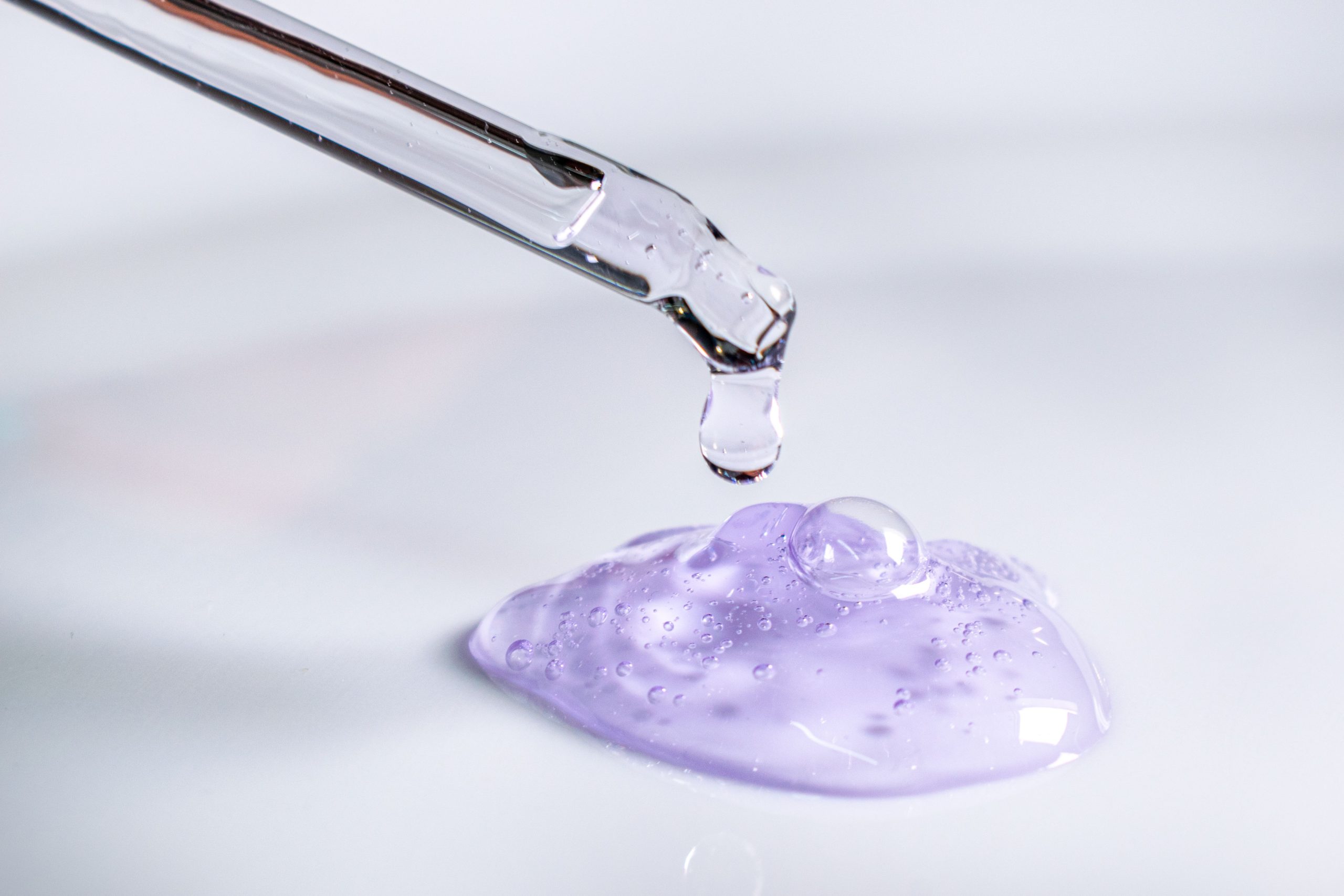
Gelatin Hydrogel as a Drug Delivery System
The research team, consisting of Tita Ratya Utari, Ika Dewi Ana, Prof. Dr. drg. Pinandi Sri Pudyani, SU., Sp.Ort(K.), and Widya Asmara, developed a gelatin hydrogel-based drug delivery system. The idea was simple yet clever: encapsulate risedronate—one of the third-generation bisphosphonates—within a porous gel matrix and inject it directly into the subperiosteal area on the mesial side of the tooth.
Gelatin was chosen for good reason. It is biocompatible, biodegradable, and capable of releasing drugs gradually according to therapeutic needs. In laboratory testing, the gelatin hydrogel was shown to slow the release of risedronate compared with the pure drug without a carrier. In the Bis-CR250 group (250 mmol/L), the release rate decreased from 19.9% to 15.7%. In the Bis-CR500 group (500 mmol/L), the reduction was more substantial, from 39.7% to 22.3%.
In other words, the gel does not release the entire drug dose at once. Instead, it releases the drug gradually and in a controlled manner precisely where it is needed.
Seventy-Five Guinea Pigs and a Significant Finding
To test its effectiveness in vivo, the researchers used 75 male guinea pigs weighing 500–600 grams. These animals were selected because of their physiological and immunological similarities to humans, as well as the relative ease of applying orthodontic appliances.
The guinea pigs' lower incisors were moved approximately 3 mm using a Ni-Ti open-coil spring and then stabilised for 14 days. After the stabilisation period, the appliances were removed and relapse was monitored. The treatment groups received risedronate hydrogel every three days through a 30-gauge needle inserted into the gingival sulcus area.
The results were clearly measurable. On days 14 and 21 after appliance removal, both treatment groups showed significantly less relapse movement than the control group (p < 0.05). More importantly, Bis-CR500 was more effective than Bis-CR250 in inhibiting relapse on day 21, demonstrating a consistent dose-response relationship.
TRAP (tartrate-resistant acid phosphatase) staining of the alveolar bone tissue further supported these findings. The number of active osteoclasts was significantly lower in the treatment groups than in the control group. These bone-resorbing cells were inhibited by risedronate released gradually from the gel matrix.
“Controlled release of bisphosphonate risedronate with a topically administered gelatin hydrogel has shown to be effective in decreasing the tooth relapse movement and osteoclast activity.” — Utari et al., Saudi Dental Journal, 2021
From the Laboratory to the Clinic
The study was published in Saudi Dental Journal in 2021 and supported by the Directorate General of Higher Education (DIKTI), Ministry of Education and Culture of the Republic of Indonesia. The study received ethical approval from the Biomedical Research Ethics Committee of the Faculty of Dentistry, Universitas Gadjah Mada, under clearance number 355/KKEP/FKG-UGM/EC/2012.
These findings open the door to a new approach to post-orthodontic retention. Currently, patients rely on removable or fixed retainers, whose effectiveness depends heavily on patient compliance. If this risedronate hydrogel can eventually be developed for clinical use in humans, it could offer something different: controlled local effects without the concern of the drug spreading throughout the skeletal system.
Of course, the journey from the laboratory bench to the dental chair is still a long one. Human clinical trials have not yet been conducted, and questions concerning the long-term safety of bisphosphonate use in the oral cavity remain unanswered. Nevertheless, for millions of patients who have spent years undergoing orthodontic treatment, these findings offer at least a glimmer of hope: perhaps one day, a small injection could help preserve the results of all that hard work.
Source DOI: https://doi.org/10.1016/j.sdentj.2020.03.003
Authors: Nanda Ayu, drg. Achmad Zam Zam Aghasy, M.Kes.
Photo: Pexels