
For years, the transition from undergraduate dental education to professional training has hinged on a single final gateway: the entry examination. After spending three and a half to four years, or even longer, completing their undergraduate education, not a few dental students have found themselves unable to move on to professional training because they could not pass the examination. Years of time, effort, and financial investment can ultimately lead to the painful realization that an undergraduate degree does not necessarily guarantee a pathway to becoming a dentist.
This situation has prompted a turning point for the Faculty of Dentistry, Universitas Gadjah Mada (FKG UGM). The faculty is now designing a transformation of its academic assessment system through a longitudinal assessment model—an approach that no longer treats assessment as a “verdict” delivered at the end of education, but rather as an ongoing process of developing competencies from the moment students enter their first year.
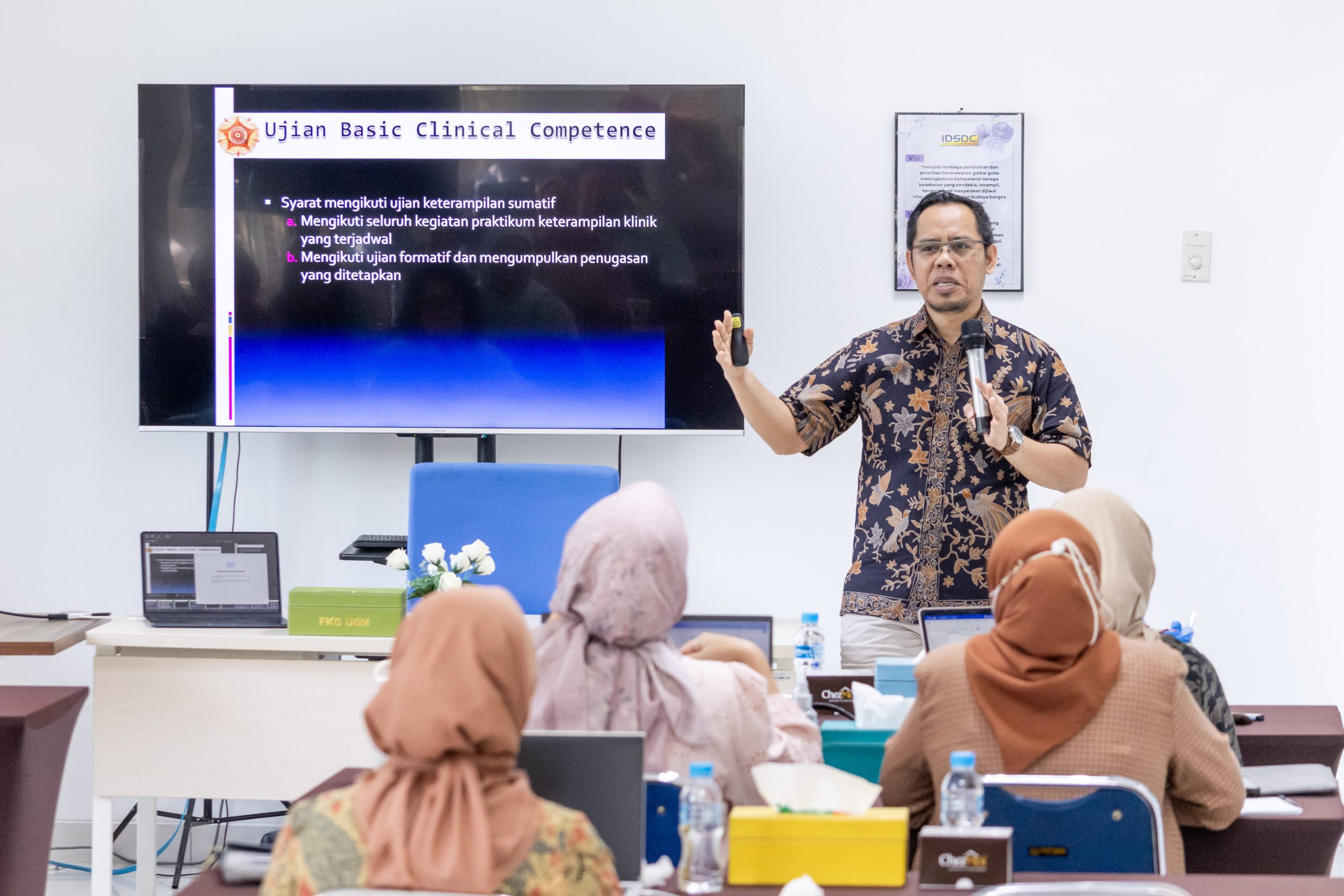
The change is not simply about replacing one type of examination with another. It represents a broader shift in the philosophy of dental education, from a culture focused on passing examinations to one centered on building competencies continuously. Dr. Yoyo Suhoyo, M.Med.Ed., Ph.D., from FKKMK UGM, shared this new academic paradigm with FKG UGM.
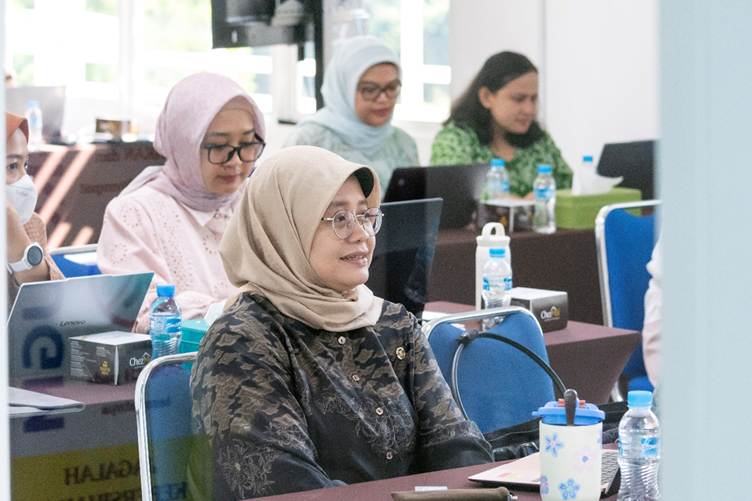
“We hope that students who graduate from the undergraduate program will automatically have achieved the basic clinical competencies required to enter professional education. Their future should no longer depend on a single entry exam,” said Vice Dean for Academic and Student Affairs of FKG UGM, Prof. drg. Rosa Amalia, M.Kes., Ph.D., during a forum discussing the reform of the assessment system.
This perspective emerged from a lengthy evaluation of the entry examination. Under the current system, students who fail are given up to four opportunities to retake the examination within a one-year period. Yet some still fail to meet the required standards, forcing them to abandon their goal of becoming dentists.
“We have identified a recurring pattern. Students who ultimately fail the entry examination had often already demonstrated poor academic performance during their undergraduate years. In other words, the problem does not suddenly appear at the end—it simply was not detected early enough,” the speaker explained.
This phenomenon has raised questions about the existing evaluation system. Four years of undergraduate education should be sufficient to identify early on who needs academic support, who requires remediation, and even who may be better suited to pursue another field before investing years of additional time.
Under the proposed system, students will pass through a series of competency milestones each year. Those who meet the required targets will receive competency certificates for each phase. Students who encounter difficulties, meanwhile, will no longer have to wait until the end of their studies to discover that they have failed. Instead, they will receive timely academic interventions through mentoring, remediation, or further evaluation.
The approach also shifts the role of examinations from simply serving as selection tools to becoming instruments for learning.
Maintaining Competency without Sacrificing Student Well-Being
The assessment transformation also stems from criticism of an educational culture in which medical and dental students have traditionally been subjected to endless examinations.
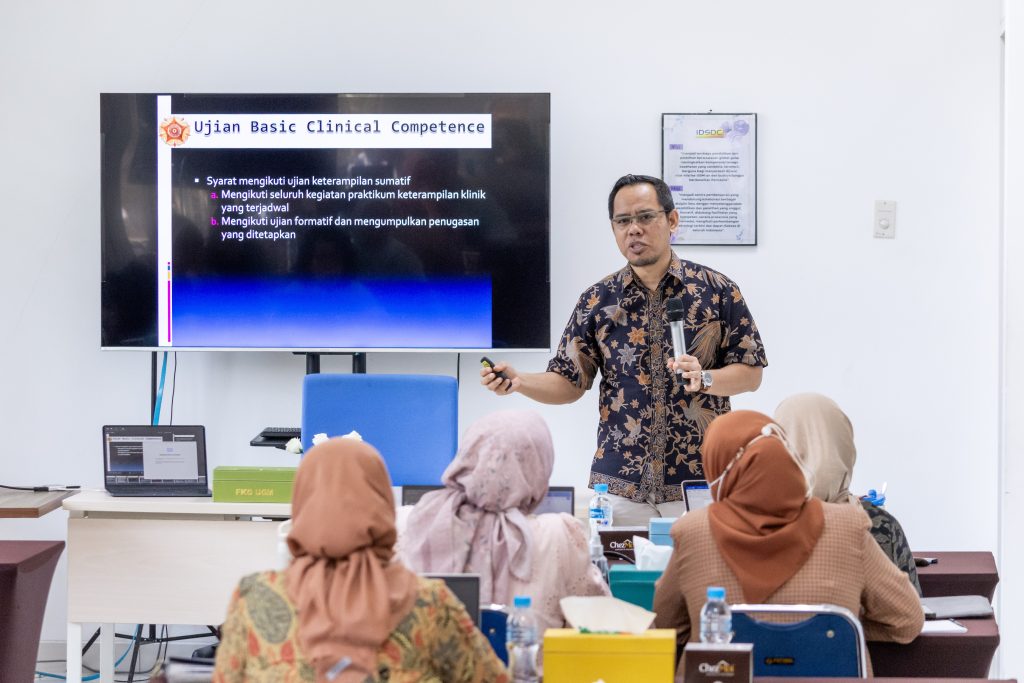
During the discussion, assessment specialist Dr. Yoyo from FKKMK UGM described how the old system often required students to deal with practical examinations, pre-tests, inhal sessions, assignments, and block examinations all at once.
“What we found was that students would already lose focus during morning lectures or tutorials because their minds were occupied with the practical examination scheduled for that afternoon. Situations like this can actually undermine the learning process,” he said.
For this reason, FKKMK UGM is reorganizing the academic calendar so that all assessments are integrated into a clearly defined schedule. No more unexpected examinations will disrupt students’ concentration during block-based learning.
According to Dr. Yoyo, the purpose is not to make things easier for students, but to ensure that their energy is genuinely spent understanding the material rather than simply surviving a succession of examinations.
“We want to protect student well-being. Students need space to learn, develop themselves, and even have personal time. Medical education is demanding, but that does not mean students should have to live under pressure every day,” he said.
The statement reflects an important shift in the philosophy of modern medical education. Competency is no longer built through academic pressure alone, but through a healthy and structured learning environment.
Clearly Separating Knowledge from Practical Skills
Another change concerns the substance of assessment itself. Until now, various laboratory skills have often been tested through theoretical questions. Under the new model, practical competencies will be assessed separately through the Objective Structured Clinical Examination (OSCE).
Skills such as using a microscope, performing laboratory examinations, interpreting radiographs, and carrying out basic clinical procedures will be assessed as practical skills rather than simply through memorization of theoretical concepts.
“If something is considered a skill under the competency standards for dentists, then it should be tested in the clinical skills lab. The theoretical examination should only assess the student’s understanding of the underlying concepts,” Dr. Yoyo explained.
This model is considered more reflective of real-world practice because students are assessed not only on whether they understand a concept, but also on whether they can apply it directly.
Technology as the Backbone of Assessment
The transformation of assessment does not stop at curriculum reform.
FKKMK UGM is also developing a digital ecosystem that integrates question banks, computer-based testing, student portfolios, feedback systems, and longitudinal grade management.
According to Dr. Yoyo, digitalization is essential for ensuring that longitudinal assessment can be implemented objectively.
“In the past, assessment teams had to chase lecturers to collect questions. Now, each department has its own question bank, while the study program manages the overall system, allowing the quality of the questions to be monitored and evaluated continuously.”
Through this system, lecturers will not simply assign grades. They will also receive analyses of question quality, difficulty levels, and learning effectiveness. Assessment, therefore, becomes more than a tool for evaluating students—it also serves as an instrument for evaluating lecturers and the curriculum itself.
Responding to National Regulatory Challenges
While internal reforms are underway, dental and medical education is also facing external challenges.
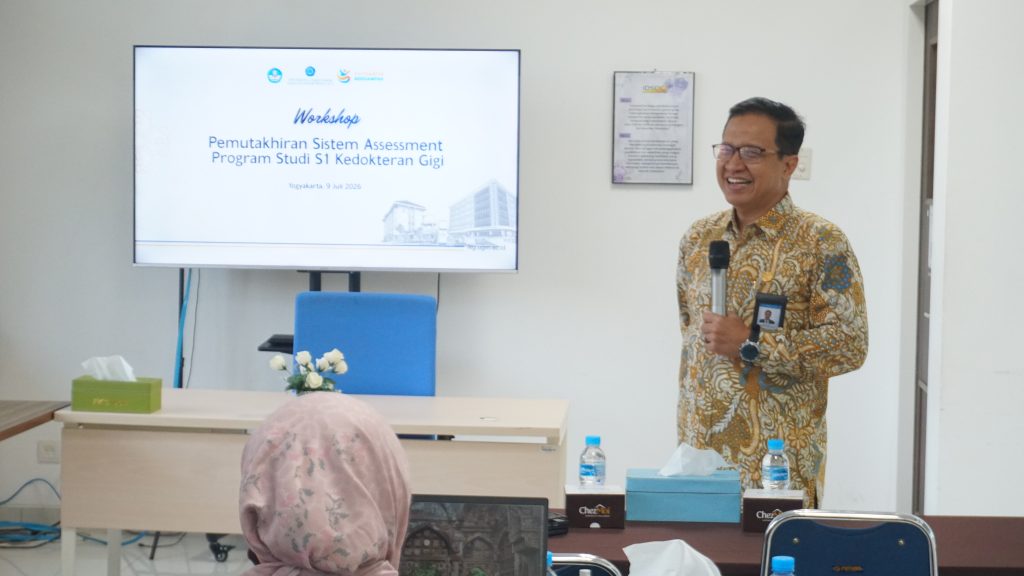
In his remarks, the Dean of FKG UGM emphasized that changes in national regulations governing medical education, teaching hospitals, and human resource management require higher education institutions to become increasingly adaptable.
He noted that curriculum quality and assessment systems are essential foundations for institutions seeking to maintain educational standards amid continuously evolving policies.
“We have to think about how the institution can remain sustainable. Quality assurance has already become part of our culture, but the challenge now is ensuring that our educational strategies remain relevant as regulations continue to change,” he said.
The statement underscores that assessment reform is not merely an academic necessity, but also part of a broader strategy to maintain the competitiveness of Indonesian medical and dental education.
Building Dentists Who Are Ready, Not Merely Graduated
FKG UGM’s proposed assessment reform carries an important message: the quality of graduates cannot be safeguarded through a single high-stakes examination at the finish line.
Clinical competence is built through a long, consistent, and measurable process that begins on the first day students enter university. With continuous assessment, students have opportunities to improve, lecturers have a stronger basis for providing guidance, and institutions can ensure that every graduate is genuinely prepared to enter professional practice.
(Reporter: Andri Wicaksono, Fotografer: Fajar Budi Harsakti & Andri Wicaksono)