
In today’s digital era that demands efficiency and transparency, academic administration processes often still encounter slow and complicated procedures. Researchers frequently face technical obstacles when managing important documents that should ideally be processed more quickly and easily.
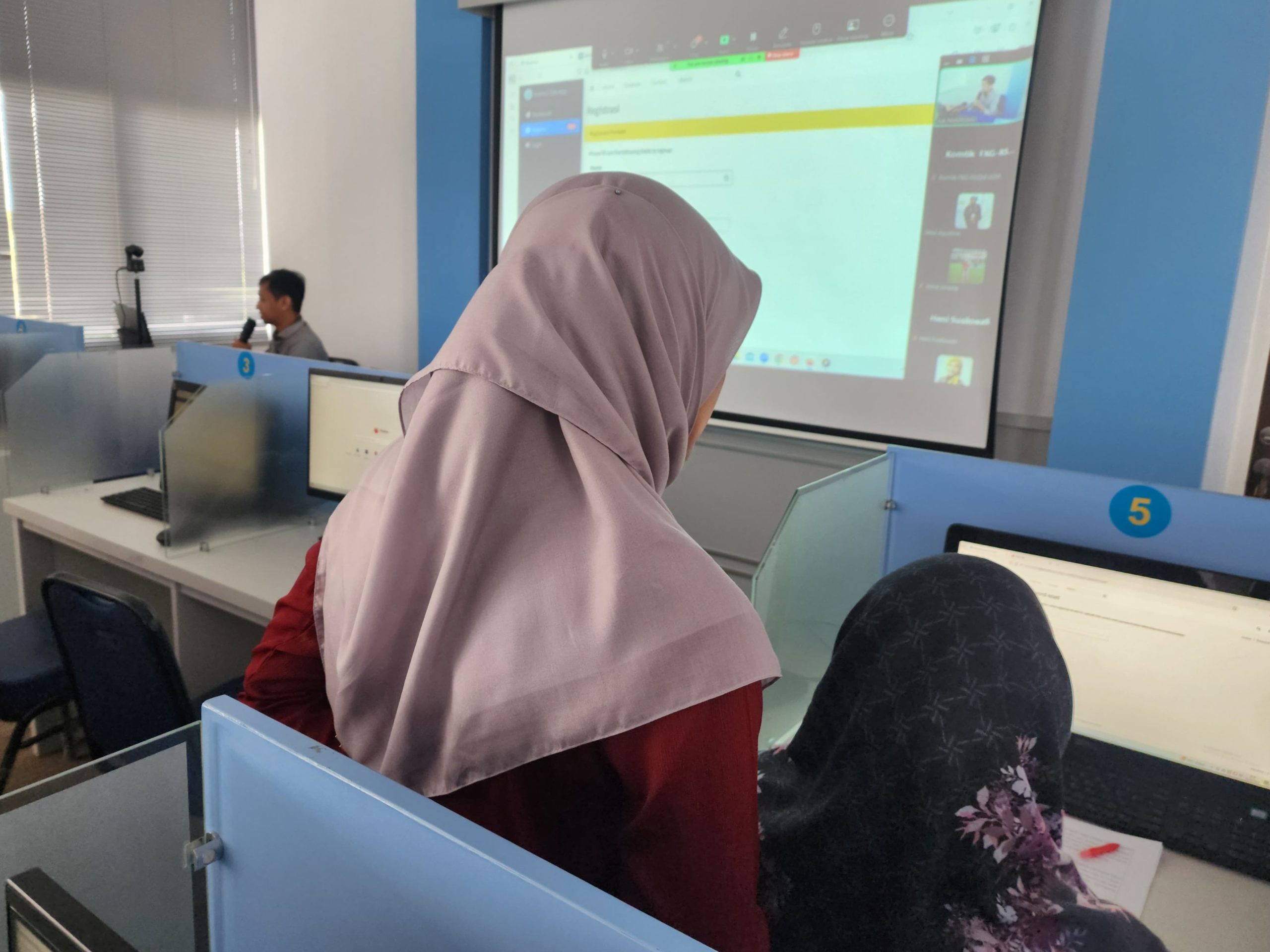
To address this challenge, the UGM Faculty of Dentistry (FKG UGM) has launched a new system designed to streamline the approval process for ethical clearancedocuments. The system was introduced during the Socialization and Tutorial of the Research Ethics Committee Information System held on 12 June 2025. Ethical clearance is an official approval confirming that a research project complies with ethical principles, particularly regarding the protection of research subjects—humans, animals, and the environment. Researchers must obtain this document before beginning data collection, especially when involving human participants.
According to drg. Ryna Dwi Yanuaryska, Ph.D., Chair of the Research Ethics Committee at FKG UGM, the new system was developed to resolve challenges in managing ethical clearance documents, which were previously submitted via email. “Previously, applications were sent by email and had to be distributed manually by the admin to the chair, secretary, and reviewers. This process was time-consuming and placed a heavy workload on the admin,” she explained.
The Research Ethics Committee is responsible for managing and issuing ethical clearance as an approval mechanism for research proposals. ethical clearance is an important document stating that a study has fulfilled ethical principles, especially in terms of protecting research subjects.
With this new web-based information system, the submission process becomes faster and more efficient. Researchers can upload requirements and monitor their applications directly, while reviewers can provide feedback digitally in real time. "platform makes things easier for everyone. Researchers and reviewers can communicate directly within the system without waiting for manual distribution,” Ryna added.
Dyah Kusumo Jati, a staff member of the Research Ethics Committee, also shared her experience before the system was introduced. “Previously, researchers sent all documents by email, which then had to be forwarded one by one to reviewers, the chair, and the secretary. Now, the process can be done directly through the website komisietik.sidenta.id, and the results are much faster,” Jati said.
The system went through four trial phases, during which the Research Ethics Committee actively invited both researchers and reviewers to provide feedback at every stage of development. The result is a platform that is not only functional but also adaptive to user needs.
Author and Photographer: Fajar Budi Harsakti

