
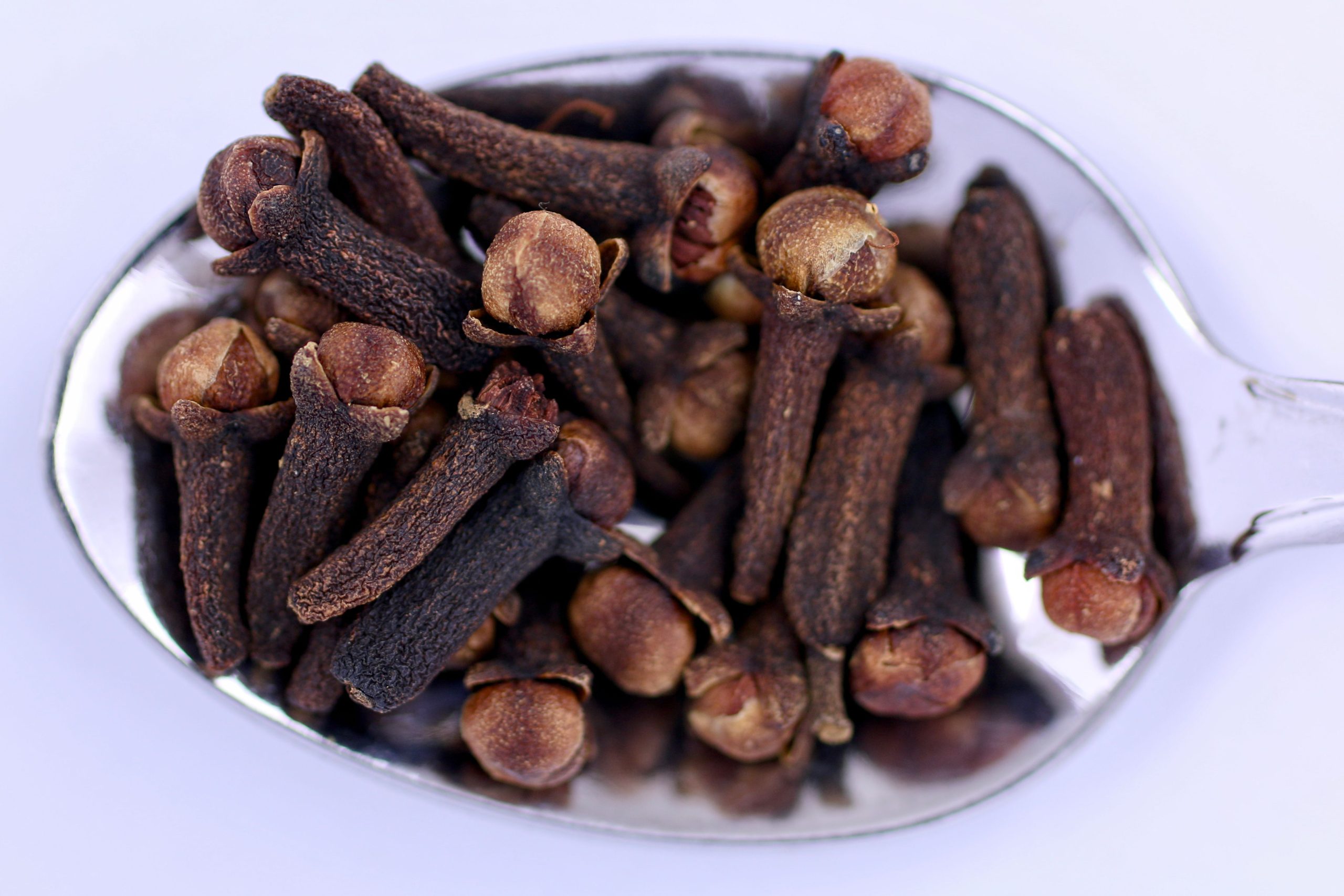
Imagine a tooth that has been drilled until the pulp is reached—the innermost living tissue filled with nerves and blood vessels. No cooling, no protective barrier. Under these conditions, the body begins sending in its defensive “troops”: neutrophils, macrophages, and lymphocytes. In excessive numbers, however, these three types of cells can actually worsen tissue damage. The question then becomes simple yet crucial: can eugenol, the active compound in clove oil that has long been used by dentists, really slow down this inflammatory response?
A study published in the Indonesian Dentistry Magazine (Vol. 2 No. 2, August 2016) provides a fairly convincing answer based on experimental data.
From Cloves to the Cavity: A Long History That Is Not Yet Over
Eugenol is not a newcomer. This compound, chemically known as 4-allyl-2-methoxyphenol, has long been used in dental practice because of its analgesic and anti-inflammatory properties. The Indonesian Ministry of Health has even recommended its use as an initial treatment for patients with irreversible pulpitis: the cavity is cleaned and dried, then cotton soaked in eugenol is placed before the patient is referred to a dental specialist for root canal treatment.
However, this recommendation has largely been based on clinical experience and empirical evidence. The research conducted by Prof. drg. Tetiana Haniastuti, M.Kes., Ph.D., together with a team from the Department of Oral Biology and Department of Conservative Dentistry, FKG UGM, sought to strengthen its scientific foundation by directly observing what occurs at the cellular level in inflamed pulp tissue.
Before eugenol became widely used, the “devitalization” of inflamed dental nerves was performed using arsenic trioxide. Its use was first documented in 1492. The problem is that arsenic trioxide is toxic: if it leaks from the cavity, it can cause necrosis of the gingiva and bone, as well as osteomyelitis of the jaw. Clearly, it is not a safe long-term option.
Thirty Rats, Fifteen Days, One Big Question
The research team used 30 male Sprague Dawley rats aged 3–4 months and weighing 300–350 grams. All rats underwent the same procedure: the maxillary first molar was prepared using a No. 010 round bur until the pulp was reached. From there, the treatment paths diverged. The treatment group (15 rats) received eugenol at the base of the cavity, while the control group (15 rats) received only distilled water before the cavities were temporarily restored.
Three rats from each group were sacrificed on days 1, 3, 5, 7, and 14 after treatment. The pulp tissue was collected, processed histologically, and stained with hematoxylin and eosin. Under a microscope, the researchers counted three types of inflammatory cells: neutrophils, macrophages, and lymphocytes.
The results spoke for themselves. On the first day, neutrophils dominated both groups, as would be expected: these cells are the “first responders” to arrive at an injury site within the first 24–36 hours. However, in the eugenol-treated group, their numbers were consistently lower than in the control group. This difference was statistically significant on days 1, 3, and 5 (p < 0.05).
A similar pattern was observed with macrophages. These cells reached their peak on day 5, consistent with the known biological sequence: monocytes from the bloodstream migrate into tissue and differentiate into macrophages 48–96 hours after injury. Interestingly, in the eugenol group, macrophage numbers were lower at every observation point, from day 1 through day 14.
“The administration of eugenol can reduce the number of inflammatory cells (neutrophils, macrophages, and lymphocytes) in the dental pulp of inflamed Sprague Dawley rats.” — Conclusion of the study by Raras Ajeng Enggardipta, Prof. drg. Tetiana Haniastuti, M.Kes., Ph.D., and Juni Handajani, FKG UGM
The Mechanism Behind the Numbers
Why can eugenol suppress the number of inflammatory cells? The answer lies at the molecular level. Eugenol is known to inhibit the production of pro-inflammatory cytokines, particularly IL-1 and TNF-α, two compounds that play major roles in opening the “gate” for leukocytes to enter tissues. By inhibiting these two cytokines, vasodilation is reduced, capillary wall permeability decreases, and ultimately fewer inflammatory cells migrate to the site of injury.
In addition, eugenol also inhibits IFN-γ, an interferon involved in promoting the differentiation of monocytes into macrophages. In other words, eugenol not only reduces the number of “soldiers” arriving at the site, but also slows the process of “recruiting” new troops.
By day 14, histological examination of the treatment group showed almost no inflammatory cells remaining in the area beneath the cavity. The control group still showed a small amount of infiltration. This was not merely a difference in statistical figures; it was a visible difference under the microscope.
Not the End, but a Starting Point
This study, of course, has limitations. Animal models, as should always be emphasized, do not necessarily replicate clinical conditions in humans exactly. The researchers themselves recommended further studies to directly measure IL-1 and TNF-α levels, while also determining the optimal dose of eugenol as an anti-inflammatory agent for dental pulp.
What is clear is that eugenol is not simply a “traditional remedy” that has persisted out of habit. There is a solid scientific mechanism underlying its effectiveness. A deeper understanding of how it works at the cellular level could pave the way for the development of more precise, safer, and more effective medicaments for treating pulpitis. This is particularly relevant in countries where access to specialist dental care remains limited and such conditions often need to be managed first at the frontline of primary healthcare.
Source DOI: http://dx.doi.org/10.22146/majkedgiind.8730
Authors: Anny Anggraini; drg. Achmad Zam Zam Aghasy, M.Kes.
Photo: Pexels