
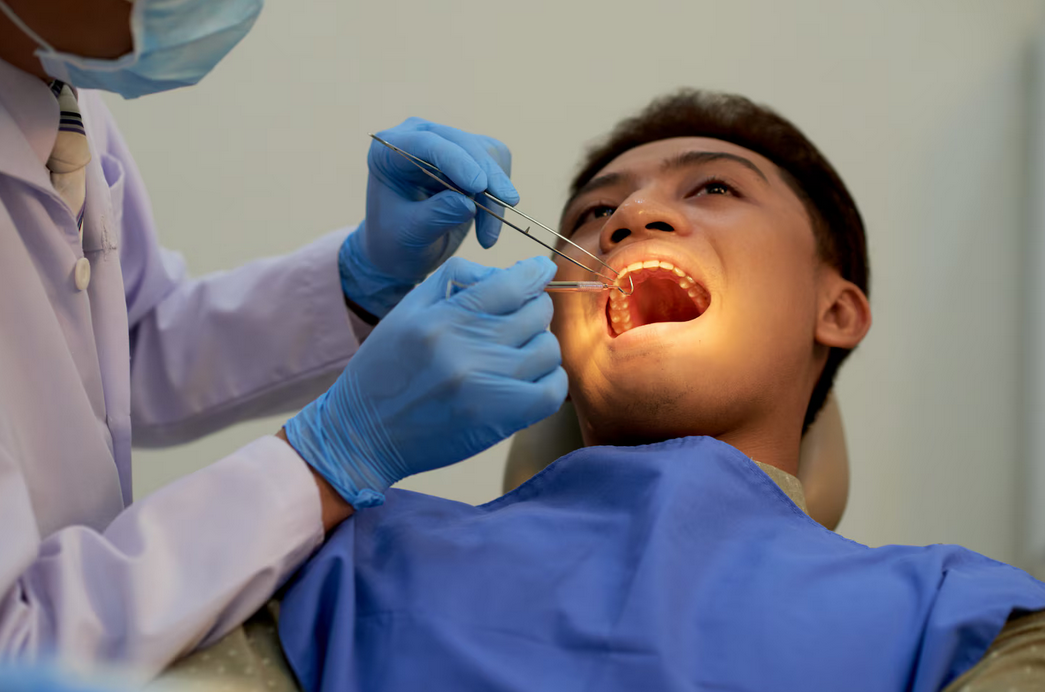
Aggressive periodontitis is a form of periodontal disease characterized by rapid destruction of the supporting tissues of the teeth, often affecting younger individuals, and frequently associated with highly virulent pathogenic bacteria and an exaggerated host response. The primary treatment typically involves Scaling and Root Planing (SRP) as a mechanical debridement procedure to remove bacterial deposits and toxins from root surfaces. However, despite its effectiveness, SRP has limitations in aggressive cases or in sites with extreme pocket depth, where access is restricted and residual bacteria may remain.
Therefore, many studies and clinical practices have considered the use of adjunctive therapies—such as laser therapy (diode, Nd:YAG, Er:YAG, or low-level lasers)—to complement SRP. The goal is to enhance biofilm destruction, reduce microbial load, and accelerate tissue healing.
This article reviews the effectiveness of SRP combined with adjunctive laser therapy for aggressive periodontitis, drawing parallels with clinical and experimental studies involving SRP plus adjunctive agents such as antibiotics (including the referenced study), and discussing potential benefits and limitations.
Theoretical Basis: Why Add Laser Therapy to SRP
Several reasons support the use of laser therapy as an adjunct to SRP:
- Bacterial Penetration into Cementum Tubules
Certain periodontal bacteria can penetrate deeply into cementum tubules or areas inaccessible to mechanical instruments. Lasers with specific wavelengths can penetrate these areas and aid in bacterial destruction. - Antimicrobial and Local Disinfection Effects
Lasers, particularly certain classes, provide photothermal or photodisinfection effects that inactivate bacteria and reduce residual microbial populations. - Tissue Modulation and Promotion of Healing
Laser therapy can stimulate fibroblast activity, angiogenesis, and biological responses that support tissue regeneration through photobiomodulation mechanisms. - Reduction of Inflammation
Laser therapy may reduce local inflammatory mediators and accelerate inflammation resolution, contributing to tissue stabilization.
However, the actual effectiveness of laser therapy as an adjunct to SRP depends on the protocol used (laser type, power, duration, frequency), pocket depth, tissue type, and patient compliance.
Lessons from SRP Plus Adjunctive Agent Studies: Ciprofloxacin Study
A study conducted by an FKG UGM student, Ika Andriani, under the supervision of Prof. Dr. drg. H. Sudibyo, SU., Sp.Perio(K), entitled “Efektivitas Antara Scaling Root Planing (SRP) Dengan Dan Tanpa Pemberian Ciprofloxacin Per Oral Pada Penderita Periodontitis Ditinjau dari Hitung Jenis Leukosit pada cairan sulkus Gingiva”, provides empirical data on the effects of systemic antibiotic administration as an adjunct to SRP.
Key points from the study include:
- Subjects: 20 cases of chronic periodontitis with pocket depths > 5 mm, divided into two groups—SRP alone and SRP plus oral ciprofloxacin.
- Parameters measured: Differential leukocyte counts (neutrophils, lymphocytes, eosinophils, basophils, monocytes) in gingival sulcus fluid, measured before SRP and on day 8 post-treatment.
- Results:
– No significant differences were observed between the SRP-only group and the SRP plus ciprofloxacin group for neutrophils, lymphocytes, and eosinophils (p > 0.05).
– Neutrophil counts increased in both groups, while lymphocyte and eosinophil counts decreased in both groups.
– Basophils and monocytes were not detected (zero values) and therefore were not statistically analyzed. - Conclusion: SRP without ciprofloxacin was as effective as SRP with ciprofloxacin in terms of changes in leukocyte profiles in gingival sulcus fluid.
This study suggests that adding systemic antimicrobial agents does not always confer significant short-term advantages in local inflammatory parameters.
In the context of adjunctive laser therapy, the analogy is that although additional interventions (antibiotics or lasers) are intended to enhance SRP effects, their benefits may be situational—depending on pocket conditions, microbial burden, and host response.
Effectiveness of SRP Plus Laser Therapy in Aggressive Periodontitis: Evidence and Challenges
Several modern clinical studies have evaluated SRP combined with laser therapy compared to SRP alone, particularly in periodontitis cases with deep pockets or limited access:
- A recent clinical trial demonstrated that SRP combined with Nd:YAG laser application and air polishing resulted in greater reductions in pocket depth and improved clinical attachment levels (CAL) in deep pockets (≥ 7 mm) compared to SRP alone. PubMed
- In general, lasers provide additional benefits particularly in areas that are difficult to access with mechanical instruments.
However, study results are not consistently uniform, as outcomes depend on variables such as laser type, application protocol, and patient characteristics.
Potential Benefits in Aggressive Periodontitis
Aggressive periodontitis presents additional challenges, including:
- Extremely high and virulent bacterial loads
- Deeper bacterial invasion into tissues
- An aggressive and destructive immune response
- Rapid progression of tissue destruction
In such conditions, combining SRP with laser therapy may offer the following benefits:
- Improved access to residual bacterial niches
Laser therapy can help eliminate bacteria hidden within microstructures (cementum tubules, complex root anatomy) beyond the reach of instruments. - Reduction of residual bacterial and biofilm activity
Local disinfection effects may suppress early bacterial recolonization after SRP. - Modulation of tissue response
Photobiomodulation effects may reduce local inflammatory mediators and promote faster healing. - Improved long-term stability
By reducing residual bacteria and accelerating tissue healing, combination therapy may help maintain SRP outcomes over time.
Challenges and Critical Considerations
- Heterogeneity of laser protocols: Different laser types (diode, Nd:YAG, Er:YAG, etc.) use varying power settings, application times, and wavelengths, which influence outcomes.
- Risk of overheating and tissue damage: Inappropriate laser parameters may cause thermal damage to root surfaces or surrounding soft tissues.
- Cost and operator skill: Laser therapy requires specialized equipment and training, which may not be accessible in all clinical settings.
- Limited evidence in aggressive periodontitis: Many studies focus on chronic periodontitis or deep pockets, while specific research on aggressive periodontitis remains limited.
- Need for biological and regenerative parameter evaluation: In addition to clinical parameters (PD, CAL), biological indicators such as sulcus leukocytes, inflammatory mediators, and regenerative biomarkers should be assessed.
Practical Recommendations and Future Clinical Study Design
To determine the true effectiveness of SRP plus laser therapy in aggressive periodontitis, the following considerations are recommended:
- Aggressive-periodontitis–specific RCT design
– Control group: SRP alone
– Intervention group: SRP plus laser (clearly defined type and protocol)
– Evaluation parameters: clinical (PD, CAL, BOP), radiographic, and biological markers. - Standardization of laser parameters
– Selection of optimal laser type and parameters (power, duration, application distance) based on literature.
– Thermal safety testing to prevent tissue damage. - Medium- to long-term evaluation
– Follow-up at 1, 3, 6, and 12 months to assess sustainability of effects. - Subgroup analysis
– Moderate vs deep pockets
– Patient-related predictive factors (e.g., smoking, plaque control, comorbidities) - Monitoring of biological parameters
– Differential leukocyte counts, inflammatory biomarkers (IL-1β, TNF-α), and regenerative mediators (EGF, VEGF), among others. - Cost–benefit considerations
– Evaluation of whether clinical benefits justify the additional cost and complexity of laser therapy.
***
SRP remains the foundational and highly effective therapy in periodontal management, with evidence demonstrating reductions in inflammatory burden both clinically and immunologically (e.g., leukocyte counts). Studies involving ciprofloxacin show that adjunctive interventions do not always yield significant short-term differences in local leukocyte parameters.
Adjunctive laser therapy has the potential to enhance SRP effectiveness in aggressive periodontitis, particularly in hard-to-access areas and deep pockets. However, its effectiveness depends heavily on laser type, application protocol, and clinical case characteristics.
To confirm the true benefit of SRP combined with laser therapy in aggressive periodontitis, structured clinical trials with standardized laser protocols, comprehensive clinical and biological analyses, and long-term evaluations are required.
References
Ika Andriani, Prof. Dr. drg. H. Sudibyo, SU., Sp.Perio(K), EFEKTIVITAS ANTARA SCALING ROOT PLANING (SRP) DENGAN DAN TANPA PEMBERIAN CIPROFLOXACIN PER ORAL PADA PENDERITA PERIODONTITIS Ditinjau dari Hitung Jenis Leukosit pada cairan sulkus Gingiva, https://etd.repository.ugm.ac.id/penelitian/detail/50832
Author: Rizky B. Hendrawan | Photo: Freepik

