
The government often states that Indonesia has sufficient numbers of doctors. However, this claim collapses when mapped against the distribution of dental specialists across the country. Outside major cities, hospitals still lack specialist doctors. Community health centers in border areas may remain vacant for months. The issue lies not in the number of doctors produced, but in distribution—and in the underlying medical education policies that were never fully designed to support regional healthcare infrastructure.
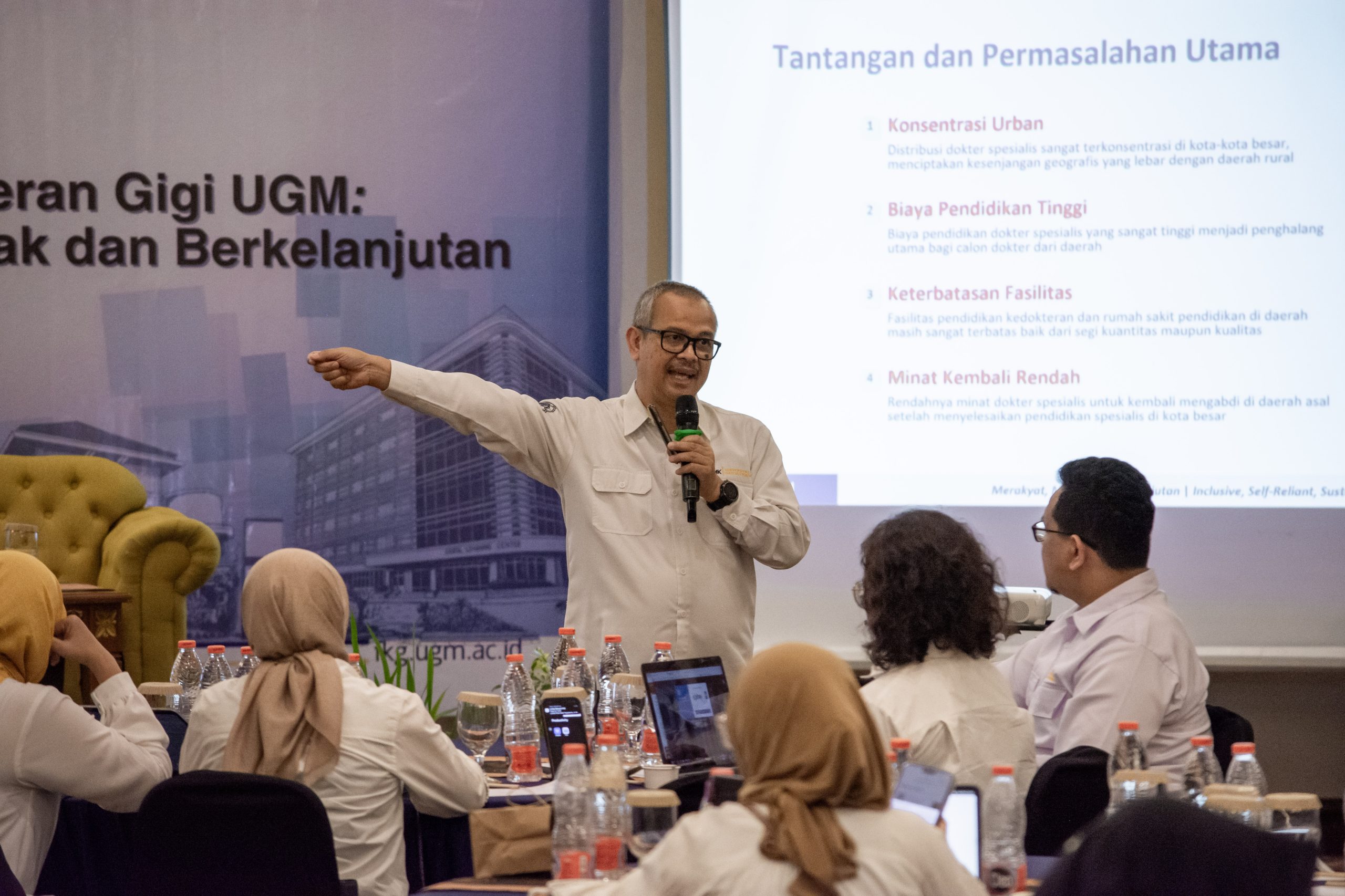
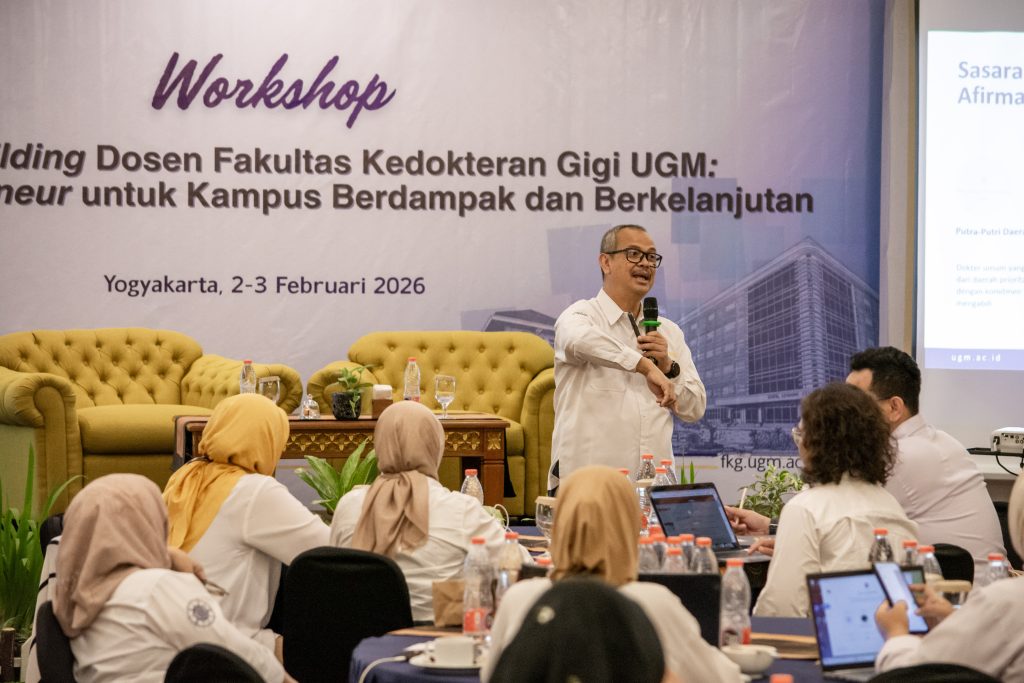
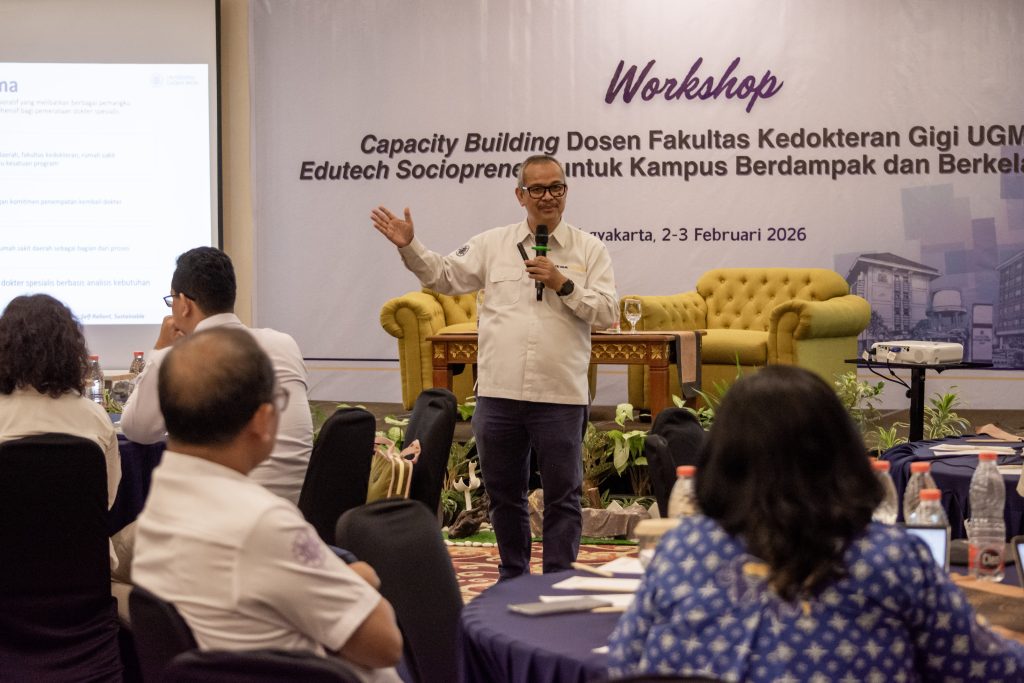
An academic forum hosted by the Faculty of Medicine, Public Health, and Nursing (FKKMK) and the Faculty of Dentistry (FKG) at Universitas Gadjah Mada reopened an old question: why do specialist graduates not return to their home regions, despite being educated with public funds?
Urban Appeal, Regions Left Behind..
Specialists concentrate around educational centers almost without exception. In Yogyakarta Special Region, hundreds of specialists are clustered in Yogyakarta City and Sleman, while surrounding districts may have only one or two. In Papua and Kalimantan, the situation is more extreme—specialized services such as surgery, anesthesia, and dental specialties are often entirely unavailable.
“The numbers exist, but they accumulate,” explained Dr. Sudadi, SpAn, KNA, KAR, anesthesiology consultant at FKKMK UGM. Of approximately 4,000 anesthesiologists in Indonesia, more than a quarter are based in Jakarta.
Doctors tend to remain near campuses because professional networks, facilities, and economic opportunities are concentrated there. The education system reinforces this flow—students study in cities, work in cities, and rarely return home.
Affirmative Education: Solution or Shortcut?
UGM has developed an affirmative specialist education program providing special pathways for doctors from underserved regions. Local governments fund their education, the university offers academic reinforcement, and participants sign service agreements to return.
On paper, the scheme is promising. In practice, challenges arise.
First, dependence on local political cycles. Some participants nearly dropped out when regional leadership changed and funding stopped.
Second, academic adaptation. Affirmative participants must still pass national selection standards. Faculty members admit that additional mentoring is often required for doctors who previously worked in regions with limited access to updated knowledge.
Resident Deployment: Regulatory Loophole or Innovation?
A controversial measure involves deploying self-funded residents to regional hospitals lacking permanent specialists. With national practice permits and remote supervision, residents provide services while continuing training.
For regions, it is a quick solution. For universities, it expands partnerships. But it raises a question: is the state normalizing specialist services without fully qualified specialists?
Program administrators argue it is a temporary transition until local doctors complete their training. Yet without strict oversight, it risks becoming a permanent substitute solution.
Downstreaming of Tridharma and the Public Money Trail
Another emerging issue is the downstreaming of the Tri Dharma of Higher Education. Community service is now directed towards a multi-disciplinary model, involving the government, hospitals, and the private sector. For example, hypothermia management training in the Dieng tourist area involved the health and tourism offices.
But behind the narrative of usefulness, crucial questions arise: who funds it, and who benefits most? Community service is academically valid because it produces publications and policy briefs, but it remains dependent on consistent budgeting and regional commitment.
Regulation and Accountability
Educational regulations for specialist programs have become more flexible. Faculty-student ratios can be supported by networks, prior learning recognition (RPL) allows program establishment before full faculty staffing, and affirmative pathways can operate outside regular quotas.
Flexibility accelerates expansion—but also increases risks. Educational quality depends more heavily on supervision rather than strict initial requirements.
Are Regions Becoming Policy Laboratories?
Affirmative education and resident deployment respond to real crises. Yet without durable policy design resilient to political change, regions risk becoming experimental laboratories rather than the ultimate beneficiaries of equitable healthcare development.
Does the state truly aim to build a fair healthcare system, or merely to fill gaps with temporary solutions that appear successful on paper?
Reporter: Andri Wicaksono, Photographer: Fajar Budi Harsakti

