
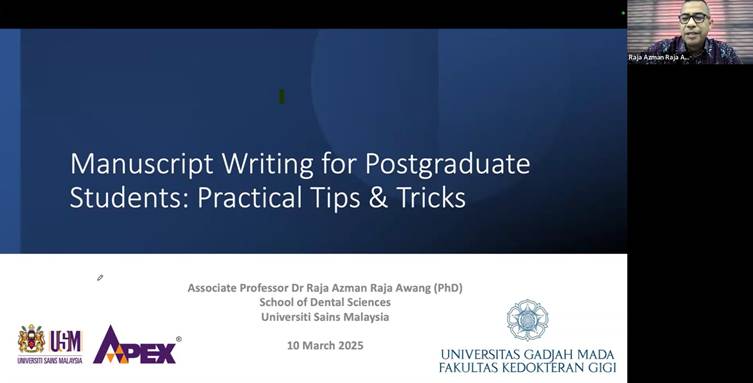
An expert lecture in Periodontics at FKG UGM, featuring Dr. Raja Azman Raja Awang, Ph.D. from Universiti Sains Malaysia, reaffirmed the importance of scientific publication as a bridge between research and its real-world impact. He emphasized that research is not truly complete until it is shared with the broader scientific community.
Research often takes place in laboratories, clinical rooms, or student desks filled with notes and data. However, knowledge only gains meaning when it extends beyond these spaces and reaches a wider audience.
This message resonated strongly during the expert lecture attended by residents of the Periodontics Specialist Program, who engaged in in-depth discussions on scientific writing strategies and the importance of publication in advancing knowledge.
Associate Professor Raja Azman shared insights from his extensive experience in international research and publication.
“When we conduct research but do not publish it, our work is essentially unfinished,” he stated. Research only creates broader impact when its results are accessible to the global scientific community.
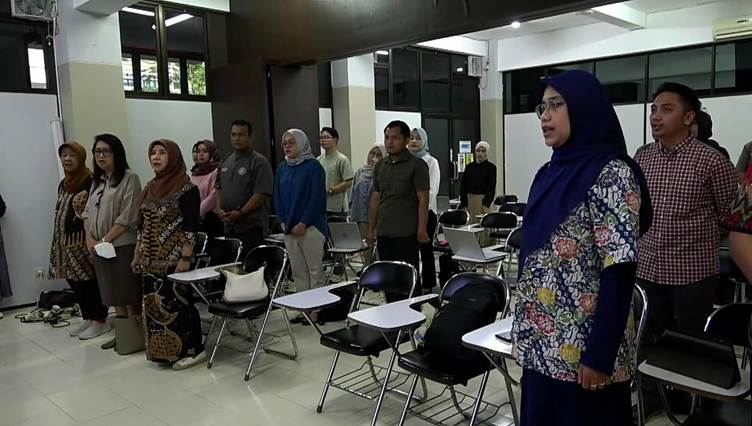
Building a Culture of Publication
This event is part of ongoing efforts to strengthen research and publication culture at FKG UGM. Specialist students are encouraged not only to become skilled clinicians but also scientists capable of generating new knowledge.
In modern academia, scientific publication is a key benchmark for measuring an institution’s contribution to the advancement of knowledge. Published findings can serve as references for further research by other scholars.
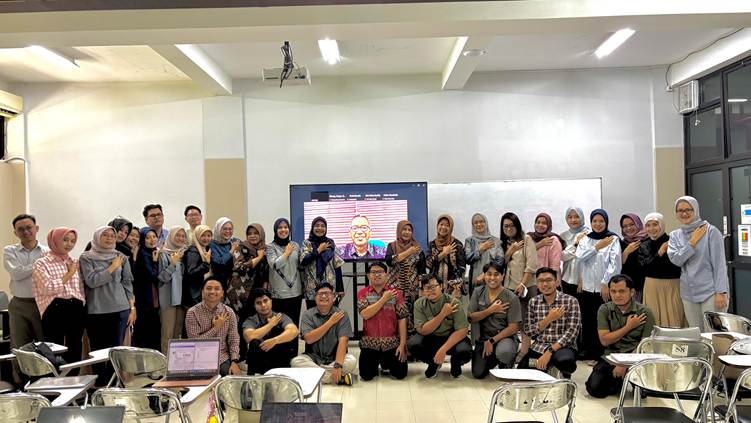
Challenges for Early-Career Researchers
For many graduate students, writing scientific articles remains a challenge. Strong research data often does not easily translate into publishable manuscripts.
Raja Azman described writing as a skill that requires practice and courage. He likened it to learning to ride a bicycle—difficult and unbalanced at first, but easier after the first success.
He also reminded participants that rejection from journals is common—even among professors. What matters most is the ability to revise and try again.
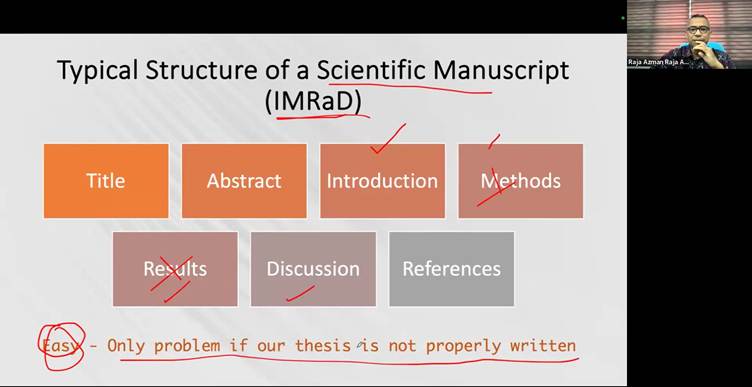
Scientific Integrity in the Age of AI
The discussion also addressed the growing use of artificial intelligence in scientific writing.
Raja Azman noted that AI can assist with grammar and sentence structure, but its use must be accompanied by strict scientific verification, especially regarding references and data sources.
Without proper verification, AI may produce inaccurate citations, which could lead to article retraction in academic publishing.
For participants, the lecture was not merely technical training but also a reminder of the true purpose of research.
Research is not just about fulfilling academic requirements or earning degrees—it is a long process of generating knowledge that helps society understand, prevent, and address health issues.
Through publication, knowledge produced within universities can extend beyond classrooms and reach the global scientific community. This is where the true role of a researcher lies: not only discovering knowledge, but also sharing it with the world.
Reporter: Andri Wicaksono | Image: Zoom Meeting Screenshot

