
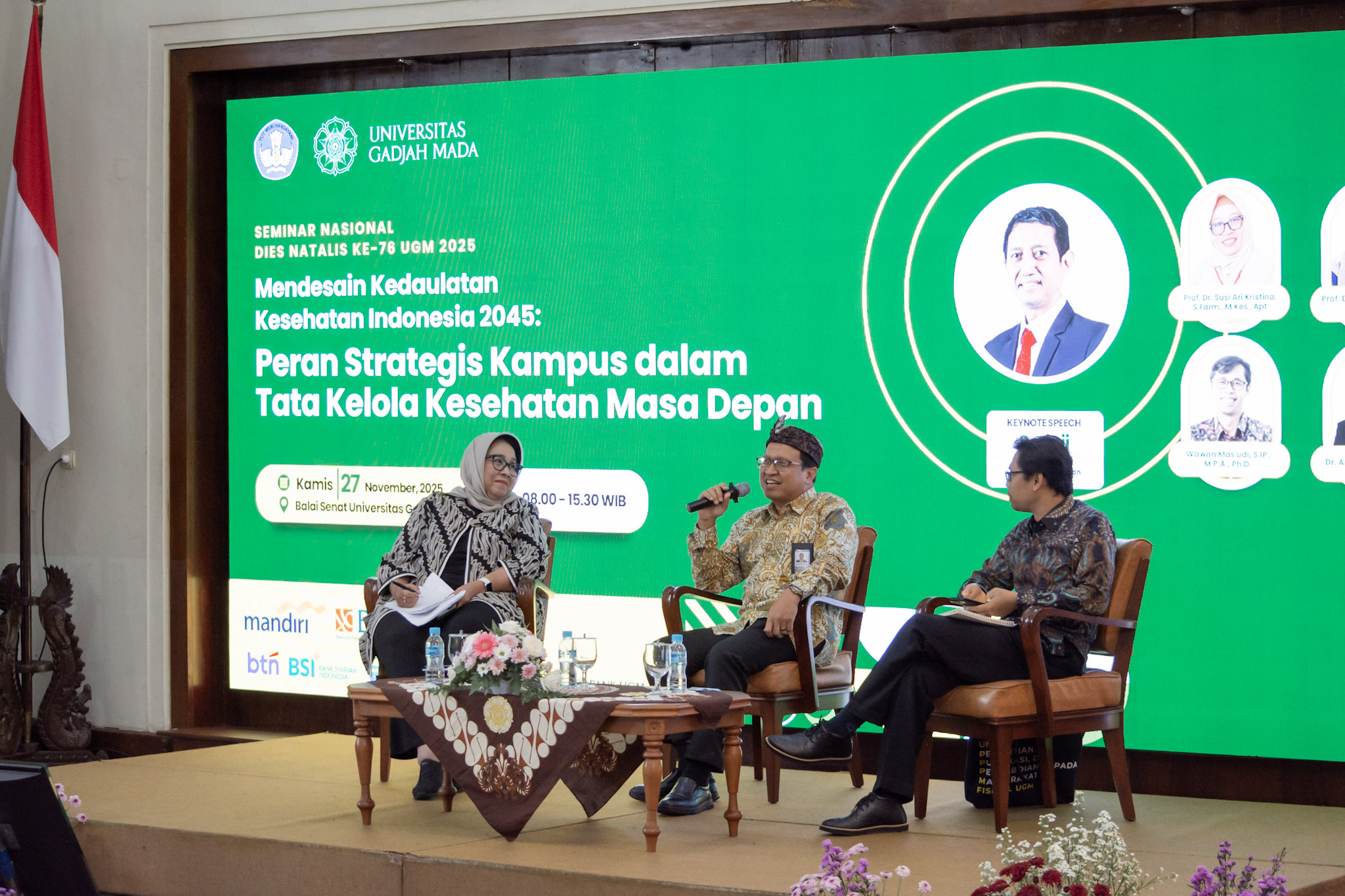
The availability of healthcare facilities and up-to-date technology is essential to delivering quality health services. However, an equally important issue is how to prepare superior health human resources (HR) and ensure their equitable distribution, including to remote areas. This was emphasized by the Dean of the Faculty of Dentistry, Universitas Gadjah Mada (FKG UGM), Prof. drg. Suryono, S.H., M.M., Ph.D., during the National Seminar entitled “Designing Indonesia’s Health Sovereignty 2045: The Strategic Role of Universities in Future Health Governance”, held at the UGM Senate Hall on 27 November 2025.
In his presentation, Prof. Suryono stated that strengthening health human resources cannot be effectively achieved by relying on a single ministry alone. He highlighted the need to involve four ministries and one institution.
“The Ministry of Health serves as the backbone in designing national programs and healthcare service standards. The Ministry of Finance, together with BPJS, supports these efforts through LPDP scholarships and flexible healthcare financing schemes. Meanwhile, the Ministry of Higher Education facilitates special education pathways and academic assignments for universities, while the Ministry of Home Affairs and local governments play a strategic role in providing physical infrastructure and region-based health workforce planning,” explained Suryono.
According to him, sending local youth to pursue higher education is the most effective long-term strategy to address disparities in the distribution of health professionals. These individuals are believed to have stronger moral ties and a higher likelihood of remaining and serving in their home regions compared to professionals from outside the area.
“Collaboration between local governments and universities is needed to provide bonded scholarships, special partnership pathways, and affirmative quotas for students from disadvantaged, frontier, and outermost (3T) regions to pursue medical and dental education. This is a concrete step toward equitable health workforce distribution and resilient community development,” he added.
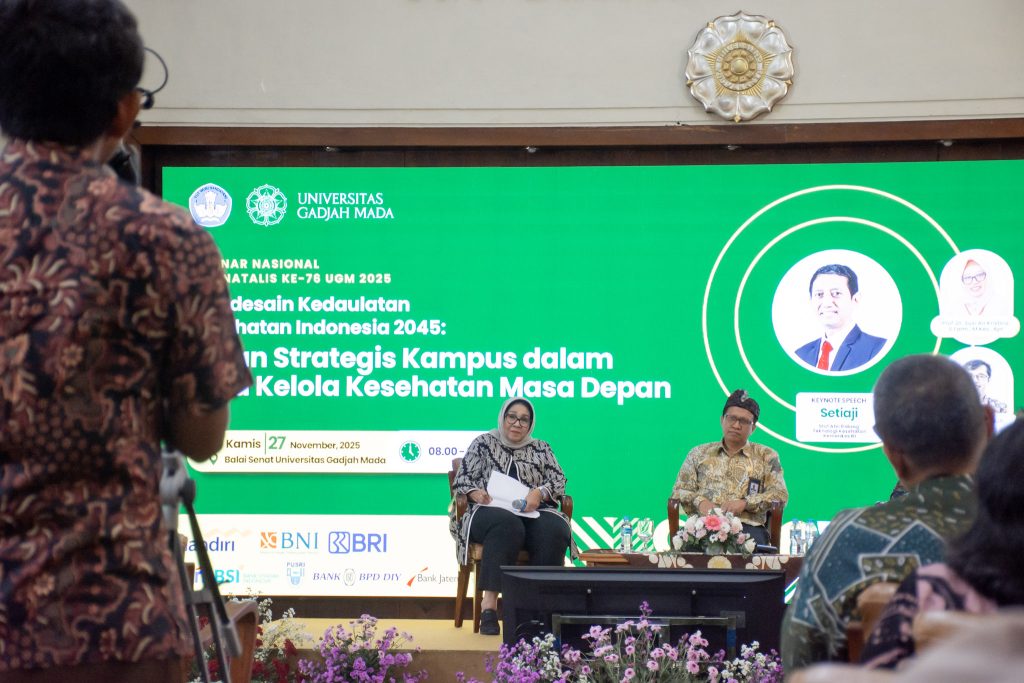
As an institution dedicated to health education, FKG UGM has implemented various concrete strategies to support this national agenda. Through the implementation of the Academic Health System (AHS), the faculty integrates education and healthcare services in its assisted regions, including Yogyakarta Special Region, Central Java, and Kalimantan. Residents and students are deployed through special assignment programs, regional rotations, and local health workforce capacity-building initiatives.
In addition, FKG UGM has opened special partnership pathways for undergraduate, professional, and specialist students originating from 3T regions, government partners, and institutions such as the Indonesian National Armed Forces (TNI), National Police (Polri), and the Ministry of Health. This scheme is designed to produce health professionals who understand regional contexts and demonstrate long-term service commitment.
Community service is also conducted in a structured and sustainable manner. The faculty regularly sends final-year students to provide promotive and preventive health education within communities. Cleft lip and palate treatments are carried out periodically through collaboration with alumni and stakeholders, reflecting a holistic approach to care that not only treats disease but also restores patients’ social lives.
At the conclusion of the session, Prof. Suryono emphasized that Indonesia’s health sovereignty will be realized only if universities assume a role beyond education—namely, shaping excellent, ethical, independent human resources who are ready to serve even in the most remote areas of the country.
Writer and Photographer: Fajar Budi Harsakti

