
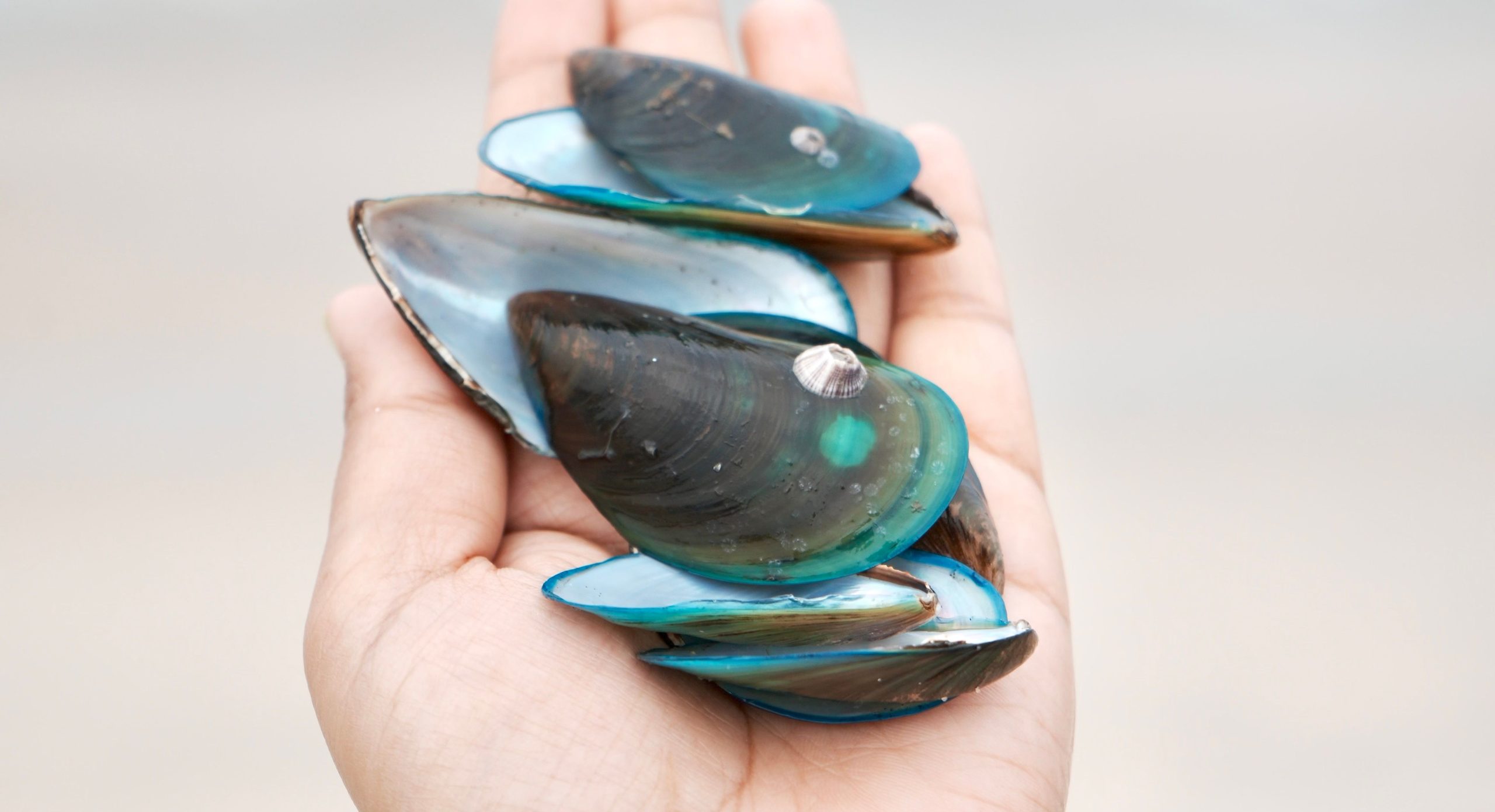
The calcium content of primary tooth enamel immersed in a green mussel shell mousse solution reached 28.97 ppm—surpassing CPP-ACP, the commercial remineralization product long regarded as the gold standard. The finding may come as a surprise, considering that its raw material is a marine waste product commonly discarded at fish auction sites.
This is the key finding of a study published in the December 2025 issue of the Journal of Dentistry, Universitas Padjadjaran . The research was conducted by a team from the Department of Pediatric Dentistry, Faculty of Dentistry, Universitas Gadjah Mada (FKG UGM): Sito Resmi Hayuning Wardani, Putri Kusuma Wardani Mahendra, and Dr. Indra Bramanti, M.Sc., Sp.KGA(K). The researchers sought to answer a simple yet pressing question: Could there be a remineralization agent that is more affordable, more accessible, and independent of cow's milk-derived products?
From Marine Waste to a Hydroxyapatite Precursor
Primary teeth—the first set of teeth that accompany children from infancy through elementary school—have enamel that is thinner and more porous than that of permanent teeth. This structural characteristic makes them particularly susceptible to acid attacks from cariogenic bacteria. When the pH of the oral cavity decreases, calcium and phosphate ions dissolve from the enamel, forming white spot lesions that may eventually progress into cavities if left untreated.
The reverse process, known as remineralization, requires an external supply of calcium and phosphate ions. CPP-ACP has long been the preferred material because of its ability to bind and gradually release these ions onto the enamel surface. However, CPP-ACP also has notable limitations: it dissolves readily in acidic environments, has limited penetration into enamel, and cannot be used in children with hypersensitivity to cow's milk proteins.
Green mussel shells (Perna viridis) offer an unexpected alternative. They contain approximately 95% pure amorphous calcium carbonate, making them an ideal raw material for synthesizing hydroxyapatite, the primary mineral component of tooth enamel. In addition, green mussel shells have zero moisture content, are highly resistant to microbial contamination, and can be processed at substantially lower cost than other marine calcium sources, such as oyster or capiz shells.
The synthesis process is far from simple. The shells are cleaned, boiled, dried, and then calcined at 1,000°C for five hours, converting calcium carbonate into calcium oxide. The calcium oxide is subsequently reacted with diammonium phosphate through a stepwise precipitation process, producing calcium hydroxyapatite suitable for formulation into a mousse.
More Than Just a Different Texture
Choosing a mousse formulation was not merely an aesthetic decision. Compared with conventional gels, mousse has a lighter, more hydrophilic consistency, allowing deeper penetration into the smooth, layered enamel surface. The formulation developed in this study included humectants (glycerin and propylene glycol), emulsifiers (stearic acid and cetyl alcohol), sodium lauryl sulfate as a surfactant, and peppermint essential oil to improve acceptability for pediatric patients.
The researchers prepared a 20% green mussel shell mousse, which was tested on 16 artificially demineralized primary incisors using 37% phosphoric acid. Four experimental groups were established: green mussel shell mousse, CPP-ACP (positive control), mousse base without active extract, and untreated negative control. All samples were incubated at 37°C for 30 minutes, simulating the temperature of the human oral cavity. Enamel calcium levels were then measured using Atomic Absorption Spectrophotometry (AAS), a highly accurate analytical technique.
The findings were striking.
"The green mussel shell mousse group demonstrated the highest enamel calcium concentration at 28.97 ± 1.75 ppm, followed by the CPP-ACP positive control group (27.89 ± 1.78 ppm), the mousse base group (22.53 ± 1.05 ppm), and the untreated negative control (22.17 ± 0.36 ppm)." — Wardani SRH, Mahendra PKW, Bramanti I., Journal of Dentistry, Universitas Padjadjaran, 2025
A one-way ANOVA confirmed statistically significant differences among the groups (p = 0.0001). Subsequent post hoc LSD analysis indicated that although the green mussel shell mousse produced higher calcium levels than CPP-ACP, the difference between the two was not statistically significant (p = 0.288). Rather than diminishing the findings, this result strengthens the central argument: a natural, locally sourced material performed at least as well as a commercial product that is considerably more expensive.
The Mechanism Behind the Numbers
The superior performance of green mussel shell mousse is supported by its underlying chemistry. Calcium ions derived from green mussel shells are present predominantly in the aragonite crystalline form, which exhibits high bioavailability and facilitates the release of calcium onto the enamel surface. Moreover, the extract has a highly alkaline pH (approximately 11.8), creating a favorable microenvironment for phosphate and hydroxyl ions—both essential for rebuilding hydroxyapatite crystals within demineralized enamel.
The remineralization process occurs as calcium ions bind to the carboxyl groups of enamel hydroxyapatite, forming a saturated layer that inhibits further crystal dissolution. The mousse formulation enhances this mechanism by distributing the active ingredients more evenly across the tooth surface while extending their contact time with enamel. The authors acknowledge that the study remains an in vitro investigation with several limitations, including a relatively small sample size of 16 teeth, a 30-minute observation period, and the use of artificial saliva, which cannot fully replicate the complex dynamics of the human oral environment.
Accordingly, the researchers—including Dr. Indra Bramanti, M.Sc., Sp.KGA(K)—recommend further in vivo studies involving larger sample sizes and additional outcome measures, including changes in enamel microstructure.
From Laboratory Research to Pediatric Dental Care
The significance of these findings extends beyond laboratory measurements. In Indonesia, dental caries in primary teeth remains a widespread oral health problem among children. Meanwhile, CPP-ACP—an imported product derived from milk proteins—is not always affordable or suitable for every child. Those with cow's milk protein allergy or those from lower-income families often have limited access to modern remineralization therapies.
Green mussel shell mousse offers a compelling alternative: an abundant and inexpensive local raw material, a production process with strong scalability, and a promising safety profile, as hydroxyapatite is both non-toxic and non-immunogenic. If future clinical studies confirm its effectiveness under real-world conditions, this marine waste-derived material could reshape preventive pediatric dental care, particularly in developing countries.
The shells that have long been discarded along Indonesia's fishing docks may ultimately provide an answer to protecting millions of children's teeth.
Source DOI: https://doi.org/10.24198/jkg.v37i3.60956)
Authors: Nanda Ayu, drg. Achmad Zam Zam Aghasy, M.Kes.
Photo: Pexels