
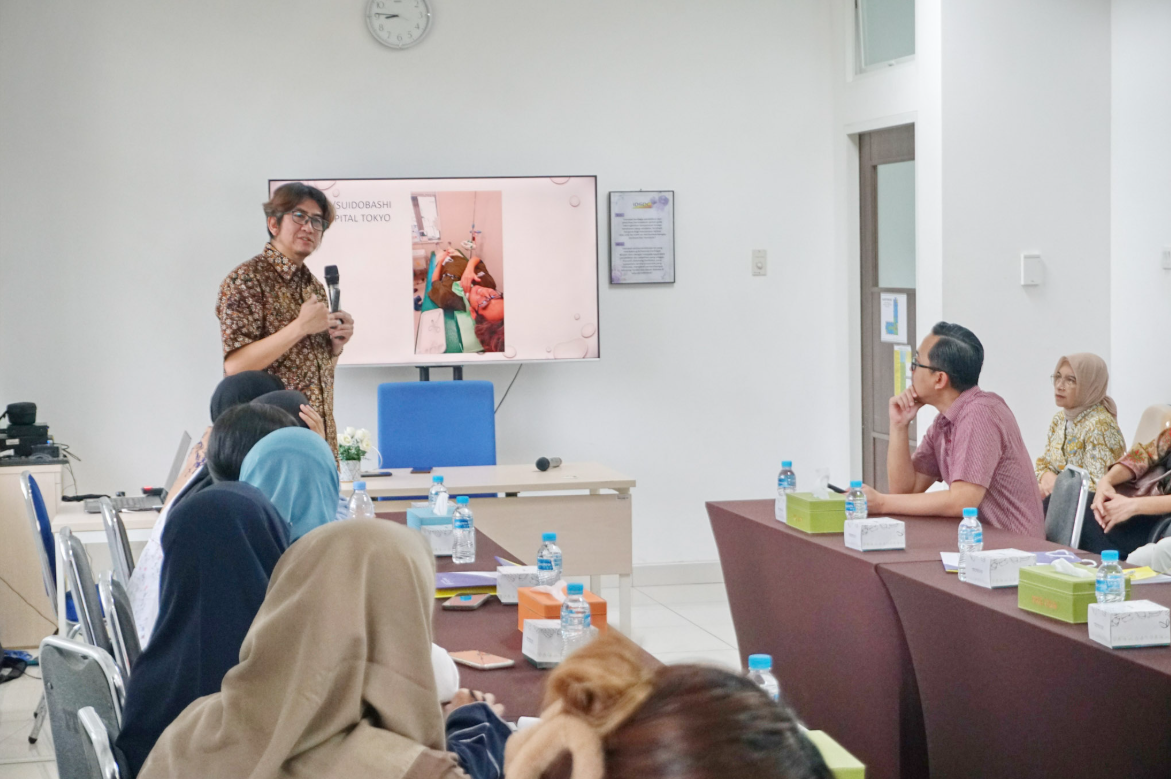
Workshop by drg. Dhanni Gustiana, Sp.BMM, Subs TM–TMJ(K) at FKG UGM highlights the importance of safe, effective, and humane anesthesia techniques
Fear of the “dentist’s needle” has long been a classic reason many people delay dental treatment. However, for drg. Dhanni Gustiana, Sp.BMM, Subs TM–TMJ(K), this fear is a call to provide a treatment experience that is comfortable, safe, and minimally traumatic. In the Basic Endodontic and Surgical Training (BEST) workshop held at the Faculty of Dentistry, Universitas Gadjah Mada (FKG UGM), drg. Dhanni thoroughly discussed the philosophy and practice of managing local anesthesia complications for dentists. The workshop was held on 11 October 2025 in collaboration with the Interdisciplinary Dentistry Skills and Development Center (iDSDC) and the Alumni Family of the Faculty of Dentistry, Universitas Gadjah Mada (KAKGIGAMA). Through this synergy, the activity served not only as a platform for knowledge sharing, but also as a means to enhance the capacity and quality of human resources in dental health, particularly in the application of safe, effective, and ethical anesthesia techniques.
“Patients do not care how sophisticated our tools are; what matters is that they do not feel pain,” — drg. Dhanni Gustiana, Sp.BMM, Subs TM–TMJ(K)
This simple message touches the core of dental care: empathy and clinical precision. According to him, anesthesia is not merely a technical procedure, but a moral responsibility of every dentist to ensure patients feel safe and respected.
Why Can Anethesia Fail?
Many dental procedures that should be simple become complex because anesthesia is ineffective. “A simple case in a difficult patient will remain difficult,” drg. Dhanni remarked, reminding participants that every patient has different anatomy, pain thresholds, and systemic conditions. He explained several common factors contributing to anesthesia failure, including:
- Injection technique that is too rapid,
- Inappropriate case indication,
- Incorrect selection of anesthetic agents, and
- Inaccurate anatomical location and anesthesia technique.
These small errors can cause patients to continue experiencing pain and may even trigger complications such as hematoma, paresthesia, or local toxic reactions. In such situations, the dentist’s composure and diagnostic ability become key to success.
Between Science and Art
The workshop addressed not only medical aspects, but also the art of managing patient fear. drg. Dhanni emphasized that dentists must understand the anesthesia instruments used—from dental syringes, needle gauges, to injection speed control. He demonstrated differences among various syringe types and safe mandibular block techniques that minimize pain.
“One ampule should be injected over 30 seconds to one minute. Do not rush. Patients who are already in pain will not feel the additional effect of anesthesia.”
This statement underscores the philosophy of “slow is smooth, smooth is safe” in anesthesia practice. In modern dentistry, technical precision and clinical empathy are inseparable.
Lessons for Young Dentists
Through discussion sessions and case demonstrations, participants—consisting of young dentists and professional students—were encouraged to understand that anesthesia is not merely a preliminary step, but the foundation of patient comfort. Dentists who manage pain well not only prevent complications, but also build long-term patient trust in dental care services. Professionalism, patience, and caution are essential values in every procedure. As drg. Dhanni stated, “Anesthesia is not just about numbing, but about making patients feel safe and confident.”
Humanistic Reflection
Closing the workshop, drg. Dhanni emphasized that technology will never replace a dentist’s empathetic touch. Every prepared syringe and every carefully administered injection is a form of respect for patients’ fear and trust. Through a scientific approach and a philosophy of humanity, this workshop served as a reminder that anesthesia is the art of calming, not merely a medical procedure.
Author & Photo: Dody Hendro W

