
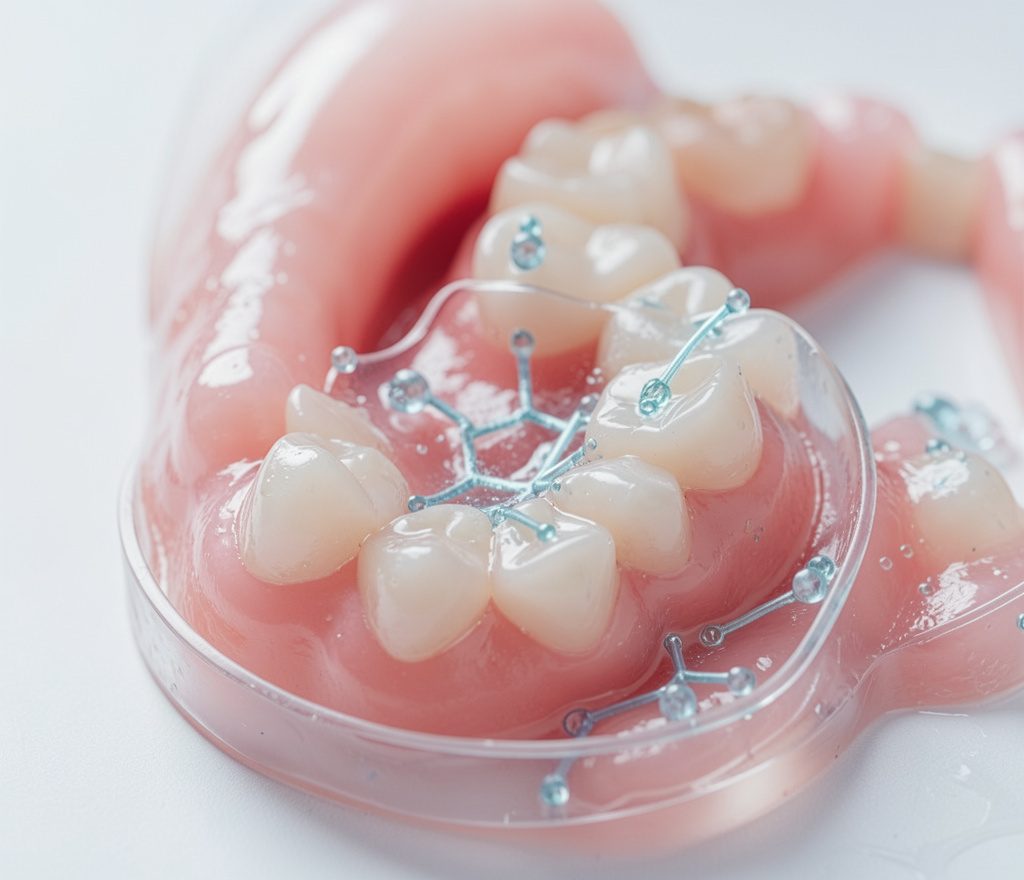
Imagine detecting oral cancer from nothing more than a drop of saliva, long before a lesion becomes visible in the tissue. That is the goal pursued by drg. Heribertus Dedy Kusuma Yulianto, M.Biotech., Ph.D., a lecturer in the Department of Biomedical Dentistry at the Faculty of Dentistry, Universitas Gadjah Mada, together with an international team of researchers. In a comprehensive review article published in the international journal Microchemical Journal in November 2025, the researchers examined the latest advances in carbon-based electrochemical biosensors for detecting biomarkers in saliva, particularly those associated with oral diseases such as dental caries, periodontitis, and oral squamous cell carcinoma (OSCC).
Oral Diseases: A Global Burden That Remains Overlooked
The numbers are striking. The World Health Organization (WHO) estimates that nearly 3.9 billion people worldwide are affected by oral diseases. Approximately 50 to 60 percent of the global population has experienced dental pain or tooth loss, and these conditions are closely associated with systemic diseases such as diabetes and cardiovascular disorders. Oral cancer presents another major threat. In 2020, the Global Cancer Observatory reported approximately 377,000 new cases of oral cancer, with more than 177,000 deaths each year. The high mortality rate is not simply due to the aggressiveness of the disease, but also to delayed diagnosis.
Conventional diagnostic methods such as PCR (Polymerase Chain Reaction) and ELISA (Enzyme-Linked Immunosorbent Assay) are highly accurate, but they can be time-consuming, expensive, and require invasive sampling procedures. A tissue biopsy, for example, is not only painful but also impractical for routine monitoring. This is where saliva emerges as an intriguing alternative: it is easy to collect, painless to obtain, and surprisingly rich in biological information.
Saliva as the “New Blood” of Diagnostics
Saliva is more than just a digestive fluid. It contains a wide range of biomarkers, from inflammatory cytokines such as IL-1β, IL-6, and TNF-α, to enzymes such as matrix metalloproteinases (MMP-8 and MMP-9) and α-amylase, metabolites such as amino acids and nitrite, as well as cell-free DNA and RNA fragments. Each of these markers provides clues about the condition of the oral cavity and, in some cases, the body as a whole.
For example, in patients with active periodontitis, salivary IL-1β levels can reach 426 pg/mL, considerably higher than the approximately 204 pg/mL observed in healthy individuals. Meanwhile, in patients with OSCC, IL-8 levels can rise from approximately 250 pg/mL to 720 pg/mL. These significant differences make salivary biomarkers highly promising diagnostic targets, provided that the technology used to detect them can do so rapidly, affordably, and accurately.
“Saliva has emerged as an attractive diagnostic biofluid due to its non-invasive collection and rich biomarker content, driving interest in biosensor-based approaches.” — drg. Heribertus Dedy Kusuma Yulianto, M.Biotech., Ph.D., and team, Microchemical Journal, 2025
Carbon: An Affordable Material with High Performance
This is where carbon-based biosensors enter the picture. Unlike precious-metal electrodes such as gold (Au) and platinum (Pt), which are expensive and susceptible to protein accumulation on their surfaces, carbon-based materials such as graphene, carbon nanotubes (CNTs), and carbon nanofibers (CNFs) offer a difficult-to-match combination of properties: high electrical conductivity, large surface area, low production costs, and easy chemical modification.
In their review, the researchers describe three main strategies for modifying carbon-based materials. The first is structural engineering, which takes advantage of the unique honeycomb-like structure of graphene or the hollow cylindrical structure of CNTs to maximize contact with biomarkers. The second is morphological modification, such as creating three-dimensional porous structures that can expand the active surface area to as much as 1,637 m²/g. The third is surface functionalization, which involves adding specific chemical groups, conductive polymers, metal nanoparticles, or even enzymes and antibodies so that the sensor can selectively recognize specific biomarkers.
The results are promising. One biosensor made from a composite of gold nanoparticles and reduced graphene oxide (AuNPs-rGO) was able to detect IL-8, a biomarker associated with oral cancer, at concentrations as low as 72.73 pg/mL. Another sensor based on graphene and polylactic acid (PLA), fabricated using a 3D printer, successfully detected nitrite, a marker associated with dental caries, at concentrations as low as 0.03 μmol/L. These figures demonstrate sensitivity that could be clinically relevant for early detection.
The Future: Smart Biosensors Powered by Artificial Intelligence
In the future, carbon-based biosensors connected to smartphone applications and cloud-based systems could become point-of-care diagnostic tools for use in small clinics, remote areas, or even patients’ homes. Biomarkers such as IL-6, MMP-9, and TNF-α could be analyzed from saliva samples and transmitted directly to healthcare professionals in real time, enabling earlier intervention before a disease progresses to an advanced stage.
Ke depan, biosensor berbasis karbon yang terhubung ke aplikasi smartphone dan sistem cloud berpotensi menjadi alat diagnostik mandiri (point-of-care) yang dapat digunakan di klinik kecil, daerah terpencil, atau bahkan di rumah pasien. Analisis biomarker seperti IL-6, MMP-9, dan TNF-α dari sampel air liur bisa dikirimkan langsung ke tenaga kesehatan secara real-time, memungkinkan intervensi lebih awal sebelum penyakit berkembang ke stadium lanjut.
Of course, challenges remain. Most current studies still rely on laboratory-conditioned saliva samples rather than real patient samples with all their biological complexity. Long-term biological fouling, the lack of standardized calibration protocols, and the cost of producing graphene and CNTs on a large scale are also challenges that must be addressed before the technology can be widely adopted.
But the direction is clear. When affordable, sensitive, and intelligent carbon-based biosensors eventually arrive in dental clinic waiting rooms, early detection of oral diseases may no longer be the exclusive privilege of major hospitals in large cities. It could represent a small shift in the way we diagnose disease, with potentially enormous consequences for millions of people.
Source DOI: https://doi.org/10.1016/j.microc.2025.116311
Authors: Achmad Zam Zam Aghasy, DDS, M.Kes.; Hazra Alifia Muharam
Photo: Freepik