
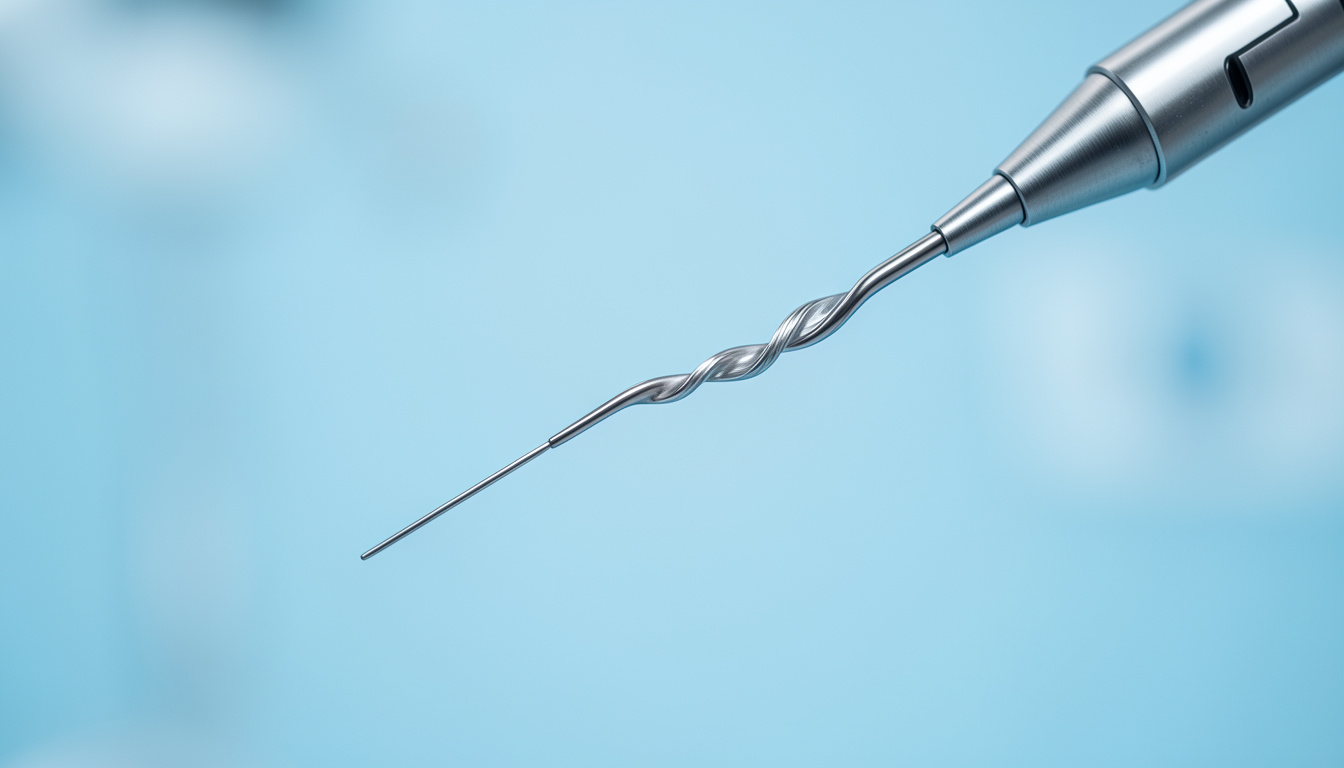
A computer simulation study has found that the cross-sectional design of endodontic files—small instruments used by dentists to clean root canals—has a major influence on how flexible and resistant the instruments are before they fracture. The finding is significant because file fracture inside a root canal is one of the most feared complications of root canal treatment.
The study, involving Dr. drg. Wignyo Hadriyanto, M.S., Sp.KG(K) from the Doctoral Program at the Faculty of Dentistry, Universitas Gadjah Mada, together with a multidisciplinary research team, was published in BIO Web of Conferences in 2021. The researchers used an in silico approach, or computer-based simulation, to examine two commonly used clinical rotary nickel-titanium (NiTi) files: ProTaper Gold F2 and HyFlex CM.
Teeth with infections extending into the root require root canal treatment (RCT). During this procedure, dentists insert endodontic files—very small instruments—into narrow and often curved root canals to remove infected pulp tissue.
The challenge is that human root canals are not always straight. In curved canals, files are forced to bend each time they rotate. This repeated bending generates what is known as cyclic fatigue, eventually causing the file to fracture inside the tooth. At the same time, a file must be sufficiently flexible to follow the curvature of the canal without damaging the dentin walls. This property is measured through deflection. These two characteristics—cyclic fatigue and deflection—were the focus of the study.
The research team designed 18 NiTi file models using Autodesk Inventor 2020 and then analyzed them using ANSYS Structural 18.2. Three variables were tested simultaneously: cross-sectional shape (convex triangle versus square), the number of pitches or threads (one fewer, standard, and one more than the manufacturer's specification), and rotational speed (200, 300, and 400 rpm). Loads ranging from 1, 2, and 3 Newtons were applied to the tip of the files to measure deflection.
The results were clear. Cross-sectional shape and applied load significantly affected both file deflection and cyclic fatigue. Meanwhile, variations in the number of pitches—one fewer or one more than the manufacturer's standard—had no significant effect on either parameter.
The file with a convex triangular cross-section, represented by ProTaper Gold, showed greater deflection than the square cross-section of HyFlex CM. This means that the triangular file was more flexible. On the other hand, the square cross-section demonstrated higher cyclic fatigue resistance, meaning that it could withstand fatigue for longer before fracturing.
“Convex triangle reveals a larger deflection value compared with the square cross-section. This shape reduces the contact point between the cross-sectional area of the file and the root canal wall, thus increasing the flexibility of the file.” — Hadriyanto et al., BIO Web of Conferences, 2021
The explanation lies in the geometry of the file core. The square cross-section has a thinner core, meaning that the stress experienced by the file as it rotates inside the root canal is lower. This makes the square file more resistant to cyclic fatigue. Conversely, the convex triangular cross-section reduces the points of contact between the file and the root canal wall, allowing the file to move more freely and making it more flexible.
Rotational speed also produced clinically relevant findings. The higher the file's rotational speed, the more quickly it reached the point of fatigue. Files rotating at 200 rpm demonstrated greater cyclic fatigue resistance than those operating at 300 or 400 rpm.
The logic is straightforward: higher speeds mean more cycles of stress and strain within a shorter period. The file does not have sufficient time to recover from repeated loading, causing it to reach its fracture point more quickly. This does not mean that high rotational speeds are always undesirable. Rather, dentists must consider the balance between working efficiency and instrument safety whenever they adjust the settings of an endodontic motor.
In silico simulations do have limitations. The static method used in this study does not fully represent the pecking motion—the repeated up-and-down movement of the file—that occurs in actual clinical practice. However, as a tool for exploring instrument designs before clinical testing, the approach proved efficient and informative.
For dentists who work with endodontic files every day, this study emphasizes that instrument selection is not simply a matter of brand or price. File geometry, particularly cross-sectional shape, determines how an instrument behaves inside a narrow and curved root canal.
A more flexible file can help reduce the risk of canal transportation, ledging, or perforation in cases involving complex anatomy. Meanwhile, a file with greater cyclic fatigue resistance provides a longer safety margin before the instrument needs to be replaced.
The study also opens opportunities for endodontic instrument developers to give greater consideration to optimizing cross-sectional design, rather than relying solely on advances in materials or heat treatment. Ultimately, the right shape operated at the right speed can make the difference between successful treatment and an unwanted complication.
Authors: drg. Achmad Zam Zam Aghasy, M.Kes. & Annisa Dwi Noviyanti
Photo: FreePik
Source DOI: https://doi.org/10.1051/bioconf/20214105005