
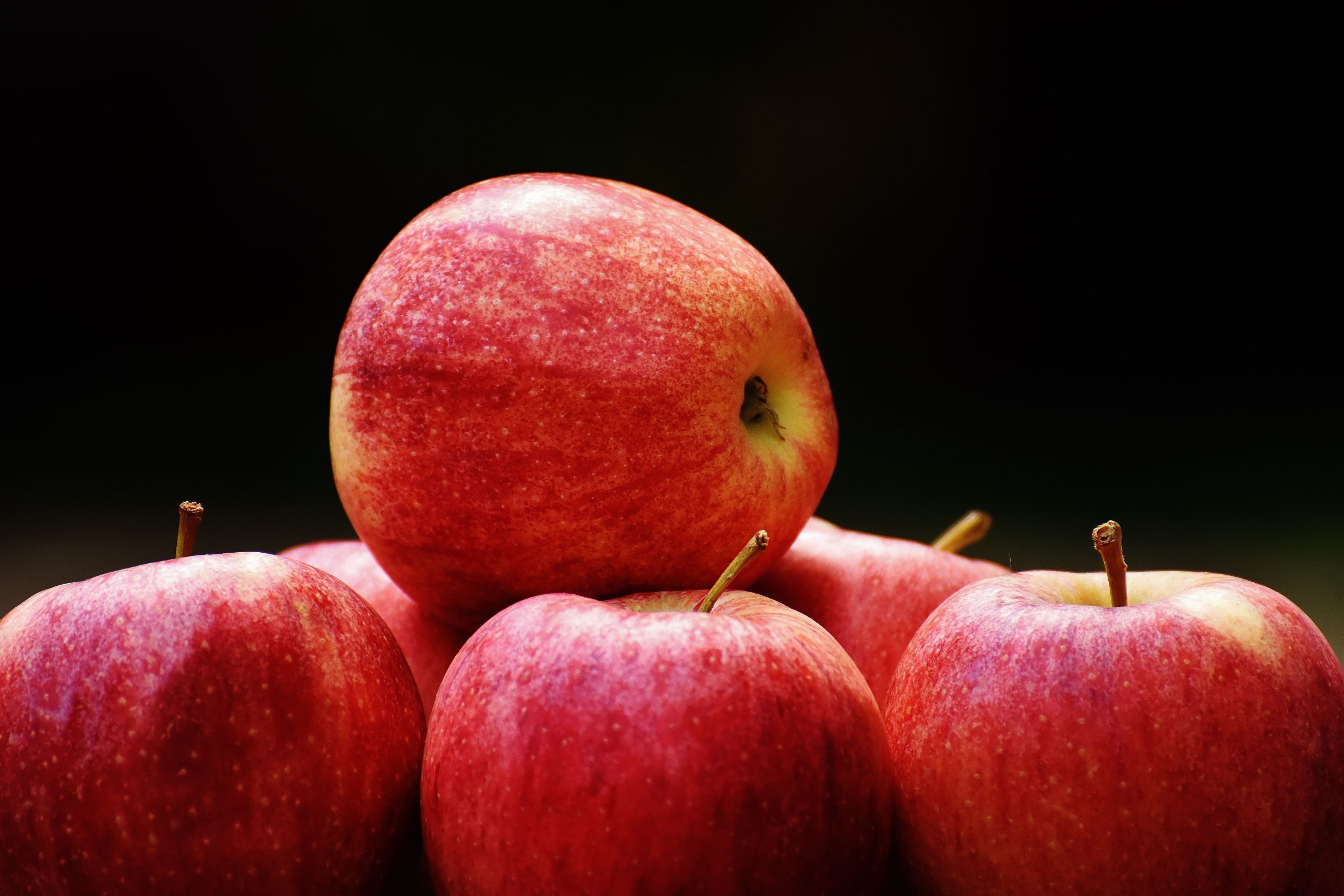
After eating chocolate biscuits, children who then consumed 50 grams of apple saw their dental plaque scores drop by an average of 17.45 points. That was nearly twice the reduction observed in the group that ate pears and far greater than the control group, which only rinsed with mineral water and actually saw its plaque scores increase by 2.91 points.
These findings are more than just statistics. They are a reminder that solutions to children’s oral health problems can sometimes be found in the fruit basket rather than on the pharmacy shelf.
Sugary Snacks: A Hidden Threat Behind Children’s Smiles
Dental caries remains a persistent problem among school-aged children. Data from the 2013 Basic Health Research (Riskesdas) showed that the prevalence of people experiencing dental and oral health problems increased from 23.2% to 25.9%, while caries prevalence among school-aged children reached 60–85%. One of the contributing factors is the habit of snacking between meals, particularly consuming sweet and sticky chocolate-coated biscuits.
Dental plaque is a soft biofilm that adheres to the surface of the teeth. It cannot simply be removed by rinsing with water. The sticky nature of chocolate combined with the texture of biscuits makes plaque accumulation more likely, particularly among children aged 8–10 years who are in the mixed-dentition stage—a critical period in the development of children’s oral health.
The question is no longer whether children should stop snacking. That is almost impossible. The more realistic question is: is there a simple way to reduce the impact?
From the Laboratory to the School Lunch Table
drg. Ignatius Sulistyo Jatmiko, M.Kes., Sp.KGA., a lecturer from the Department of Pediatric Dentistry, Faculty of Dentistry, Universitas Gadjah Mada, sought to answer that question through a study involving 24 third- and fourth-grade students from SDN Jongkang, Ngaglik, Sleman, Yogyakarta.
The research design was relatively rigorous: a quasi-experimental pretest-posttest control group design using a crossover method, allowing each child to experience all three treatment conditions. Plaque scores were measured using the modified PHP-M index developed by Martens and Meskin, a method that assigns scores based on plaque distribution across five zones on the surfaces of each index tooth.
The results were published in Interdental: Jurnal Kedokteran Gigi, Volume 18, June 2022.
The physiological mechanism behind apples’ advantage is particularly interesting. A hardness test conducted at the Laboratory of Process Engineering and Food Processing, Faculty of Agricultural Technology, Universitas Gadjah Mada, found that apples had a hardness of 14.13 N, while pears measured only 7.39 N. The harder texture requires the masseter muscles to work more intensely, which in turn stimulates the parotid glands to produce more saliva. In addition, apples have a more acidic taste, and sourness is known to be the strongest taste stimulus for salivary secretion, surpassing salty, sweet, and bitter tastes.
Saliva is more than just fluid. It contains proteins, enzymes, and antibacterial components that mechanically help wash away debris and plaque from the tooth surfaces. Apples also have a slightly higher water content (85.56 g per 100 g) than pears (83.71 g), further contributing to the natural rinsing effect in the oral cavity.
The Numbers Speak for Themselves
The one-way ANOVA results showed significant differences among the three groups (p=0.000). A post-hoc LSD test further confirmed that the difference between the apple and pear groups was statistically significant (p<0.05).
The differences in plaque scores before and after treatment summarize the findings clearly:
- Apple group: decreased by 17.45 ± 1.95
- Pear group: decreased by 11.58 ± 1.90
- Control group (mineral water only): increased by 2.91 ± 1.24
The increase in plaque scores in the control group serves as an important reminder: rinsing with mineral water after eating chocolate biscuits is not enough. Without mechanical action—from either a toothbrush or fibrous fruit—plaque will continue to accumulate.
Fruit as a Strategy, Not Just an Addition
This study does not recommend that children stop eating chocolate biscuits. Instead, it offers a more pragmatic approach: encourage children to eat fibrous, water-rich fruit after consuming cariogenic foods.
Apples and pears are readily available, affordable, and require no complicated instructions. There is no special technique that parents or teachers need to learn. Simply provide sliced apples after snack time.
Of course, this is not a substitute for brushing teeth twice a day. Mechanical plaque control through toothbrushing remains the primary standard. However, for school-aged children whose eating habits outside the home can be difficult to control, encouraging them to eat hard, fibrous fruit after sugary snacks is a sensible preventive measure—and one that has been scientifically shown to be effective.
Sometimes the best solutions really are the simplest ones. They are simply waiting to be proven.
Source DOI: http://10.46862/interdental.v18i1.4314
Authors: Nanda Ayu, drg. Achmad Zam Zam Aghasy, M.Kes.
Photo: Pexels