
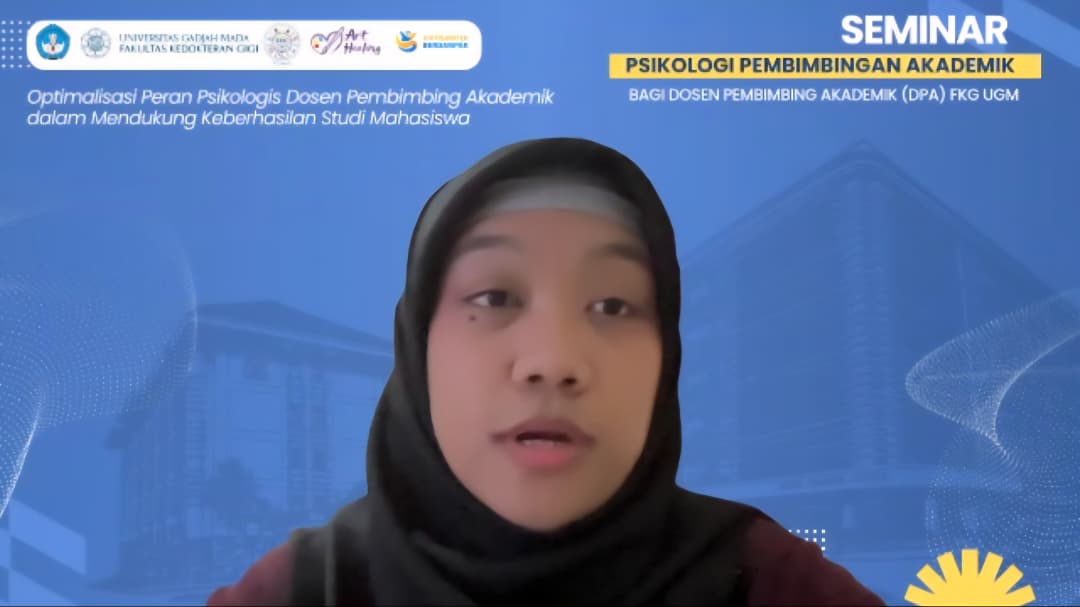
Students’ needs for Academic Advisors (Dosen Pembimbing Akademik/DPA) on campus extend far beyond administrative matters such as approving Study Plan Cards (KRS). Astri, M.Psi., a psychologist, explained that the most important things students need from their Academic Advisors are the willingness to listen, understand, validate their emotions, and provide guidance.
This need has emerged amid the increasing psychological burden experienced by Generation Z students. Psychologist Astri described students’ challenges on campus as resembling an iceberg phenomenon. Lecturers often only see the visible signs, such as declining Grade Point Averages (GPA), frequent lateness, or passive participation in class.
In reality, students must deal with various challenges, including demanding academic workloads, parental expectations, financial difficulties, and family conflicts. These pressures make them highly vulnerable to academic burnout, excessive anxiety, and fear of failure.
“Students often do not need someone who always has all the answers to their problems. They simply need someone who is willing to listen to their concerns,” Astri explained.
Astri encouraged Academic Advisors to change their communication approaches and avoid statements that may unintentionally close opportunities for discussion. Responses from lecturers such as “don’t worry” or “that is normal” may actually make students feel that their emotions are being ignored or dismissed.
Instead, lecturers should practice empathy and active listening. They can respond with statements that validate students’ feelings, such as “I can understand your concerns,” or express appreciation for students who are willing to open up and share their experiences.
Astri also encouraged Academic Advisors to implement Psychological First Aid (PFA) through the principles of Look, Listen, and Link. Lecturers can serve as the first point of support by listening and providing initial assistance. However, if students begin showing signs of crisis, such as self-harm behavior or losing the will to live, lecturers must refer them to professional psychological services.
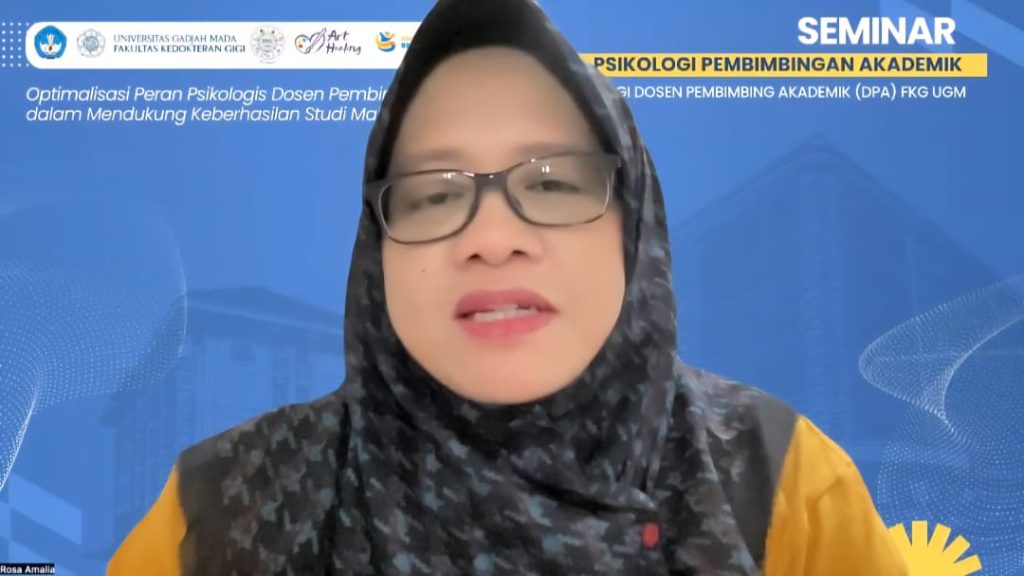
Meanwhile, Prof. Rosa Amalia, DDS, M.Kes., Ph.D., Vice Dean for Academic and Student Affairs at the Faculty of Dentistry, Universitas Gadjah Mada (FKG UGM), emphasized that Academic Advisors serve as companions throughout students’ academic journeys. They play an important role during critical stages, both when students explore their potential and when they face hidden personal challenges.
Amid increasingly complex academic challenges, Rosa urged Academic Advisors to master academic regulations while also developing a deeper understanding of the individual characteristics of the students they mentor.
“Students may not remember every piece of advice we give them. However, they will always remember how we made them feel heard, valued, and trusted,” Rosa stated.
According to Rosa, this quality of academic mentoring serves as one of the foundations of the Faculty of Dentistry, Universitas Gadjah Mada, in producing dental graduates who are academically and clinically competent while also possessing integrity and empathy toward others.
Author: Fajar Budi Harsakti
Photo: Zoom Meeting Screenshot