
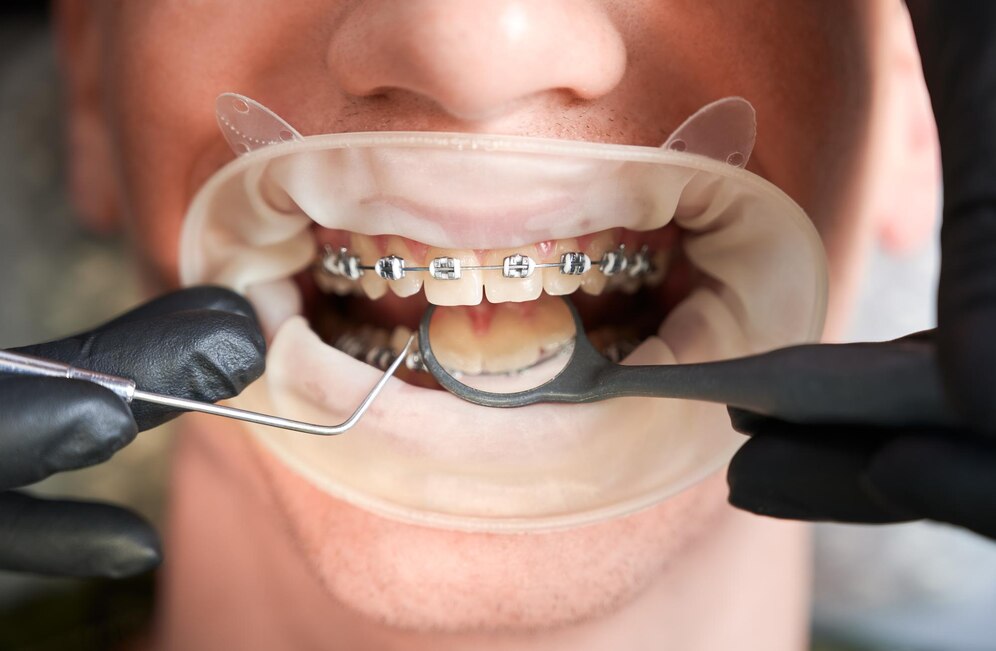
Orthodontic treatment plays a crucial role in correcting malocclusion, which refers to irregularities in tooth positioning and bite alignment. One commonly used method involves the application of orthodontic wires. This article discusses the fundamental principles of biomechanics that underpin their use, as well as their application in treating malocclusion—particularly in Class III cases.
Biomechanical Concepts in Orthodontics
Orthodontic biomechanics is the study of how forces applied to teeth can influence their movement. The main principle behind using orthodontic wires is that the force applied must be strong enough to move the teeth but not so excessive that it damages the periodontal tissues. These forces are transmitted through a system of wires and brackets attached to the teeth.
Class III Malocclusion Cases
Class III malocclusion, characterized by a protruding lower jaw in relation to the upper jaw, often requires more intensive orthodontic attention. Effective treatment can reduce complications arising from this type of malocclusion, such as functional and aesthetic issues.
In a study conducted by UGM Faculty of Dentistry student Ratna Suryani under the supervision of Dr. drg. Sri Suparwitri, S.U, Sp.Ort.(K) and drg. Soekarsono Hardjono, Sp.Ort.(K), on interceptive orthodontic treatment for Class III malocclusion, it was found that interceptive treatment can yield better results in correcting tooth positioning before the eruption of permanent teeth. This interceptive approach helps reduce potential long-term problems, including functional and aesthetic concerns.
Application of Biomechanics in Treatment
When designing treatment for patients with Class III malocclusion, it is important to consider the magnitude and direction of the forces required. The use of orthodontic wires enables orthodontists to adjust the applied forces according to the specific needs of each patient.
***
The use of orthodontic wires in correcting malocclusion, especially Class III, requires a deep understanding of biomechanics. Applying the correct forces can enhance treatment efficiency and final outcomes for the patient. Proper interceptive treatment can prevent future issues and achieve optimal aesthetics and function.
With the right approach, orthodontists can make significant contributions to patients' oral health and overall quality of life. To build a deeper understanding of orthodontic care, further literature review and broader field research are highly recommended.
References
Ratna Suryani, Dr. drg. Sri Suparwitri, S.U, Sp.Ort.(K), drg. Soekarsono Hardjono, Sp Ort (K), , Interceptive Orthodontic Treatment for Class III Malocclusion, https://jurnal.ugm.ac.id/mkgk/article/view/32003
Author: Rizky B. Hendrawan | Photo: Freepik

