
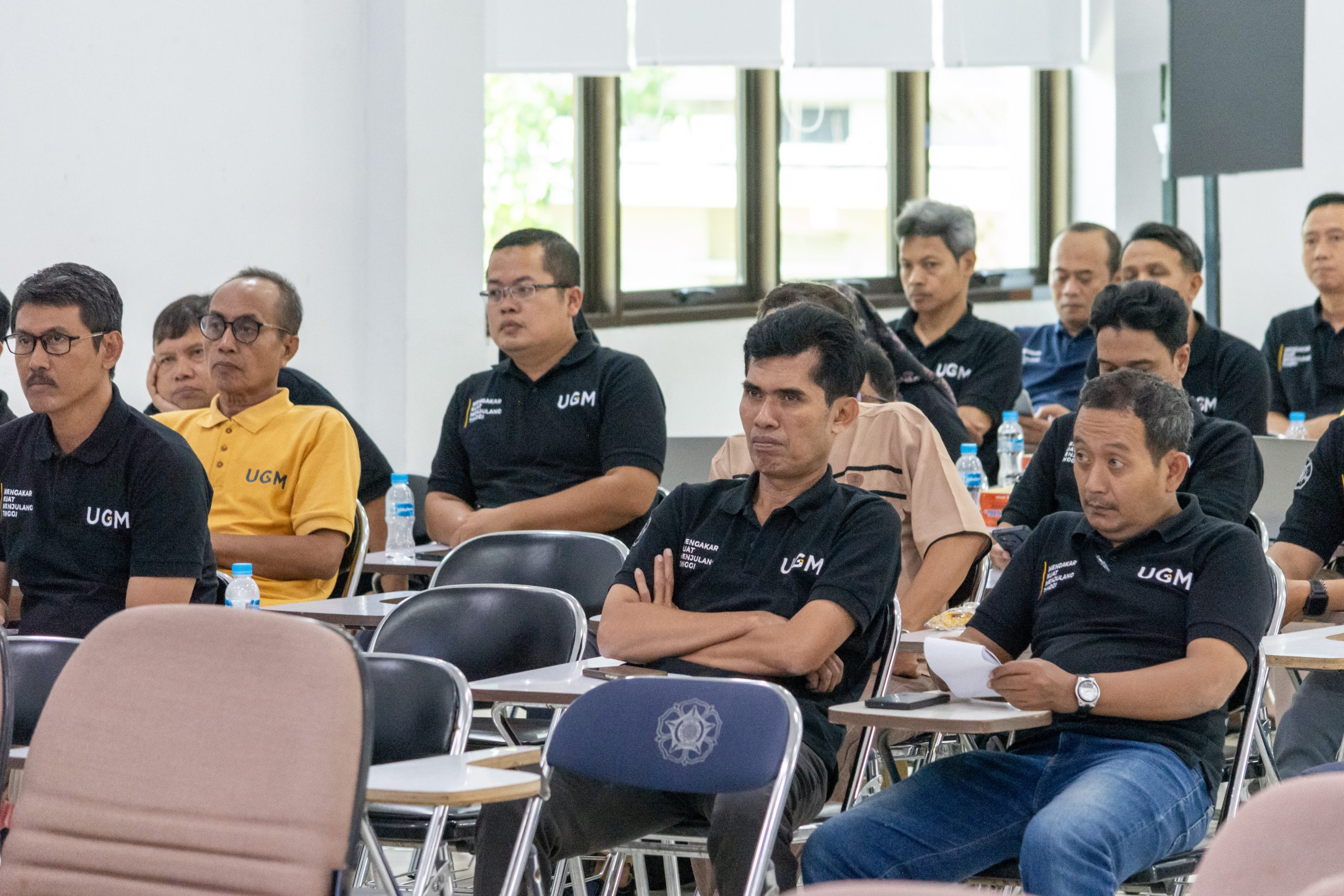
Nearly three decades ago, the film The Matrix (1999) offered a vision of a world in which artificial intelligence takes control of human civilization. In the science-fiction story, humanity lives under the control of machines, while the boundaries between reality and the digital world become blurred. What was once regarded as mere Hollywood fantasy is now echoed in everyday life. The difference is that today’s artificial intelligence (AI) is not arriving as an all-powerful force controlling humanity, but as a technology that is gradually transforming the way people think, work, and make decisions.
This transformation is happening far more rapidly than many people anticipated. AI can now draft reports, summarize thousands of pages of documents, translate multiple languages, create illustrations, and even assist in developing organizational strategies within seconds. Technology that once existed only on the big screen is now a reality on the desks, in the meeting rooms, and on the mobile phones of FKG UGM’s administrative staff.
FKG UGM Prepares Administrative Staff for the Digital Transformation Era
The development of artificial intelligence (AI) is no longer an issue discussed only within the technology industry. Universities are also beginning to embrace AI as part of the transformation of administrative governance. FKG UGM is strengthening the capabilities of its administrative staff through training on AI-based information technology as a strategy to improve both productivity and the quality of administrative services.
Amid increasingly complex university bureaucracy, digitalization is no longer understood simply as replacing printed documents with electronic ones. Digital transformation requires a shift in mindset among higher education personnel so that they can use technology as a tool to improve efficiency without compromising the accuracy and integrity of services.
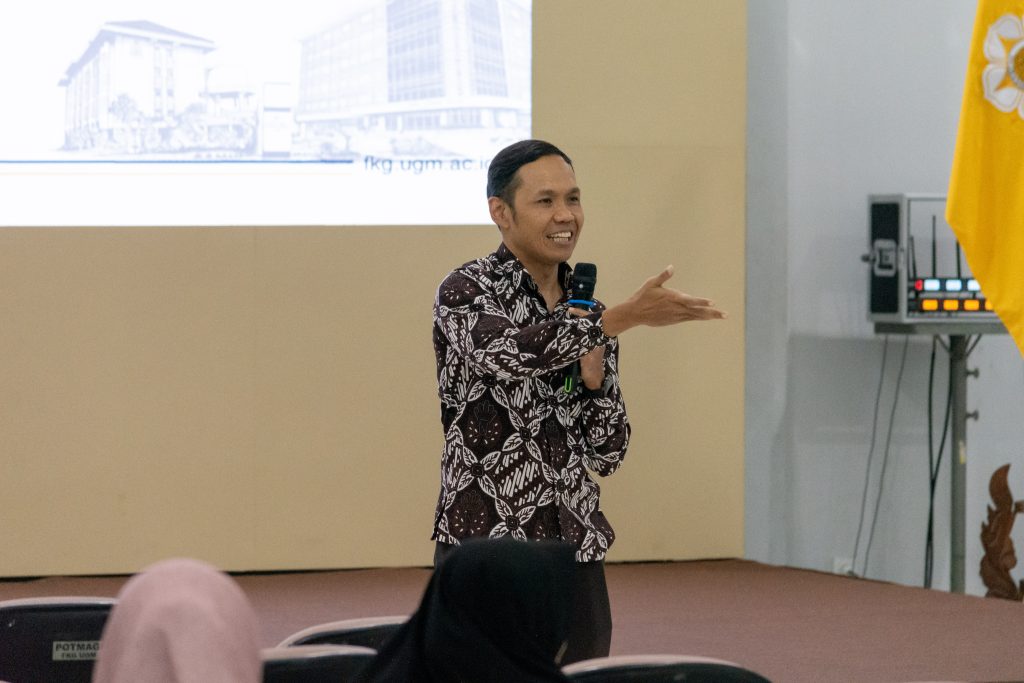
The Vice Dean for Finance, Assets, and Human Resources at FKG UGM, drg. Heribertus Dedy Kusuma Yulianto, M.Biotech., Ph.D., emphasized that strengthening information technology competencies is an important part of improving institutional performance.
“Our hope is that information technology will enable everyone to work faster and more efficiently. When the faculty’s performance improves, the benefits will ultimately return to the entire academic community,” he said.
According to him, the development of the performance assessment system at FKG UGM requires all work units to foster a culture of collaboration. The productivity of lecturers and administrative staff can no longer be viewed in isolation, as their performance increasingly influences one another in achieving institutional targets.
He emphasized that digital transformation is not simply about following the trend of AI adoption. Rather, it has become an organizational necessity to ensure that academic and administrative services can be delivered more effectively and respond more quickly to the needs of the university community.
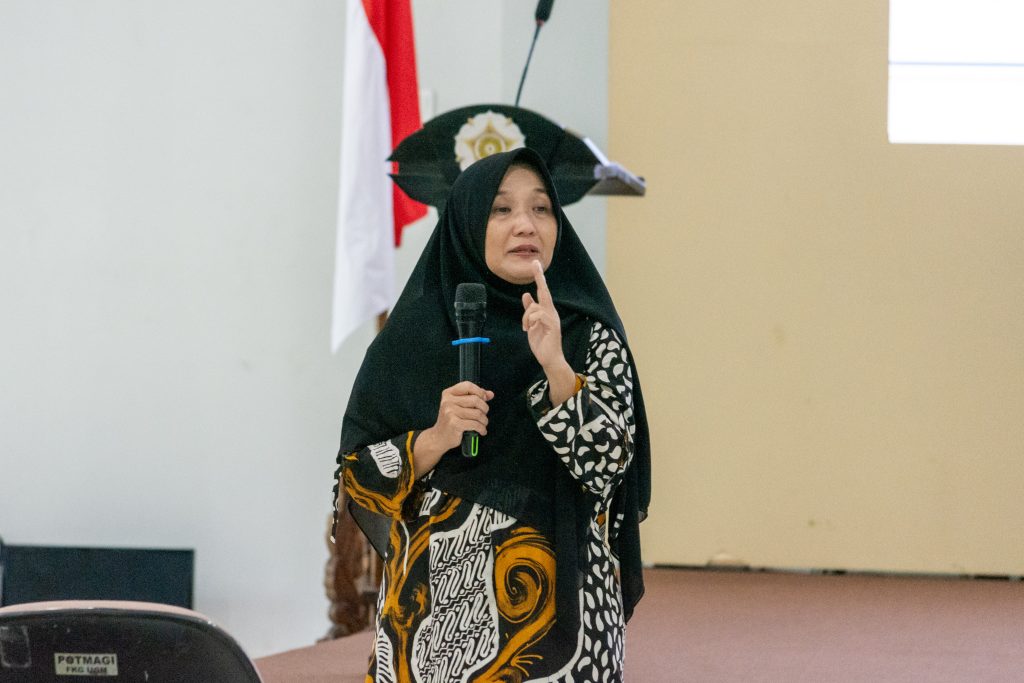
Meanwhile, Head of the FKG UGM Administrative Office Wulansari, S.S., revealed that the institution’s biggest challenge currently lies in the career development of administrative staff. Many employees have yet to meet the competency requirements needed to advance to higher positions.
“The biggest challenge right now is helping our colleagues advance to higher positions. One of the requirements is completing training. So training like this is not merely a routine activity; it is part of career development,” she said.
She explained that FKG UGM has begun mapping the competencies of all administrative staff to identify each individual’s development needs. The mapping will serve as the basis for designing training programs, further education, and opportunities to gain diverse work experience as part of career advancement.
“If you want to advance your career, you have to be willing to take training, pursue further education, and develop your work experience. We can provide the support, but the willingness has to come from each employee,” she said.
This policy demonstrates that digital transformation in higher education is not simply about providing new software or applications. Human factors remain the key determinant of successful organizational change.
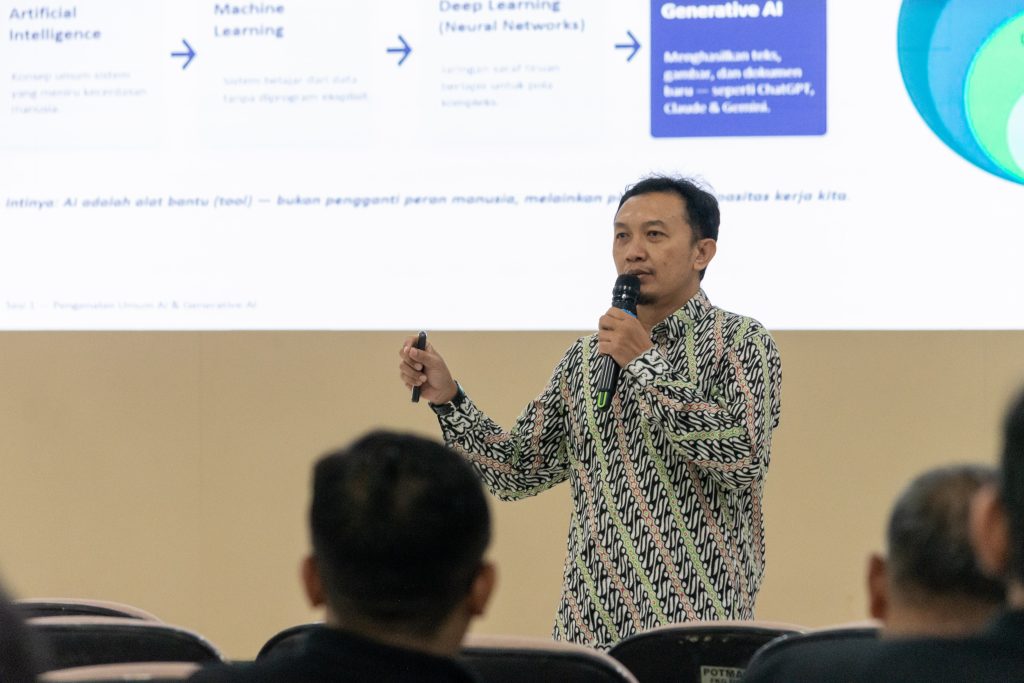
As a speaker, Novan Hartadi, S.T., M.Sc., Director of PT Global Data Inspirasi, said AI should be positioned as a work partner that helps people complete administrative tasks more quickly.
“AI is meant to make activities more effective and productive. I hope participants gain an understanding of how AI can be used to support their day-to-day work,” he said when opening the training session.
Novan explained that the development of generative AI has changed the way people work. The technology can assist in drafting official correspondence, preparing reports and meeting minutes, developing proposals, and analyzing documents that previously required considerable time.
However, he stressed that AI is not a replacement for humans. “AI is essentially just a tool, or an aid. AI does not replace the role of humans. What changes is the way we work, allowing repetitive tasks to be completed more quickly,” he explained.
At the same time, Novan highlighted risks that should not be overlooked. He noted that the ease with which AI generates information can cause users to place excessive trust in its outputs.
“Do not trust it 100 percent. AI can make mistakes or experience hallucinations, so its output must still be verified by humans,” he said.
He also highlighted the growing importance of data security as institutions begin using cloud-based AI services.
“We have to be careful about the risk of data breaches. Personal data belonging to students and lecturers, as well as internal institutional documents, must not be uploaded indiscriminately to AI platforms,” he said.
Menurut Novan, kemampuan menggunakan AI kini tidak cukup hanya mengetahui aplikasi seperti ChatGPT atau Gemini. Pengguna juga harus memahami teknik menyusun instruksi (prompt) secara tepat agar hasil yang diperoleh benar-benar sesuai kebutuhan.
He introduced the Role–Context–Task–Output (RCTO) approach as a simple method for generating more accurate AI outputs.
“The clearer the context and task provided to AI, the better the quality of the results,” he said.
The training also reflects a shift in the paradigm of human resource development in higher education, particularly at FKG UGM. Whereas competency development previously focused more heavily on conventional administrative skills, digital literacy and artificial intelligence are now emerging as fundamental competencies for administrative staff.
Nevertheless, digital transformation still presents several challenges. Technology infrastructure, data security, AI-use regulations, and digital literacy development must progress in parallel to ensure that technology does not create new problems.
FKG UGM has begun this process by strengthening the capabilities of its human resources. This approach demonstrates that the success of digital transformation is determined not by how sophisticated the technology is, but by how effectively people can use it critically, thoughtfully, responsibly, and ethically.
Reporter: Andri Wicaksono, Photographer: Fajar Budi Harsakti