
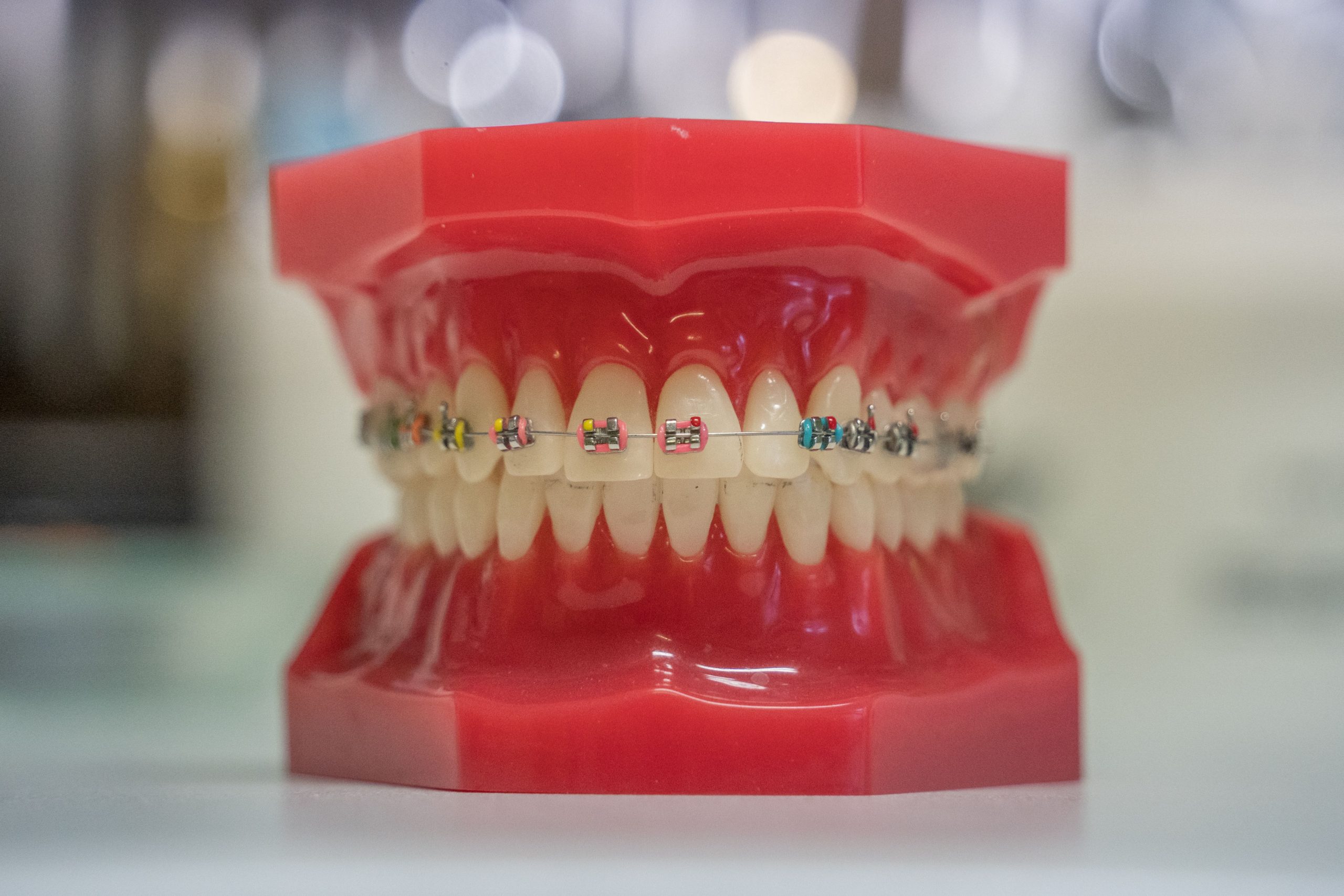
Satu pertanyaan yang semakin sering muncul di kursi ortodonsi: bolehkah saya bleaching dulu sebelum pasang kawat gigi? Bagi banyak pasien dewasa, estetika gigi bukan hanya soal kerataan susunan, tetapi juga soal warna. Mereka ingin senyum yang lurus sekaligus cerah, dan mereka ingin mendapatkan keduanya dalam satu kunjungan jika memungkinkan. Masalahnya, prosedur bleaching diketahui melemahkan ikatan antara bracket dan email gigi, memunculkan kekhawatiran klinis yang selama ini belum memiliki jawaban tuntas.
Penelitian terbaru dari Departemen Ortodonsia Fakultas Kedokteran Gigi Universitas Gadjah Mada menawarkan temuan yang mengubah cara pandang itu.
Ketika Pemutih Gigi Merusak Fondasi Ikatan
Proses bleaching bekerja dengan cara yang kimiawi: hidrogen peroksida memecah molekul kromofor yang mewarnai gigi melalui reaksi reduksi-oksidasi. Hasilnya, gigi menjadi lebih terang. Namun, radikal bebas yang tersisa di permukaan email setelah prosedur ini tidak langsung hilang. Radikal-radikal itulah yang menjadi biang keladi melemahnya daya rekat bracket.
Pada kelompok kontrol dalam penelitian ini, bracket keramik yang dipasang langsung setelah bleaching tanpa perlakuan tambahan hanya menghasilkan shear bond strength (SBS) sebesar 6,32 MPa. Angka ini masih berada di ambang batas klinis yang diterima menurut standar Reynolds, yakni 5,9–7,8 MPa, tetapi dengan standar deviasi yang besar (±4,83 MPa), menandakan ketidakstabilan ikatan yang cukup mengkhawatirkan. Pengamatan dengan scanning electron microscope (SEM) memperkuat temuan ini: permukaan email kelompok kontrol tampak penuh dengan porositas besar menyerupai kawah, dikelilingi struktur prisma email yang tipis dan tidak teratur.
Agen Desensitisasi Sebagai Penyelamat Ikatan
Dr. drg. Dyah Karunia, Sp.Ort., bersama tim peneliti yang terdiri atas Muhammad Haikal Mahardhika, Prof. Pinandi Sri Pudyani, dan Dr. drg. Ananto Ali Alhasyimi, menguji apakah pemberian agen desensitisasi segera setelah bleaching dapat memulihkan kondisi email dan memperkuat ikatan bracket keramik.
Dua jenis agen desensitisasi diuji: CPP-ACFP (casein phosphopeptide-amorphous calcium phosphate fluoride) yang mengandung fluoride, dan CPP-ACP (casein phosphopeptide-amorphous calcium phosphate) yang bebas fluoride. Keduanya diaplikasikan selama tiga menit pada permukaan email yang baru saja di-bleaching dengan hidrogen peroksida 37%, sebelum bracket keramik dipasang menggunakan resin komposit.
Hasilnya mengejutkan dalam arti yang positif.
“Aplikasi agen desensitisasi yang mengandung fluoride maupun yang tidak mengandung fluoride meningkatkan shear bond strength bracket keramik pada gigi yang sebelumnya di-bleaching.”
Kelompok CPP-ACFP mencatat SBS tertinggi sebesar 15,36 MPa, sementara kelompok CPP-ACP menghasilkan 12,19 MPa. Keduanya jauh melampaui kelompok kontrol, dan perbedaan antara keduanya tidak signifikan secara statistik. Artinya, baik agen dengan maupun tanpa fluoride memberikan manfaat yang setara dalam konteks klinis ini.
Mekanismenya dapat dijelaskan melalui remineralisasi. Agen desensitisasi menyuplai ion kalsium dan fosfat ke permukaan email yang terdegradasi, memulihkan struktur mikro dan mengisi porositas yang ditinggalkan oleh proses bleaching. Gambaran SEM dari kedua kelompok perlakuan memperlihatkan pori-pori yang lebih dangkal dan struktur prisma yang lebih rapi dibanding kelompok kontrol.
Antara Kekuatan dan Risiko Debonding
Temuan ini membawa implikasi klinis yang perlu dicermati dari dua sisi. Di satu sisi, peningkatan SBS berarti bracket lebih tahan terhadap gaya mastikasi dan tekanan ortodontik. Di sisi lain, nilai SBS yang melampaui rentang klinis yang dianjurkan, seperti pada kelompok fluoride yang mencapai 15,36 MPa, berpotensi mempersulit proses debonding di akhir perawatan dan meningkatkan risiko fraktur email.
Penilaian adhesive remnant index (ARI) pada ketiga kelompok tidak menunjukkan perbedaan signifikan. Skor ARI tertinggi di setiap kelompok adalah 4, yang berarti kurang dari 10% sisa adhesif tertinggal di permukaan email setelah bracket dilepas. Ini mengindikasikan bahwa kegagalan ikatan terjadi di antarmuka email dan adhesif, bukan di dalam jaringan email itu sendiri. Kondisi ini secara klinis lebih menguntungkan karena mempermudah pembersihan sisa adhesif dan meminimalkan kerusakan permukaan gigi.
Dengan kata lain, teknik debonding yang tepat tetap menjadi faktor penentu untuk mencegah cedera email, terlepas dari seberapa kuat ikatan yang terbentuk.
Satu Kunjungan, Dua Tujuan
Penelitian yang dipublikasikan di jurnal Applied Sciences (MDPI) pada Juli 2023 ini membuka kemungkinan baru bagi praktik ortodonsi: pasien yang menginginkan bleaching dan pemasangan bracket dalam satu sesi tidak lagi harus menunggu satu hingga tiga minggu seperti yang selama ini direkomendasikan, asalkan agen desensitisasi diberikan di antara kedua prosedur tersebut.
Tentu saja, penelitian ini dilakukan secara in vitro menggunakan gigi premolar yang dicabut, sehingga kondisi rongga mulut yang sesungguhnya, termasuk peran saliva dan variasi individual, belum sepenuhnya tercermin. Uji klinis pada pasien hidup masih diperlukan sebelum protokol ini dapat diadopsi secara luas.
Namun untuk pasien yang duduk di kursi ortodonsi sambil berharap bisa pulang dengan senyum yang lebih cerah dan lebih rapi, penelitian ini setidaknya membuktikan bahwa harapan itu bukan sekadar mimpi yang terlalu ambisius.
Sumber DOI : https://doi.org/10.3390/app13148351
Penulis : Nanda Ayu , drg. Achmad Zam Zam Aghasy, M.Kes.
Foto : Pexels

