
Siapa sangka jika cangkang landak laut yang berduri tajam atau limbah cangkang keong yang berserakan di pantai bisa menjadi penyelamat bagi pasien patah tulang dan kerusakan gigi? Inovasi ramah lingkungan yang mengawinkan sains dan kelestarian alam ini dikupas tuntas dalam ajang internasional International Dental Summer Course (IDSC) 2026 yang berlangsung di Gedung Margono Soeradji L3, Fakultas Kedokteran Gigi Universitas Gadjah Mada (FKG UGM) pada Selasa,14 Juli 2026.
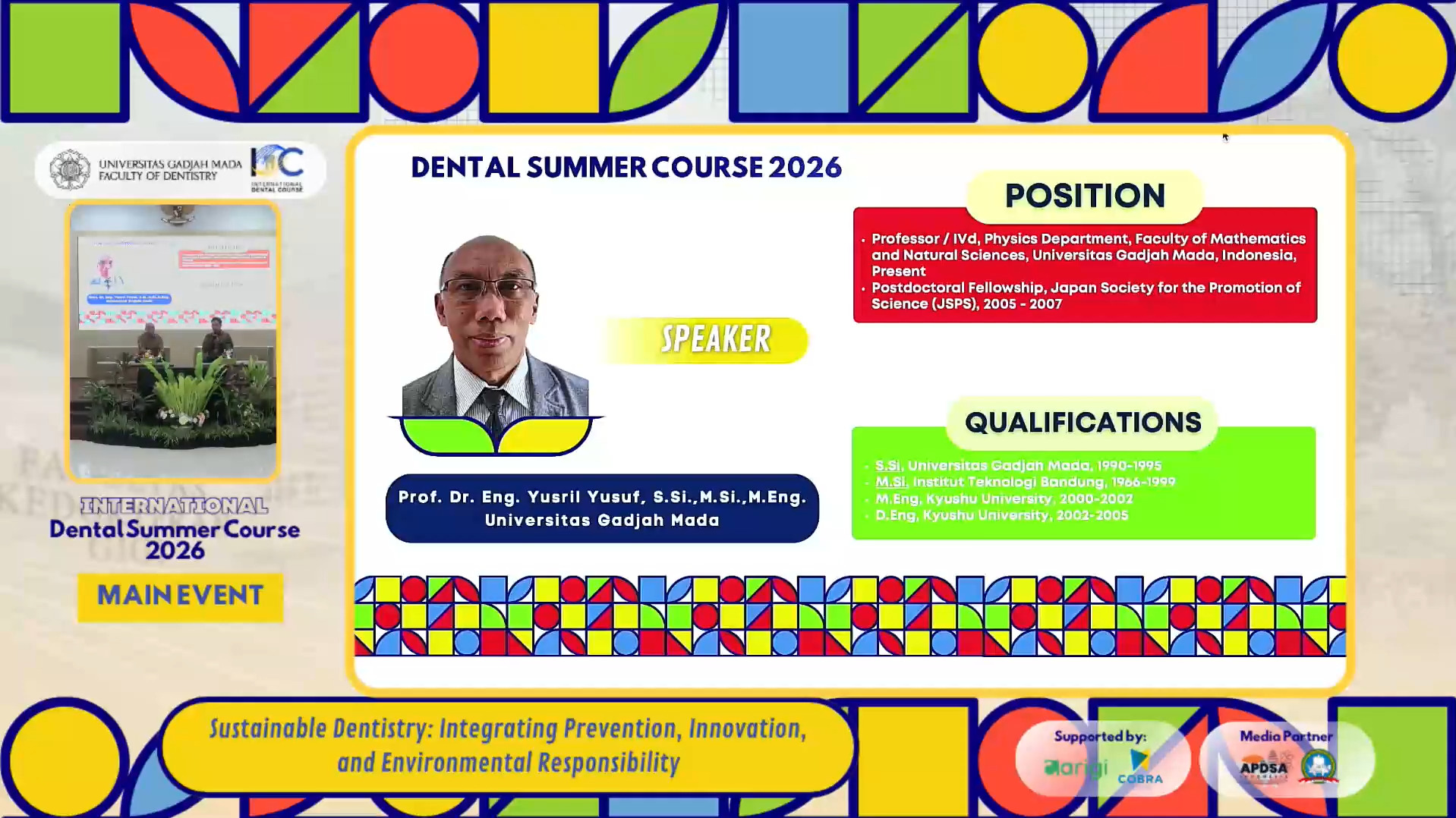
Memasuki hari kedua, suasana auditorium langsung dipanaskan oleh paparan memikat dari pakar biomaterial terkemuka sekaligus Guru Besar Departemen Fisika FMIPA UGM, Prof. Dr. Eng. Yusril Yusuf, S.Si., M.Si., M.Eng.. Di bawah panduan moderator Dr. Daniel Rino, Prof. Yusril membawakan kuliah bertajuk “Waste Management Strategy for Biomedical Application: Transforming Biogenic Waste into Functional Bioceramics”.
Paradoks Medis: Indonesia Kaya Maritim, tapi Impor Bahan Tulang
Dalam presentasinya, Prof. Yusril membeberkan ironi yang terjadi di dunia medis Indonesia. Sebagai negara maritim besar, Indonesia memiliki limpahan sampah biogenik—seperti cangkang kerang, tulang ikan, hingga limbah pertanian—yang belum dikelola efektif. Di sisi lain, rumah sakit di dalam negeri justru membakar anggaran besar demi mengimpor material sintetis untuk kebutuhan graf/tambal tulang (bone graft).
“Kami mencoba menjembatani masalah ini dengan strategi daur ulang, mengubah residu biologis tersebut menjadi material medis yang terstandarisasi,” ujar Prof. Yusril.
Melalui riset mendalam di laboratoriumnya, tim Prof. Yusril berhasil mengekstraksi kalsium karbonat () dari limbah mentah menggunakan metode fisik top-down (seperti mesin ball mill) serta metode kimia bottom-up (seperti wet precipitation, sol-gel, dan hidrotermal) untuk menghasilkan bubuk biokeramik hydroxyapatite berskala nano.
Formula hydroxyapatite alami dari limbah ini memiliki keunggulan adaptif karena strukturnya mirip dengan mineral tulang manusia asli. Hebatnya lagi, inovasi ini sukses melahirkan produk siap pakai, mulai dari perancah jaringan (tissue scaffold) berbasis printer 3D hingga gel remineralisasi gigi yang ampuh melenyapkan noda putih akibat demineralisasi serta menangkal serangan asam bakteri.
Keajaiban Duri Landak Laut
Salah satu produk yang paling mencuri perhatian peserta adalah bone graft berbentuk granul (butiran) yang diproduksi dari duri landak laut (sea urchin spine). Karakteristik unik dari duri landak laut ini secara alami mengandung ion magnesium yang mampu merangsang pertumbuhan tulang baru (osteogenesis) dan pembentukan pembuluh darah (angiogenesis).
Riset menunjukkan bahwa granul dari landak laut ini memiliki tingkat kepadatan pengisian defect yang jauh lebih tinggi dan struktur pori mikro yang sempurna dibandingkan granul iregular yang beredar di pasaran klinik saat ini. Keberadaan produk ini sekaligus menjadi angin segar agar dokter tidak perlu lagi melakukan operasi ekstra pada tubuh pasien hanya demi mengambil donor tulang biologis.
Menuju Kemandirian Pasar: 5 Tahun Lagi Siap Komersial
Sesi presentasi dilanjutkan dengan diskusi interaktif yang memicu antusiasme tinggi dari para peneliti muda. Farah Fonia, mahasiswa dari Universitas Sumatera Utara, serta Abel dari Universitas Padjadjaran, melayangkan pertanyaan kritis seputar pengaruh jenis cangkang keong terhadap sifat mekanis material serta efisiensi penggunaan cangkang telur vs tulang ikan.
Menutup sesi yang penuh inspirasi tersebut, Dr. Daniel Rino melempar pertanyaan pamungkas mengenai efisiensi biaya dan kapan produk lokal berbasis limbah ini bisa menggantikan produk standar emas impor yang mahal.
Prof. Yusril, yang mendalami riset biomaterial ini sejak tahun 2016, menjawab dengan optimis. “Dari riset nol sampai menghasilkan produk dan menyelesaikan seluruh uji laboratorium, uji in-vitro, hingga uji in-vivo, kami membutuhkan waktu sekitar 10 tahun. Saat ini seluruh fase ilmiah tersebut sudah selesai dengan hasil yang sangat baik. Langkah berikutnya adalah menjembatani produk ini ke sektor industri. Target kami, maksimal lima tahun ke depan produk ini sudah bisa masuk ke pasar komersial,” pungkasnya yang disambut tepuk tangan meriah dari audiens.
Acara pun diakhiri dengan penyerahan sertifikat penghargaan kepada Prof. Yusril Yusuf yang diserahkan langsung oleh Dr. Raras selaku perwakilan dari pihak panitia.
Reporter : Nanda , Andri
Foto : Tangkapan Layar Zoom Meeting

