
Environmental sustainability is now making its way into the field of dentistry. At an international scientific forum organized by the Faculty of Dentistry, Universitas Gadjah Mada (UGM), on Thursday (9/26), academics and healthcare practitioners from around the world gathered to discuss the future of more environmentally responsible healthcare.
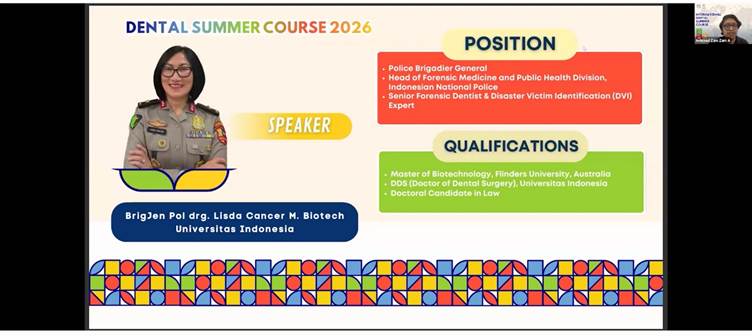
The keynote speaker was Brigadier General Dr. drg. Lisda Cancer, M.Biotech., a senior officer of the Indonesian National Police and one of the country's leading forensic experts. In her scientific presentation, titled “From Oral Health to Planetary Health: An Ethical Perspective on Sustainable Dentistry,” she emphasized the importance of repositioning professional dental ethics around the responsibility to protect the planet.
The event, moderated by drg. Achmad Zam Zam Aghasy, M.Kes., unfolded dynamically and generated several important points concerning both the challenges and practical solutions involved in implementing environmentally responsible healthcare services.
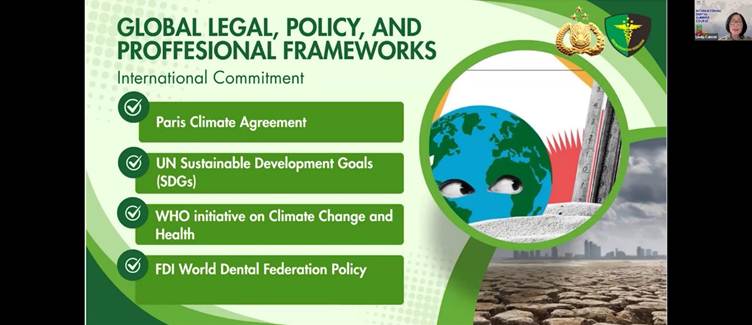
The Often-Overlooked Ecological Footprint of Dental Clinics
Although a single dental clinic may seem relatively small, the cumulative impact of thousands of clinics worldwide can contribute significantly to environmental damage. Mountains of Medical Waste: Thousands of masks, gloves, and disposable suction tips are discarded every day. The Domino Effect: Through the Planetary Health paradigm, it becomes clear that environmental degradation caused by pollution and climate change ultimately comes back to affect human health—including contributing to oral diseases.
Rethinking the Ethics of Modern Dentistry
Dr. Lisda expanded the four conventional principles of medical ethics so that dentists would not only protect their patients but also protect the environment: Beneficence: Choose treatment options and materials that cause the least ecological harm. Non-Maleficence: Apply the principle of do no harm by strictly managing medical waste to prevent environmental contamination that could endanger communities. Autonomy: Provide patients with honest information about more environmentally friendly treatment options. Justice: Conserve water and energy in dental clinics today in recognition of future generations' right to a healthy environment.
During the question-and-answer session, a participant named Vanaj raised a dilemma: in developing countries where even basic access to dental care remains limited, which should take priority—access to care or environmental concerns? Dr. Lisda offered a practical answer. In her view, the two issues do not need to be placed in opposition because the key to sustainability lies precisely in prevention. One Action, Multiple Benefits: Educating communities about preventing dental caries is one of the most environmentally friendly steps that can be taken. The logic is simple: if people do not develop cavities, there is no need for clinical procedures, no disposable medical materials to discard, and no carbon emissions from patients repeatedly traveling to and from dental clinics.
Responding to another participant, Meswari Santika, who asked about the future of private dental clinic operations, Dr. Lisda emphasized that Indonesian law is already well equipped to address the issue. Private clinics can no longer overlook environmental responsibilities, as national regulations provide clear mandates. Health Law No. 17 of 2023: Requires the integration of preventive and promotive healthcare services in line with environmentally responsible principles. Environmental Protection and Management Law No. 32 of 2009: Requires every dental clinic to manage its environmental impact responsibly, from strict medical waste segregation to providing a wastewater treatment facility (Instalasi Pengolahan Air Limbah or IPAL) when required to obtain or maintain its practice license. Dentists are no longer simply healers working within the four walls of a clinic. They are increasingly becoming guardians of the sustainability of the planet's ecosystems.
(Reporters: Nanda, Any, Andri)