
A patient arrives at a dental clinic without any symptoms. No fever, no cough, no shortness of breath. Yet SARS-CoV-2 may already be silently present in the patient’s oral cavity. This was one of the most concerning scenarios for dental professionals during the COVID-19 pandemic. A study published in the Indonesian Dentistry Magazine in April 2020 by drg. Heribertus Dedy Kusuma Yulianto, M.Biotech., Ph.D., together with a team of researchers from the Faculty of Dentistry, Universitas Gadjah Mada (FKG UGM), Yogyakarta, examined the risk of COVID-19 cross-infection in dental practice settings while also proposing evidence-based prevention strategies. The research involved a systematic review of 52 scientific articles published between January 2015 and May 2020, when the pandemic was at the height of its uncertainty.
The Mouth as an Often-Overlooked Gateway
Public attention has largely focused on the nose and respiratory tract as the primary routes of SARS-CoV-2 infection. However, the FKG UGM research team emphasized that the oral cavity plays an equally important role.
SARS-CoV-2 attaches to angiotensin-converting enzyme 2 (ACE2) receptors, which function like “doorways” on the surface of human cells. These receptors are found in high numbers in the epithelial tissues of the oral mucosa, including the tongue, gums, and other soft tissues. Saliva, which continuously moistens the oral cavity, serves as an important medium through which the virus can persist and spread.
Interestingly, tongue epithelial cells have been found to exhibit the highest ACE2 expression among oral tissues. This may help explain why one of the early symptoms of COVID-19 is loss of taste, medically known as ageusia. In addition, patients with COVID-19 have been reported to experience other oral manifestations, including pain, desquamative gingivitis, ulcers, and blisters of the oral mucosa.
Aerosols in the Dental Chair: An Invisible Threat
This is where the risk in dental clinics becomes particularly unique. Almost all dental procedures—from cavity preparation using a high-speed air-turbine handpiece and ultrasonic scaling to root canal treatment—can generate substantial amounts of droplets and aerosols.
Droplets larger than 5 micrometers can be transmitted over distances of less than one meter. Smaller aerosols, measuring 5 micrometers or less, can remain airborne and travel more than one meter. For dentists working at extremely close range to a patient’s oral cavity, such exposure is nearly unavoidable without strict infection-control protocols.
The situation is further complicated by the fact that people infected with COVID-19 may show no symptoms while still being capable of transmitting the virus. Without proper screening, such patients could sit in the dental chair and unknowingly spread the virus throughout the treatment room through aerosols generated during the procedure.
“Cross-infection of COVID-19 via oral transmission of SARS-CoV-2 virus in the salivary droplets and aerosol has become a ‘novel challenge’ for dental professionals.” — Yulianto et al., Majalah Kedokteran Gigi Indonesia, 2020
Povidone-Iodine: A Simple Solution Backed by Evidence
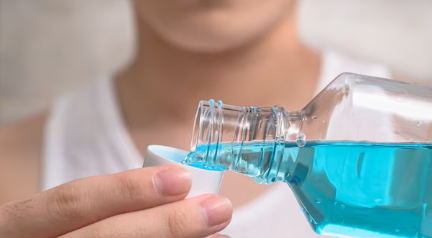
Among the prevention strategies analyzed, one finding stood out: the use of povidone-iodine (PVP-I) mouthwash was shown to significantly reduce the risk of cross-infection from asymptomatic COVID-19 patients.
PVP-I diluted to a concentration of 0.23% was shown in vitro to be effective as an antiviral agent against MERS-CoV and SARS-CoV-1, with the ability to eliminate up to 99.99% of the viruses. For routine clinical use, PVP-I was diluted at a ratio of 1:20 with sterile or distilled water, resulting in a final concentration of 0.5%. Patients or healthcare workers were advised to gargle every two to three hours, or four times daily for 60 seconds.
Another advantage of PVP-I is its safety profile. Cytotoxicity tests showed that PVP-I had lower toxic effects on mucosal cells than other mouthwashes, such as chlorhexidine digluconate and octenidine dihydrochloride. Nevertheless, the researchers cautioned that 5% and 10% PVP-I concentrations are ciliotoxic to respiratory epithelial cells, so its use should follow the recommended concentrations.
In addition to PVP-I mouthwash, the study also recommended the use of rubber dams during procedures, saliva suction devices, aerosol boxes for cavity preparation, and routine sterilization of dental unit waterlines.
Patient Screening and New Protocols for the New Normal
The research team developed a comprehensive patient-management pathway, beginning with online questionnaire-based screening before appointments, followed by temperature checks using non-contact thermometers. Suspected COVID-19 patients were to be separated and placed in well-ventilated rooms at least two meters away from other patients.
Non-emergency procedures were recommended to be postponed for at least 14 days for suspected cases. For emergencies such as acute apical abscesses, periodontal abscesses, or irreversible pulpitis, treatment could still be provided under strict protocols using personal protective equipment (PPE) in accordance with CDC standards, including N95 masks, face shields, gowns, and gloves.
This study serves as a reminder that a dental chair is not merely a place where teeth are filled or molars extracted. During a pandemic, it becomes a point where risk and caution, scientific knowledge and practical action, intersect. Protocols developed from research such as this not only protect patients but also help safeguard dentists and clinical staff so that they can continue working and providing care.
Authors: Achmad Zam Zam Aghasy, DDS, M.Kes.; Hazra Alifia Muharam
Photo: Freepik
Source DOI: http://doi.org/10.22146/majkedgiind.56588