
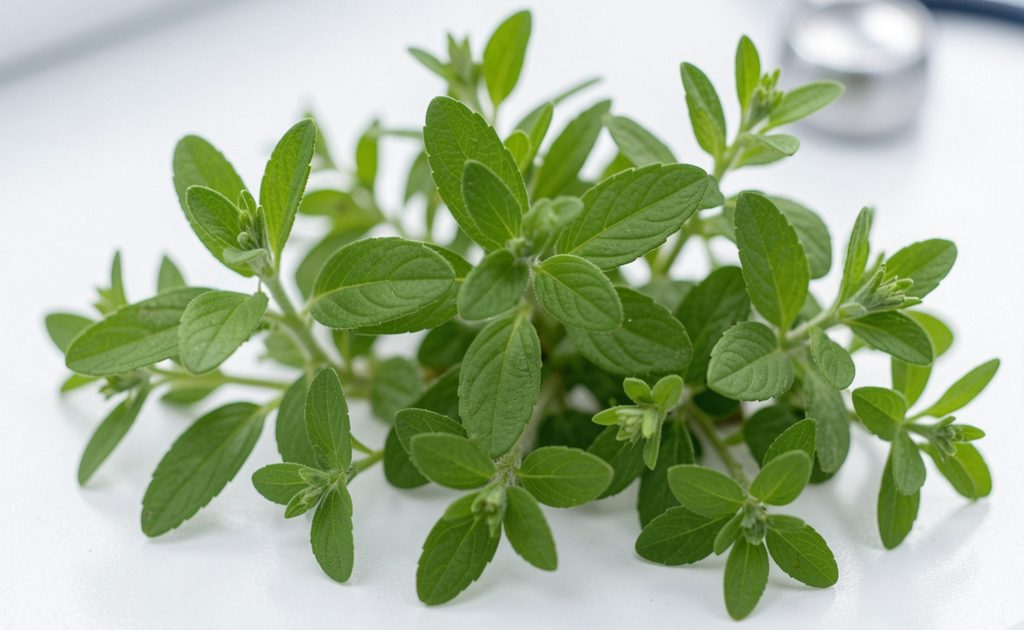
Seventy-four point one percent—that is the prevalence of gingivitis in Indonesia according to the Basic Health Research (Riskesdas). Nearly three out of every four Indonesians have experienced or are currently experiencing gum inflammation. The problem is not simply swollen or bleeding gums; if left untreated, gingivitis can progress to periodontitis, which damages the bone supporting the teeth. Now, researchers from the Faculty of Dentistry, Universitas Gadjah Mada, have discovered something unexpected: an extract from the wild plant Euphorbia hirta, commonly known in Indonesia as patikan kebo, can accelerate gingivitis healing when used as a coolant for a piezoelectric ultrasonic scaler. The findings were published in the Journal of Taibah University Medical Sciences in 2024.
Scaler Coolant Is More Than Just Water
Scaling, or professional removal of dental calculus, is a standard procedure for treating gingivitis. One of the most commonly used instruments is the piezoelectric ultrasonic scaler, which uses high-frequency vibrations to remove calculus deposits and bacterial plaque from tooth surfaces. The instrument requires a continuous flow of coolant throughout the procedure to prevent the tip from overheating while also flushing debris from the working area.
Until now, the coolant has generally consisted of plain water or standard antiseptic solutions. Prof. Dr. drg. Archadian Nuryanti, M.Kes., the principal investigator and a member of the Department of Biomedical Dentistry at FKG UGM, saw an opportunity that had largely been overlooked: what if the coolant itself could provide therapeutic benefits? What if the water flowing over the gingival tissue during scaling could also help reduce inflammation?
That question led to this study. The research team processed Euphorbia hirta into a nanoextract and tested it as a coolant for a piezoelectric ultrasonic scaler in Wistar rats with experimentally induced gingivitis.
From a Roadside Weed to Nanotechnology
Euphorbia hirta may not look like a remarkable plant to most people. It grows wild along roadsides, in fields, and around homes. Scientifically, however, the plant contains several potentially valuable bioactive compounds, including flavonoids, tannins, saponins, and terpenoids, all of which have anti-inflammatory and antibacterial properties.
The challenge is that these compounds do not readily penetrate body tissues when used in conventional extract form. This is where nanoparticle technology comes in. The researchers used an ionic gelation method with chitosan as the coating material. Chitosan is a natural polymer derived from marine animal shells. It is biodegradable and biocompatible and also has antibacterial activity, particularly against Gram-positive bacteria such as Porphyromonas gingivalis, one of the bacteria associated with periodontal disease.
The resulting nanoextract particles measured 485 nanometers in size and had a zeta potential of 43.6 mV. A zeta potential above 30 mV indicates good stability, meaning the particles are less likely to aggregate in solution. The nanoextract was then prepared at three concentrations: 25%, 30%, and 35%.
Fewer White Blood Cells, More New Blood Vessels
The study involved 45 adult male Wistar rats divided into five groups: three treatment groups receiving nanoextract concentrations of 25%, 30%, and 35%; a negative control group receiving plain water; and a positive control group receiving 2% iodine glycerin solution. Gingivitis was induced by placing silk sutures around the upper incisors for seven days until classic signs of gum inflammation—redness, swelling, and bleeding on contact—appeared.
After scaling, the gingival tissues were examined on days 3, 5, 7, 14, and 21. Two key indicators were measured: neutrophil count and angiogenesis, both of which play important roles in tissue healing.
Neutrophils are the first white blood cells to arrive at a site of infection. A high neutrophil count indicates that inflammation is still active, while a decline suggests that healing is progressing. Angiogenesis, meanwhile, refers to the formation of new blood vessels, an essential process for delivering oxygen and nutrients to recovering tissue.
The results were notable. The 25% nanoextract group showed a faster decline in neutrophil counts than the plain-water group, along with greater angiogenesis. More importantly, the performance of the 25% nanoextract group was not statistically different from that of the positive control group treated with 2% iodine glycerin, a clinical standard used for comparison.
“The use of Euphorbia hirta nanoextract as a coolant for a piezoelectric ultrasonic scaler showed good therapeutic effects in promoting gingivitis healing, particularly at a concentration of 25%.” — Prof. Dr. drg. Archadian Nuryanti, M.Kes., principal investigator, Department of Biomedical Dentistry, FKG UGM
The mechanism appears to involve several pathways. Flavonoids in E. hirta inhibit cyclooxygenase and lipoxygenase enzymes involved in the synthesis of prostaglandins and leukotrienes, two major inflammatory mediators. Saponins stimulate the expression of vascular endothelial growth factor (VEGF), a molecule that promotes the formation of new blood vessels. Tannins act as antibacterial and antioxidant agents, supporting fibroblast proliferation and capillary growth.
Potential—and the Long Road to Clinical Use
These findings offer a new perspective on nonsurgical periodontal therapy. Efforts to improve the effectiveness of scaling have traditionally focused on instrumentation techniques or the addition of antibiotics. The latter approach has come under increasing scrutiny amid the growing global threat of antimicrobial resistance.
A herbal coolant formulated using nanoparticle technology offers a different strategy: using an existing scaling procedure as a “vehicle” to deliver anti-inflammatory agents directly to inflamed gingival tissue—without an additional procedure and without the risk of antibiotic resistance.
The study was funded by the 2019 FKG UGM Community Fund and received ethical approval from the Ethics Committee of the Faculty of Medicine, UGM. However, the researchers acknowledge that this is only an initial step. Further studies are needed to isolate the active components of E. hirta individually, understand their pharmacokinetic and pharmacodynamic profiles, and evaluate their safety and efficacy in humans before the approach can be introduced into clinical practice.
The plant long dismissed as a weed may contain more potential than we realize. This study has merely opened one of the doors.
Authors: Achmad Zam Zam Aghasy, DDS, M.Kes.; Hazra Alifia Muharam
Photo: Freepik
Source DOI: https://doi.org/10.1016/j.jtumed.2023.09.004