
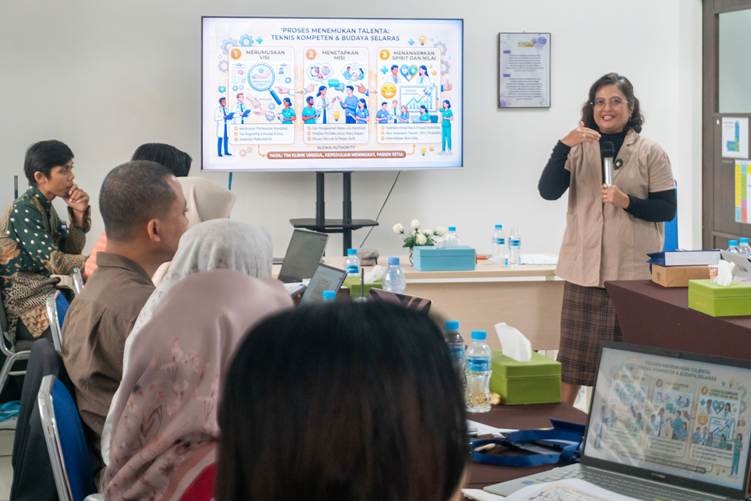
Human resource (HR) challenges in the healthcare sector do not always stem from a shortage of workers. In many cases, the problems arise from flawed recruitment processes, unclear reward systems, and leadership that fails to build a sense of belonging within the workplace.
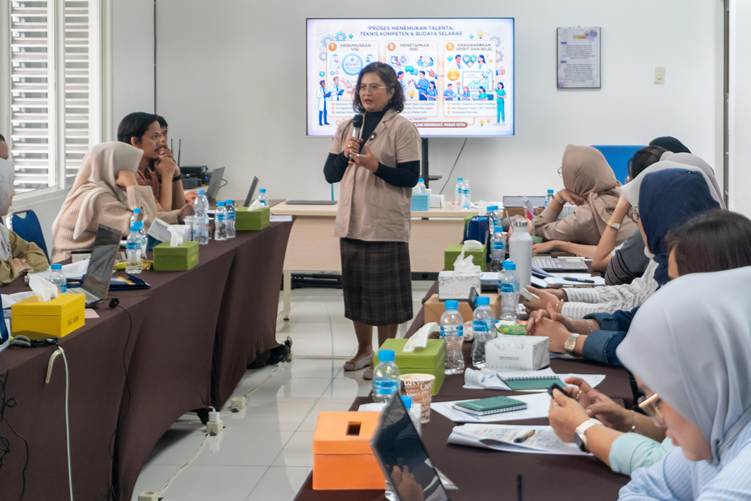
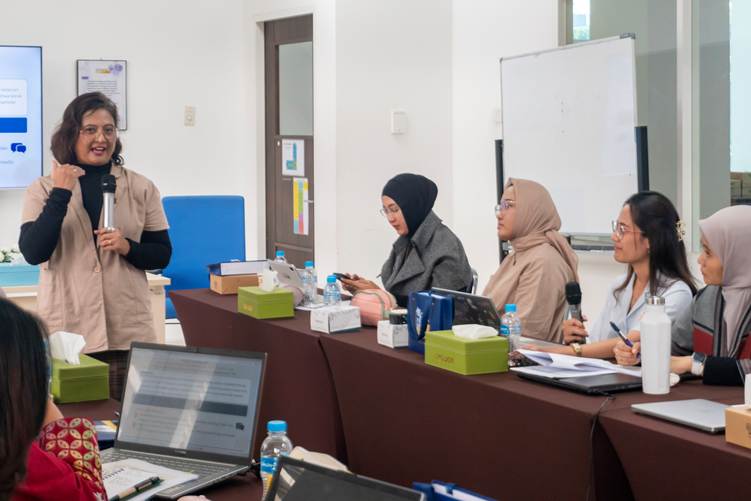
This message was highlighted by dental practitioner and HR management expert at Prof. Soedomo Dental Hospital (RSGM), Margareta Rinastiti, drg. Margareta Rinastiti, M.Kes., Sp.KG. Subsp.KR(K)., Ph.D., widely known as drg. Tita, during a dental clinic HR management forum held in Yogyakarta on Friday (12/6/2026).
Rather than focusing solely on administrative aspects, drg. Tita criticized the tendency of many institutions to prioritize technical competence while neglectingvalue alignmentbetween individuals and organizations.
“If there is no alignment, there are two options: we can try to fix the problem, or perhaps we truly cannot find common ground,” she said. She emphasized that not all HR issues can be resolved through training or reprimands. In certain situations, organizations must be willing to make firm decisions to maintain service quality.
Recruitment Requires Sharp Intuition
According to drg. Tita, one of the most common mistakes in employee selection is asking questions that encourage candidates to provide normative and idealistic answers.
When asked how they would treat underprivileged patients, for example, almost every applicant would answer that they would help those patients. However, such answers, she argued, do not sufficiently reveal a person’s true character.
“If you want to find the right person, do not ask about their ideals. Ask about what they have experienced. Through small experiences, we can actually understand who they really are,” she said.
She explained that interviewers would gain deeper insights by exploring candidates’ experiences in caring for younger siblings, resolving conflicts, or dealing with everyday challenges rather than asking about ideal concepts that can easily be memorized.
This perspective reflects a shift in the modern recruitment paradigm: technical skills can be taught, but character, resilience, and organizational cultural fit are far more difficult to develop.
Competence Matters, but Potential Matters More
drg. Tita also questioned the obsession of some institutions with candidates who are considered “perfect” from the beginning.
According to her, candidates who still have shortcomings but demonstrate a willingness to learn are often more valuable than individuals with high competence but poor adaptability.
“When I see someone who may still be below average in terms of ability but is willing to learn and has potential, I would choose that person. Everything can be learned,” she said.
This statement serves as a critique of recruitment cultures that rely too heavily on academic achievements or certificates without measuring an individual’s ability to grow in the long term.
Transparency Is Non-Negotiable
Amid increasing public awareness of organizational governance, drg. Tita believes transparency in recruitment is no longer optional.
The larger the organization, the greater the demand for accountability.
“When a clinic or institution grows larger, its processes must become increasingly transparent. People now want to know why someone was accepted or rejected,” she said.
According to her, a closed recruitment process can create internal distrust while also increasing the risk of accusations of nepotism or unfair treatment.
Loyalty Does Not Come from Salary Alone
In a session that attracted significant attention from participants, drg. Tita challenged the assumption that employee loyalty is determined solely by income levels.
assumption that employee loyalty is determined solely by income levels. She believes that today’s workforce, particularly Generation Z, increasingly demands clear career direction, personal development opportunities, and certainty regarding work systems.
Employees, she said, need to understand where they will be positioned five years from now, what training opportunities they will receive, and what career paths are available.
“People work because they want to move forward. If we can show them their career projections, it will motivate them,” she said.
This analysis aligns with various modern management studies showing that HR retention is increasingly influenced by non-financial factors, such as growth opportunities, a healthy work environment, and recognition of contributions.
Reward and Punishment Must Be Equally Clear
One of the strongest criticisms was directed toward institutions that are quick to impose punishment but reluctant to provide rewards.
drg. Tita emphasized that reward systems must have standards that are as clear as disciplinary systems.
“Do not only make punishment clear; rewards must also be clear. Rewards can be monetary or non-monetary,” she said.
According to her, rewards do not always have to take the form of money. Opportunities to attend training, conduct benchmarking visits to other institutions, or receive simple appreciation through team activities can become effective retention strategies.
On the other hand, she stressed that disciplinary violations must have measurable consequences.
A doctor’s lateness, for example, does not only affect service schedules but may also reduce the number of patients who can be treated, ultimately causing losses for the institution.
KPIs and Digitalization as Key Factors
drg. Tita highlighted the importance of measurable Key Performance Indicators (KPIs).
According to her, many HR conflicts occur because organizations lack objective performance measurements.
“Patient appointment compliance, for example, can become a KPI for front office staff. With KPIs, rewards and punishments become clearer,” she said.
She also encouraged clinics to invest in information systems to reduce the potential for service manipulation and unfairness in patient queues.
“Investment in information systems is indeed significant, but the impact is also significant,” she said.
Humanistic Leadership, Not Permissive Leadership
Although advocating a human-centered approach, drg. Tita reminded leaders that they must not lose their firmness.
According to her, humane leadership does not mean allowing rule violations to continue indefinitely.
“The boundary is the rules. When the situation is serious, we must be serious. When it is relaxed, we can be relaxed. But when rules have been violated, it does not mean we simply ignore them,” she emphasized.
She even raised the example of an employee who experienced limitations due to an accident. In such situations, leaders must balance organizational efficiency considerations with humanitarian aspects.
“From a financial calculation perspective, it may not be efficient. However, there are other factors that must also be considered,” she said.
New Challenges: AI and Data Literacy
Entering the digital era, HR management challenges are becoming increasingly complex. drg. Tita highlighted the possibility of adopting artificial intelligence (AI)-based diagnostic tools in clinics.
The challenge is that technology can be purchased quickly, but HR capabilities do not automatically develop at the same pace.
When a clinic has highly accurate AI equipment but employees lack sufficient data literacy, the organization must decide whether to improve the capabilities of existing employees or recruit new personnel.
For her, the first option should remain the priority by providing development opportunities for employees who demonstrate willingness to learn.
Human Resources as a Long-Term Investment
At the end of her presentation, drg. Tita reminded participants that HR management is not merely an administrative activity but a long-term process that begins when someone is recruited and continues until retirement.
“Human resources are a long-term matter. There is never one single strategy that works for everyone,” she said.
The statement served as a closing reminder and a fundamental critique of many healthcare organizations in Indonesia: technology can be purchased, buildings can be constructed, but developing the right people requires patience, consistency, and the courage to make decisions.
Amid increasingly intense competition in healthcare services, HR quality may become the most decisive factor separating clinics that grow from those that merely survive.
(Reporter: Andri Wicaksono, Photography: Dodi Hendro Wibowo)