
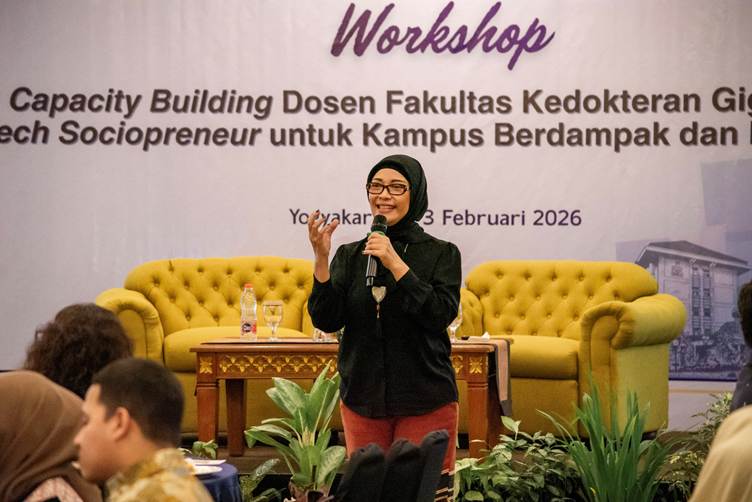
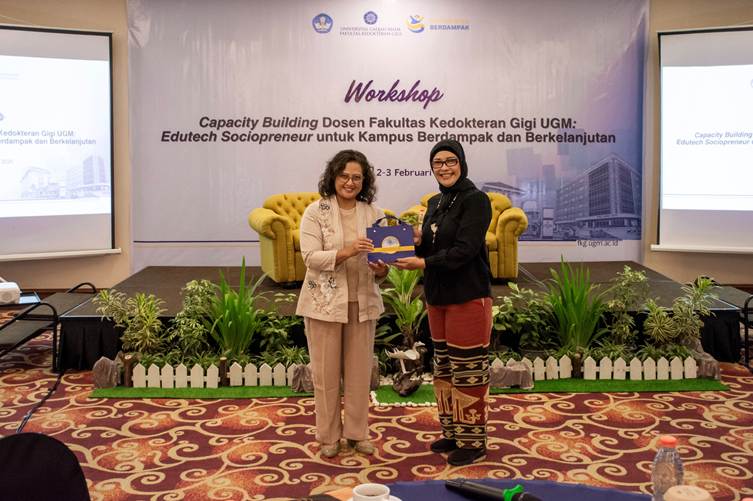
The capacity-building workshop for faculty members at FKG UGM that morning evolved beyond a routine professional development session. It became a moment of reflection—and a mirror for health higher education in Indonesia: how far can universities keep pace with industries that evolve faster than curricula?
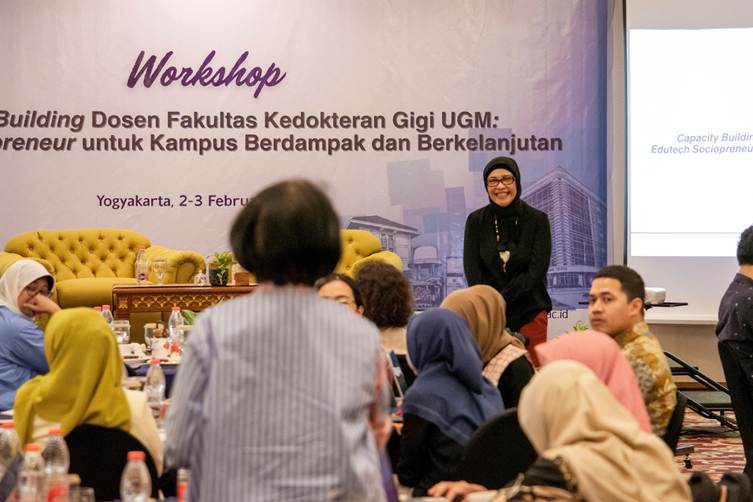
A presentation by digital industry and sociopreneurship practitioner Amalia Susilowati Prabowo, S.Str., MM, CMT., President Director of ExporHub.id and global partner of Alibaba.com, shifted discussion toward a more fundamental issue: graduate relevance in a fully digital, data-driven, socially conscious workforce.
Industry No Longer Waits for Universities
Amalia described an industry landscape where degrees and GPAs are no longer primary determinants. Employers—especially in healthcare and community-based services—seek graduates who are adaptable, communicative, and socially aware.
“Companies must invest six months just to make fresh graduates job-ready,” she said. The gap lies not in intelligence, but in practical skills—data processing, public communication, and digital ethics.
This resonates with the growth of modern dental clinics in urban areas like BSD, South Tangerang. Small in scale, these clinics excel in branding, environmental sustainability, and engagement with young patients—especially Generation Z, for whom social values are a form of currency.
Generation Z and Social Media: A Double-Edged Sword
In the era of people-generated content, Instagram, LinkedIn, and personal blogs function as professional showcases rather than private spaces.
In several global companies, including Alibaba’s partners, digital footprint analysis is part of recruitment. “A high GPA without a digital presence may actually delay hiring,” Amalia noted.
However, social media also poses risks. Limited digital literacy and emotional resilience can derail careers even before they begin—simply due to impulsive posts or inappropriate public responses.
Dental Clinics and the Sociopreneurship Paradigm
For dental education, this presents a dual challenge. Graduates must not only possess clinical expertise, but also understand service management, digital marketing, medical waste management, and collaboration with communities and NGOs.
Amalia emphasized that many modern dental clinics managed by younger generations have adopted sociopreneurship principles—integrating business sustainability, social responsibility, and digital technology.
Internal Alibaba research shows that over 70% of global consumers prefer products and services committed to social and environmental values—a trend increasingly evident in Indonesia, including healthcare.
Universities at a Crossroads
Faculty discussions revealed a growing awareness: health higher education must extend beyond knowledge transfer and clinical competence. Universities must cultivate digital character—training students to interpret data, manage public identity, collaborate across disciplines, and build social empathy.
Ideas emerged, including social project-based assignments, popular publications on digital platforms, and student collaboration with communities and industry partners.
Between Idealism and Reality
Amid policy limitations, bureaucracy, and regulatory pressures, higher education stands at a crossroads: remain an ivory tower of knowledge, or transform into a responsive learning ecosystem.
society has changed, and students have changed. If universities do not move forward, the gap between graduates and workplace reality will continue to widen.
Reporter: Andri Wicaksono, Photographer: Fajar Budi Harsakti