

Yogyakarta, 20 November 2025 — In celebration of its 76th Dies Natalis, Universitas Gadjah Mada (UGM), through its Health Cluster, organized a national training program titled “Strengthening the Role of Health Cadres in Supporting the Integration of Primary Care Services at Puskesmas.” The activity involved 1,000 health cadres and 1,000 supervisors from various regions across Indonesia as part of efforts to strengthen community participation in improving primary healthcare services.
One training session featured two speakers, dr. Dana D.H. Laksmidewi, MSc., Sp.B(K)Onk., and dr. Ratri Wulandari, MSc., PhD., SpOG, who discussed early detection of breast cancer and cervical cancer.
In her presentation, dr. Dewi explained that breast cancer currently has the highest incidence among women in Indonesia, with more than 50% of cases diagnosed at an advanced stage. She emphasized the importance of breast self-examination (SADARI), clinical breast examination (SADANIS), and follow-up examinations such as mammography, ultrasound, and MRI according to risk groups.
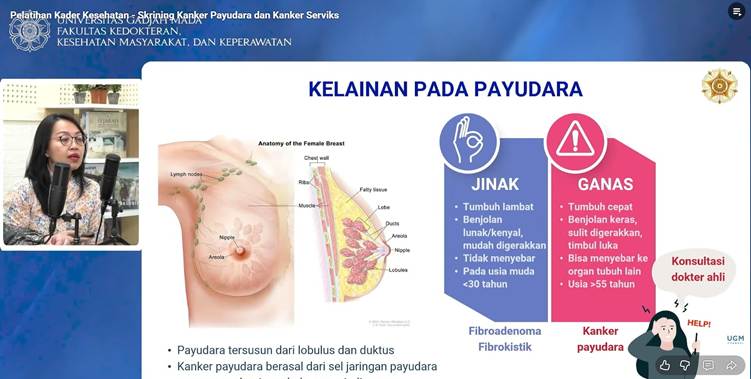
“Early detection can reduce mortality risk by up to 20%. Patients diagnosed at an early stage have a much higher survival rate than those presenting at an advanced stage,” she explained.
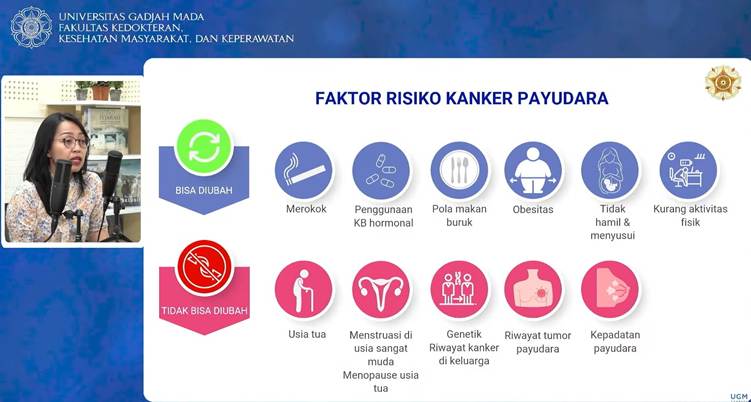
Dr. Dewi also outlined breast cancer risk factors, including age, reproductive history, long-term hormonal contraceptive use, obesity, and genetic factors such as BRCA1 and BRCA2 mutations. She stressed that cadres must provide basic education to encourage communities to seek medical attention promptly when lumps are detected and to understand referral procedures.
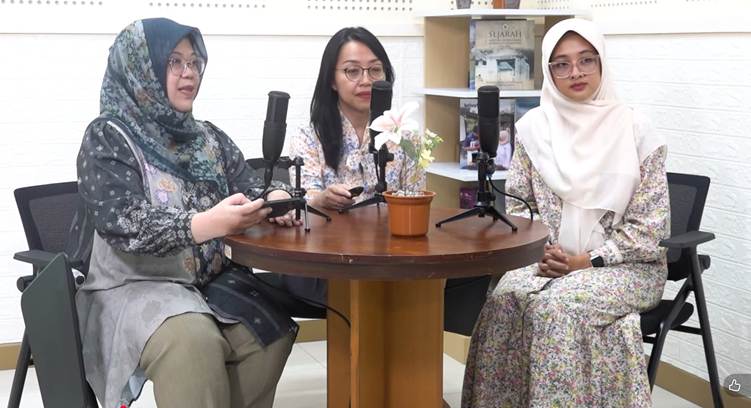
Cadres as Pillars of National Health Resilience
The organizing committee added that strengthening cadre capacity is part of UGM’s vision of fostering a healthy campus and a self-reliant nation. “Health is not only knowledge—it is culture. Through collaboration between universities, healthcare professionals, and communities, we hope to develop resilient cadres who can drive innovation at the regional level,” the committee explained.
The training curriculum is available digitally through the Pelataran Sehat platform. Participants who complete the training are entitled to receive a competency recognition certificate from the Ministry of Health.
Sustainable Expectations
Through this large-scale training, UGM hopes health cadres will become the frontline in disease prevention, health promotion, and the strengthening of primary care services. “A strong nation begins with a healthy society. The role of cadres is key,” concluded the organizing committee.
(Andri Wicaksono)