
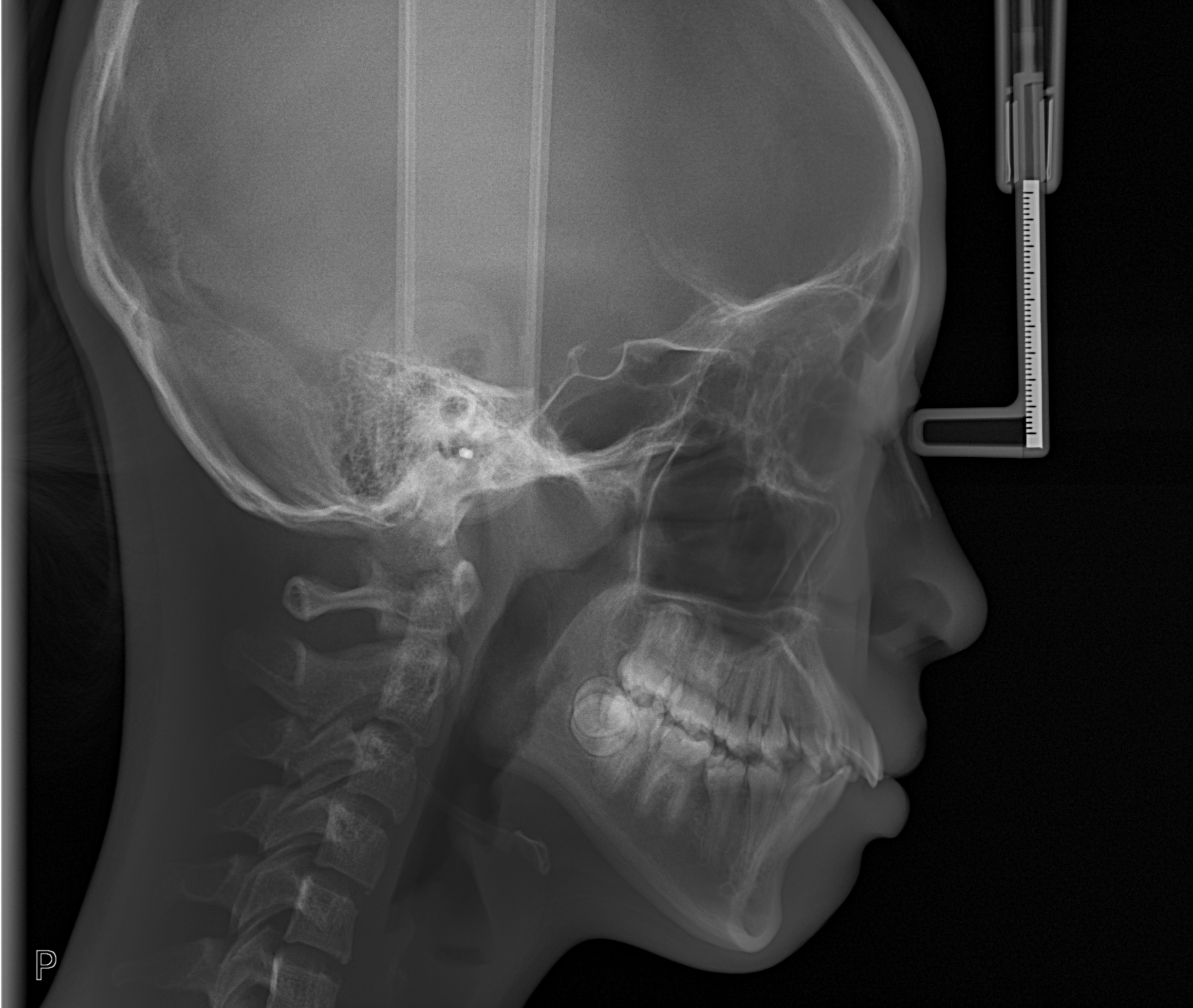
Lateral cephalometric radiography is one of the primary methods in orthodontics for assessing relationships among jaw and facial structures. Through facial angle analysis such as the Downs model, orthodontists can monitor changes in jaw growth and the effects of orthodontic treatment. Particularly in Angle Class II Division I malocclusion, changes in the anterior jaw and the maxilla–mandible relationship must be evaluated to optimize treatment.
Research Study
A study conducted by students of the Faculty of Dentistry, Universitas Gadjah Mada, Hayati and Dian, under the supervision of drg. Hj. Kuswahyuning S., Sp.Ort(K), examined changes in facial angles in males versus females aged 17–25 years undergoing treatment using the Begg technique. Lateral cephalometric radiographs were taken before and after treatment, and changes in facial angles were analyzed. The study found that changes in facial angles after treatment of Angle Class II Division I malocclusion with the Begg technique in patients aged 17–25 years were greater in males than in females. The results showed that in the male group there were significant changes in facial angles (p0.05). Furthermore, comparison between males and females demonstrated a significant difference in the magnitude of change.
Clinical Analysis
- The Begg technique, which relies on fixed brackets and the use of interarch elastics, appears to induce noticeable changes in facial angles—particularly in males within the young adult age group.
- Greater facial angle changes in males indicate that sex-related factors may influence tissue response to orthodontic forces in the context of near-adult facial growth.
- As the age range of 17–25 years has generally passed the peak pubertal jaw growth period, these results indicate that although growth has slowed, orthodontic treatment can still produce measurable facial changes if treatment design and technique are appropriate.
Clinical Recommendations
- Growth monitoring using lateral cephalometric radiography is strongly recommended for patients with Angle Class II Division I malocclusion, especially near the completion of growth.
- Consider sex-related factors when estimating facial changes in treatment planning, as males may demonstrate greater facial angle changes than females.
- Use orthodontic techniques, such as the Begg technique in this case, with attention to how brackets, interarch elastics, and torque/tooth movement forces may influence overall facial structure.
***
This study confirms that lateral cephalometric radiography is an important tool in analyzing jaw growth in patients with Angle Class II Division I malocclusion. The Begg technique in the 17–25-year age group showed that males experienced greater facial angle changes than females, although females also experienced changes (not statistically significant in this study). Evaluation of sex and age are important factors in orthodontic treatment planning, and the use of lateral cephalometric radiography strongly supports accurate diagnosis and optimal treatment planning.
References
HAYATI, Dian, drg. Hj. Kuswahyuning S., Sp.Ort(K), Comparison of facial angle changes between males and females aged 17–25 years with Angle Class II Division I malocclusion treated using the Begg technique: A study on lateral cephalometric radiographs, https://etd.repository.ugm.ac.id/penelitian/detail/37610
Author: Rizky B. Hendrawan | Photo: Freepik