
In a pediatric clinic room at Osaka University Dental Hospital in Japan, a young boy sat calmly in the dental chair. There were no tears. No cries. After the procedure, his mother smiled, gave a small round of applause, and said, “Yokatta ne” (meaning: thank goodness). The boy responded with a proud expression.
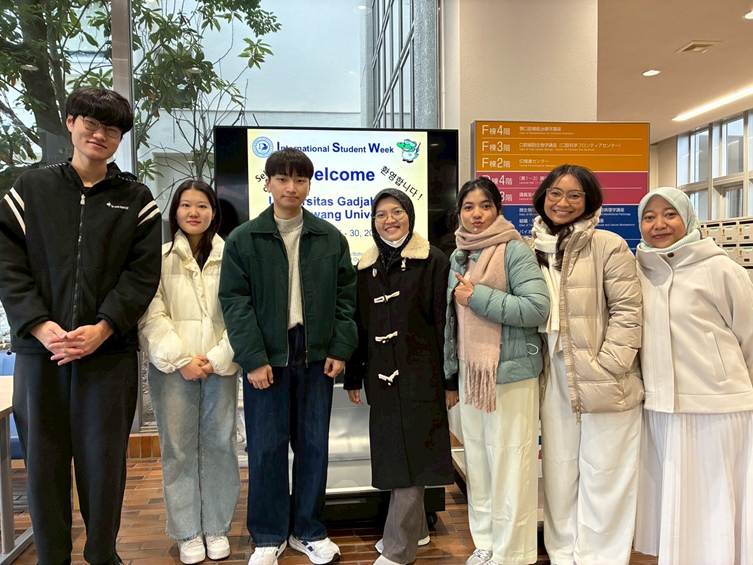
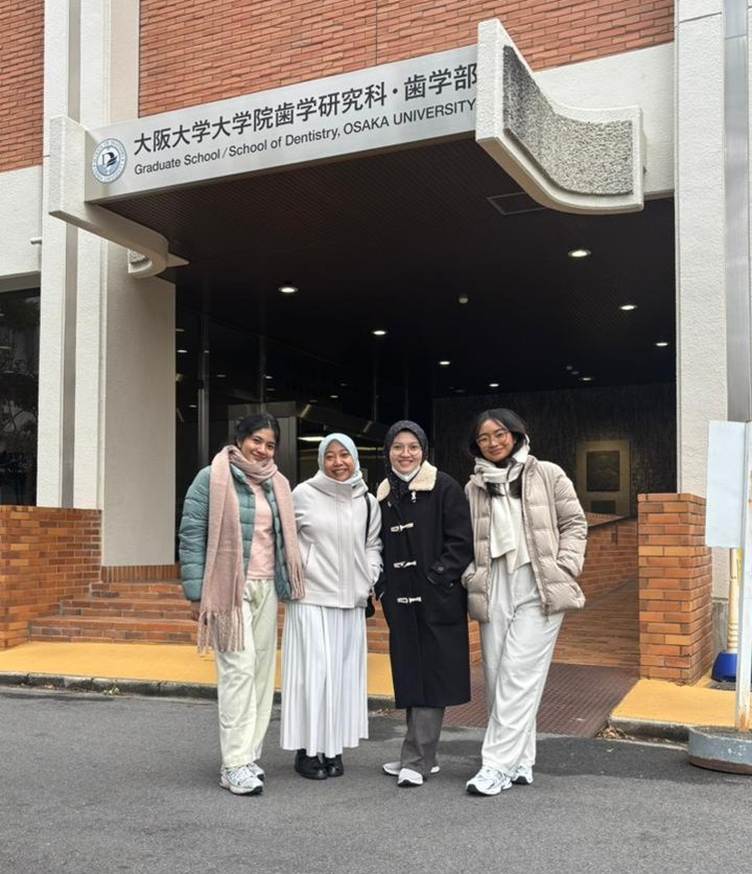
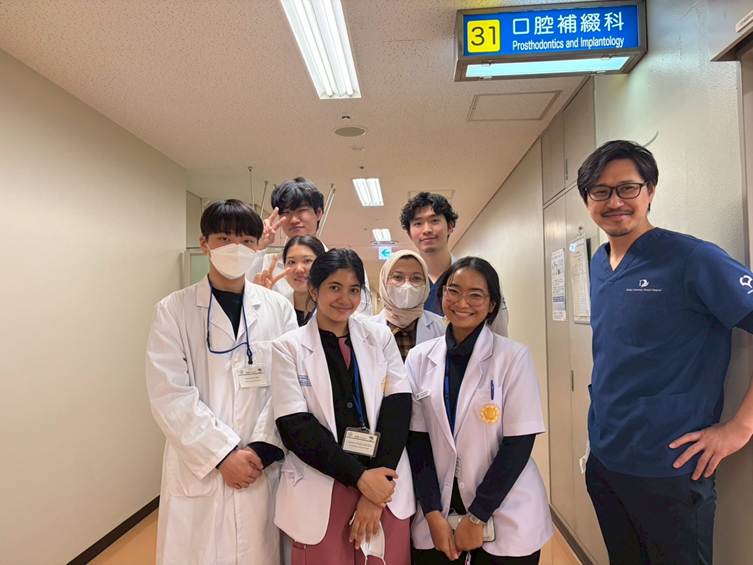
For Taskara Shafa Lantika (Class of 83), Luthfika Fadhilatul Auliya (Class of 86), and Putu Rani Wulandiva (Class of 83)—three clinical dental students from the Faculty of Dentistry, Universitas Gadjah Mada (FKG UGM), accompanied by Dr. Niswati Fathmah Rosyida, DDS, MDSc., Sp.Ort—that special moment became the most memorable lesson during their participation in the International Student Week (ISW) at Osaka University, January 26–30, 2026.
“Over there, parents are not allowed to frighten their children with horror stories about dentists. Every procedure must be appreciated. It shapes children’s mentality from an early age,” said Putu Rani Wulandiva, affectionately known as Diva.
A Different Structure in Dental Clinical Education
In Osaka, they encountered a dental education system different from Indonesia’s. The six-year program is fully integrated, without a strict separation between undergraduate and professional phases. Students progress continuously from grade 1 to grade 6.
Interestingly, during their clinical training period, students spend more time practicing on phantoms (simulation models) before treating real patients. Intensive direct patient exposure occurs during the residency phase after completing six years of study.
“The advantage is that students don’t have to find their own patients like we do here. However, emotional adaptation when first facing real patients might be different,” she explained.
One striking difference was the presence of an attending physician (DPJP) who remains fully on standby throughout clinic operating hours. There is no filtering system through residents. Every case is directly supervised by the attending physician.
“The attending physician is always there, from morning until closing. It gives both students and patients a sense of security,” Diva emphasized.
Technology as the Backbone
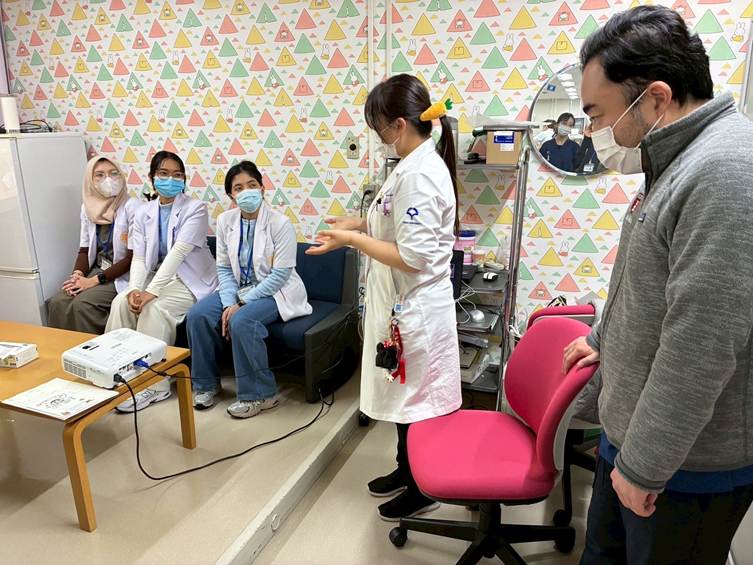
In terms of facilities, Osaka University Dental Hospital was considered one step ahead. In the Conservative Dentistry Department, nearly every portable dental unit is equipped with a Leica surgical microscope—high-precision equipment that comes at a significant cost.
In Indonesia, clinical microscopes remain limited and are usually available only in resident clinics. In Osaka, such technology is a routine part of patient care.
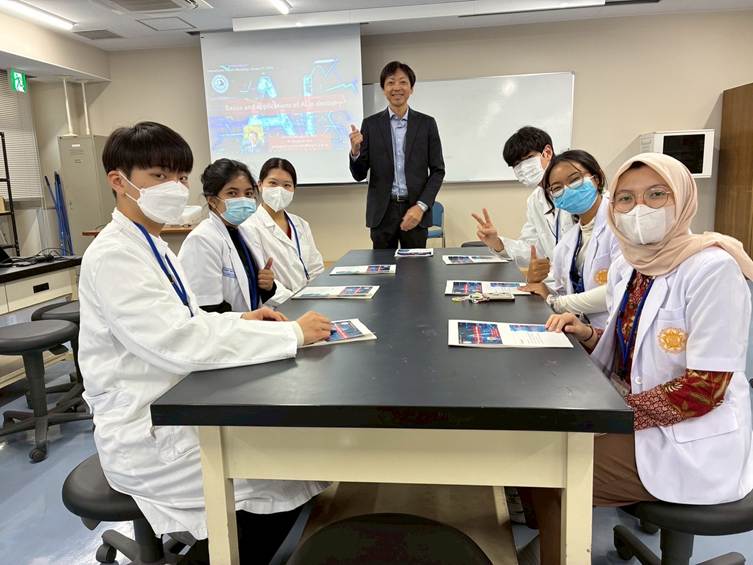
In addition, the presence of an AI Research Unit laboratory, modern surgical rooms for cleft lip and palate cases, and specialized dental inpatient facilities demonstrates how research and clinical services operate side by side.
“If research has been tested and certified, it is immediately implemented in the clinic,” Diva explained.
Early Education: A Long-Term Investment
However, what left the deepest impression was not the advanced equipment, but the collective public awareness in Osaka regarding oral health.
During a child’s first visit, parents receive detailed education on age-appropriate toothbrushing techniques, toothbrush types, toothpaste selection, diet, and snacking habits. Everything is recorded in a special monitoring book that accompanies the child’s treatment journey.
Each child even receives a dental hygiene kit from the hospital.
The initial pediatric patient form includes detailed questions about daily habits. Parents respond seriously—it is not merely a formality.
“The results are very visible. Children are not afraid of the dentist. They are cooperative,” she said.
The ISW program included orientation on the education system, departmental clinic tours, mini lectures, and campus presentations before students and faculty of Osaka University and participants from Wonkwang University, South Korea.
Reflection: What Can Be Learned?
For the three students, the main lesson was not merely a comparison of facilities.
“Small things like patient communication, parental education, or the consistent presence of the attending physician may seem simple, but their impact is very significant,” she said.
Amid limited resources, strengthening education and communication may be the most feasible aspects to adopt. Cultivating awareness that oral health is not merely a clinical matter, but part of a lifestyle culture.
In Osaka, the calm atmosphere of the pediatric clinic did not happen by chance. It is the result of a system built gradually over time—from parental education, consistent medical staff presence, to disciplined community habits.
For the three UGM dental clinical students, the five-day winter journey in Japan opened new horizons: progress is not only about technology, but about mindset and awareness in valuing the process.
(Editor: Andri Wicaksono, Photo: Putu Rani Wulandiva Archive)

